Before Diesel sent butt-crack-baring jeans down the Fall/Winter 2025-2026 runway, or Duran Lantink unveiled his fully backless denim designs, there was Raimundo Langlois and his three-year-old namesake label redefining denim and challenging the boundaries of gender in fashion.
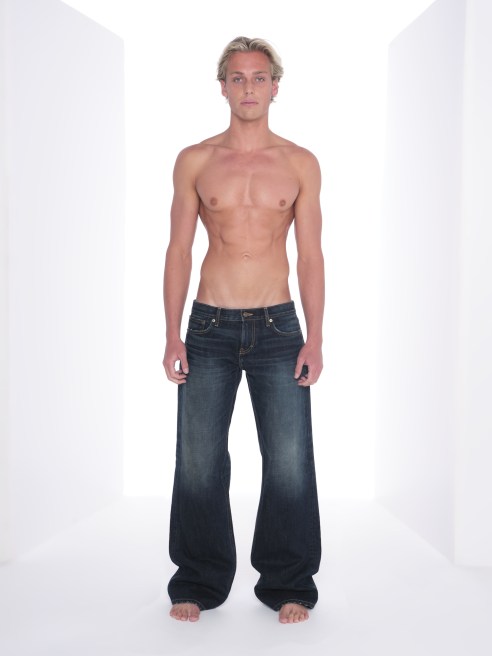
The brand’s low-rise bootcut jean—now available in three washes—started it all, though Langlois said the style’s genesis was simply to offer an alternative to the high rises that flooded the market at the time.
Related Stories
“I think we were early with exploring that erogenous zone and bringing back that silhouette,” Langlois told SJ Denim. “I mean, it always looks good.”
While he sought to revive the nostalgic style of the 2000s, Langlois aimed to do so through the authenticity of a 100 percent cotton jean. The last time that shape was really explored, everything had stretch. “For me, doing this silhouette in 100 percent cotton was kind of the point. I like the rigidity and quality, and what you can do in the wash,” he said.
The decision behind the bootcut fit, he added, was all about attitude. “It was the right fit to communicate the kind of story that I wanted to present,” he said.
The $360 unisex jean is made with 15 oz. cotton denim from Cone Denim’s mill in Mexico. The style’s alpha sizing breaks other industry norms, such as how jeans are typically developed. Each size, from XS to L, has its own block and unique grading system, so it fits male and female bodies—an idea that even factories challenged at first.
The former model turned designer/entrepreneur, Langlois is a Gen Z graduate of Parsons School of Design in New York City—embodying the very blend of nostalgia, youth culture, and progressive style that defines his brand. He is also plugged into how young shoppers visually consume fashion. “Immediately, from the jump, I feel like a lot of the brand is based around visuals. And I feel like the jean is the perfect product for that because it’s so versatile,” he said.
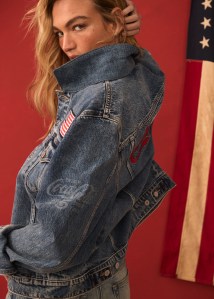
The brand’s campaigns have a dreamy, cinematic feel that playfully nod to Abercrombie’s controversial ads in the 2000s. Likewise, the brand’s subversive reinterpretations of classic American fashion (wide-leg track pants, layered polo shirts, poplin jackets) command attention. However, beneath the boldness lies a deep respect for craftsmanship—from meticulous patternmaking to resourceful production methods.
To bring his vision to life, the young designer collaborates with industry veterans like Christine Rucci, the founder of Godmother NYC, Inc., whose decades of experience anchor the brand’s experimental edge.
“The funny thing is, I’ve worked at many of the brands Rai references,” Rucci told SJ Denim. “I think this is where Rai and I really connect creatively. A lot of Rai’s inspiration came from places where I’ve worked, whether it’s Calvin Klein, Ralph Lauren, Abercrombie and places like that. So, a lot of those elements come in.”
Serving as both mentor and consultant, Rucci has helped Langlois fine-tune fit, laying the foundation for more styles. “We’ve sort of nailed this block. We have proven sales after a year. That’s helping us to in our next direction and think about what leg we can do next,” Rucci said.
Rucci has also guided Langlois toward more focused and efficient sourcing and manufacturing strategies, from using one cotton fabric as a canvas for a variety of unique washes to limiting the number of patterns and thread types for more consistency with sewing factories.
“We’ve got a good fabric, we’ve got a good system, and now we’ve got a good washer [Cotton Cloob and American Made in L.A.]. So now we can flow things,” she said.

The bootcut jean appeals to both male and female consumers equally, but unisex designs were never part of Raimundo Langlois’ brand mission. “I feel like it was just sort of intrinsic. It wasn’t a pointed effort to make something unisex. It’s just part of the ethos, in general, like, the way that I think about people, and the way I think people my age think about people,” Langlois said.
Raimundo Langlois is dabbling in gendered designs like women’s cap-sleeve stretch satin henley tops and lace camisoles, and more are on the way. For 2026, Langlois said his goal is to start offering more waist and inseam sizes so the brand can expand its design catalog. “It’s style specific. Some things are great when they’re unisex, but different bodies have different needs. We don’t want to limit ourselves by trying to address everyone at one time,” he said.
The brand will introduce black denim, as well as a new straight leg that will run a little longer than usual to create a “stack and drag” look. Rucci added that the plan is to go narrow in fabric, deep in finishing, and expand the fits into men’s and women’s.
While denim will remain a focal point—the catalyst that helps tell the brand’s story—Langlois plans to build out an assortment of tops. More “Made in USA” knits are on deck for men, and for women, the brand is using Pima cotton from Peru and treating details like pearl buttons as jewelry.
“We just want the best material for the product,” Langlois said.