Pay equity discrepancies across Turkey’s garment manufacturing sector are under scrutiny by Global Fashion Agenda (GFA).
This week, the non-profit organization dedicated to creating a net zero fashion industry published “Unpacking Pay Equity in Fashion: Türkiye,” a paper that explores how “structural factors, including occupational segregation, care responsibilities and limited data visibility, continue to shape pay outcomes” for women in Turkey’s textile and apparel sector.
Related Stories
The report draws on 43 facility-level surveys of Turkish textile and apparel manufacturers, as well as interviews with trade unions and worker associations. It also incorporates insights from social sustainability experts, including the Social & Labor Convergence Program (SLCP), the Fair Labor Association, and the Anker Research Institute.
According to GFA, Turkey’s gender pay gap is estimated to range between 15.6 percent and 17.4 percent, compared to an EU average of approximately 12 percent.
Data from SLCP reinforces these findings. Across nearly 5,400 textile and apparel facilities assessed, 35 percent reported a gender pay gap, with men earning more than women for the same or comparable work. Furthermore, men held 67 percent of the roughly 500,000 roles classified as having supervisory responsibilities.
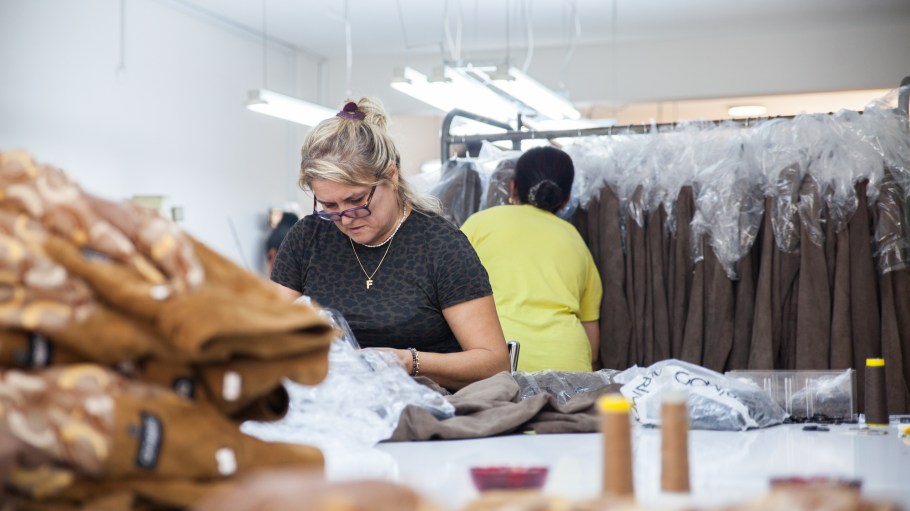
Despite these discrepancies, women remain the backbone of the industry. As of January 2024, GFA said women accounted for approximately 44-45 percent of the workforce in Turkey’s textile, apparel, and leather sectors, with apparel production generally employing a higher share of women than textile manufacturing.
While ongoing economic factors like inflation, rising production costs and competition from Egypt have placed sustained strain on the sector, the Turkish fashion manufacturing industry contributes approximately 7.8 percent of the nation’s GDP and employs one million workers. However, the country remains a key sourcing hub, especially for markets like Spain and Germany seeking nearshoring solutions.
To maintain its position as a fair, competitive, and reliable supplier to international manufacturing markets, Turkey will need to address persistent gender pay disparities within its workforce.
GFA said gender pay disparities are driven largely by structural factors rather than unequal pay for the same work, including occupational segregation, differences in career progression opportunities, cultural norms, access to training, and the distribution of care responsibilities.
However, GFA said progress depends on coordinated actions from policymakers to strengthen frameworks and to brands and suppliers for adopting responsible purchasing practices. The organization recommends “stronger, more coherent legislation paired with effective enforcement” as well as steps to make childcare and parental support more accessible and mandated gender pay gap audits.
“Pay equity is fundamental to build a fair and resilient fashion industry. This research shows that gender pay gaps in Turkey’s fashion manufacturing sector are real, but they are also addressable,” said Federica Marchionni, GFA CEO.