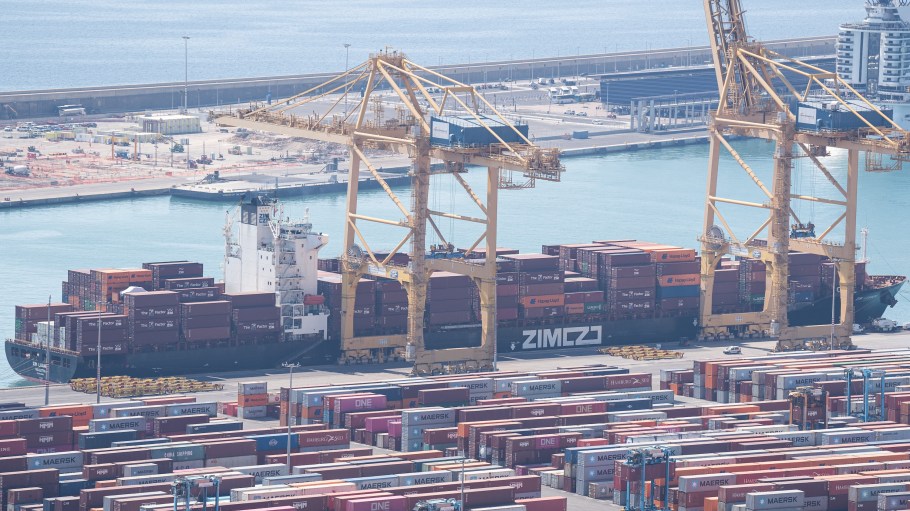
Ocean carriers have been openly cautious about returning to the Red Sea even in the weeks after the Israel-Hamas ceasefire. But Israel’s top container shipping company hinted at where the hurdle lies for many of the liners.
In an earnings call Thursday morning, ZIM CEO Eli Glickman said the carrier is still waiting for approval from its insurance companies, as well as shipowners of its chartered vessels.
Glickman shared optimism about a return, calling the ceasefire “encouraging progress,” albeit a situation that needs further assurance of durability.
Related Stories
“We believe that a return to the Suez Canal in the near future now appears increasingly likely,” said Glickman. “Therefore, we are preparing an operational plan to support this transition once the security situation is stabilized.”
Later in the call, when the CEO acknowledged ZIM was seeking the insurers’ and shipowners’ approval, he shared his eagerness to return: “Bottom line, as soon as we can, we’ll go through the Suez Canal.”
Glickman’s confidence is notable given ZIM’s Israeli origins.
The Houthis began attacks commercial vessels in the Red Sea in solidarity with Palestinians weeks after the Israel-Hamas war began in October 2023. The Yemeni militant group had contended throughout its assault on shipping that Israeli and Israeli-affiliated vessels would be the main targets, making ZIM the most prominent target for a possible attack.
ZIM and its peers avoided the Suez Canal route for the next two years, instead rerouting their vessels around Africa’s Cape of Good Hope.
As the Houthi attacks became a more regular occurrence, war-risk insurance premiums escalated, which forced the carriers to pay extra in insurance costs if they intended to risk a voyage through the conflict-ridden waterway.
Those costs have been volatile due to the lingering uncertainty within the region, with a July attack more than doubling the premiums from roughly 0.3 percent of a vessel’s insured value to 0.7 percent in a weeks’ span, according to Reuters. At times throughout the crisis, the number reached 1 percent, when the attacks were more prevalent.
Earlier this month, the Houthis indicated they would suspend attacks on commercial vessels, and end them permanently if the ceasefire held up.
Like ZIM, other carriers are still formulating plans in the event more clarity is provided, and likely, if insurance companies give the go-ahead.
In an online panel on Thursday, Hapag-Lloyd CEO Rolf Habben Jansen said the ocean carrier has “a plan on the shelf on how to return” to the Red Sea, but noted the move would be difficult. A week earlier, he said in an earnings call that he did not see the German shipping company returning any time soon.
The risks have been echoed extensively by Maersk CEO Vincent Clerc, who previously opined that it would cost “hundreds of millions of dollars” to go back to the Suez Canal, only to revert back to the longer route.
Michael Aldwell, executive vice president for sea logistics at Kuehne + Nagel, said during the panel that carriers were likely to use both Red Sea and Cape of Good Hope routings in their schedules after they were cleared to make the shift.
But he noted that even with a phasing in to the Red Sea, that this would likely cause some delays due to vessel bunching at European ports.
“You end up with vessel bunching and port congestion, which is going to exacerbate the existing challenging port conditions in the [northern part of the] continent and other parts of Europe and the Mediterranean,” said Aldwell.
Habben Jansen agreed that the congestion risks were “huge” if carriers return to their normal Suez Canal transit cadence. This could also add frustration for shippers who will have to arrange to move more cargo if it floods the ports.
“When everybody all of a sudden gets two or three times the amount of inventory that they normally get, they will struggle to take those boxes out of the yard,” Habben Jansen. “That’s probably the thing that worries me most, because that’s something that we don’t have 100 percent under control.”
Lars Jensen, CEO of container shipping consultancy Vespucci Maritime, said in the panel that the best time to return to the Red Sea if a ceasefire holds up would be in the “slack season” after Lunar New Year.
“The vessel bunching would take place in a period when quite a few of the services have blank sailings—it’s easier to realign when you have a lower demand flow coming in,” said Jensen. “It’s not going to solve the problems by any means, but it’s going to limit some associated with the switchover.”