Yellow Corp. will have another 90 days to file a proposal for the liquidation of its estate, a Delaware bankruptcy court ruled Monday.
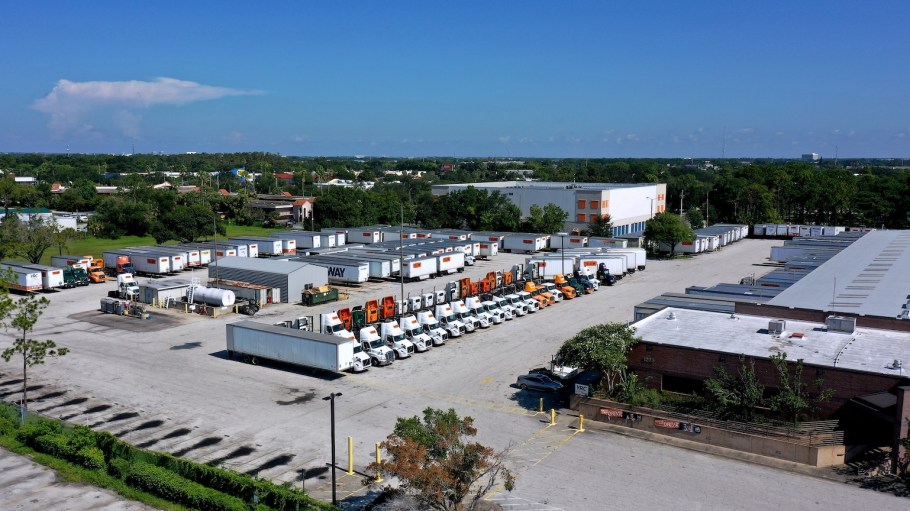
The century-old defunct trucking company, which ceased operations July 30, 2023 before filing for bankruptcy is asking to place its remaining terminals and other vacant properties into a real estate investment trust (REIT) that could be used to raise money for creditors.
According to Yellow Corp. chief restructuring officer Matthew Doheny during the hearing, the REIT would be the best option for maximizing value on the remaining terminals, rolling stock and other assets that are still in the process of being sold.
Related Stories
“My overall conclusion is that the debtor has accomplished a great deal in this case and I’m persuaded that the debtor’s actions are consistent with an effort to maximize value for the benefit of all constituencies,” Judge Craig Goldblatt said in his ruling.
The proposal was made public in the court between company officials and a committee of lower-ranking creditors, which include the Teamsters, who claim an affiliated pension fund is owed roughly $6 billion.
As part of the court battle, the committee tried and failed to end Yellow’s exclusive right to put together a Chapter 11 reorganization plan. The committee’s attorney, Meredith Lahaie, argued that Yellow’s bankruptcy was costing about $20 million a month, saying that Yellow was wasting time fighting the various pension claims instead of trying to settle the disputes.
According to bankruptcy court filings, Yellow’s estate has been billed with more than $100 million in professional fees as of May 10. The company burned through $30 million in April, $16.9 million of which was tied to professional fees.
A May 21 filing shows that Yellow had $327.7 million in cash at the end of April.
Yellow already sold off 130 owned terminals for $1.88 billion and 23 leased properties for $92 million in separate auctions, with rival trucking firms including XPO, Estes Express Lines, Saia and Knight-Swift all acquiring new real estate in the deal. With some of those proceeds, the company paid off all pre-bankruptcy debt and all debtor-in-possession financing. The company has also moved more than 30,000 units of rolling stock, primarily through auction.
Yellow called these efforts “tremendous.” Yellow is still in the process of selling 47 owned and 78 leased properties.
“The Debtors have since continued to build on this early success, spending significant time determining which unexpired nonresidential real property leases would bring value to the estates through assumption of such unexpired leases for later sale and assignment or other use,” the estate said in a court filing on May 20.
With the extension, other financial firms can’t put forward competing plans for unwinding Yellow’s estate until Sept. 1.
The goal is to find out if the company can raise more cash for creditors by keeping the properties than by liquidating them, according to Doheny.
However, any reorganization of Yellow would not include the resumption of less-than-truckload (LTL) operations.
“That’s unfortunately never going to happen,” Doheny said during the hearing.
Currently, there are more than $10 billion in unsecured claims against Yellow’s estate currently. The biggest claimants are the pension funds it contributed to, which say the company owes $7.8 billion in withdrawal liabilities (although some of these claims appear to be duplicates) across multiple pension funds. The hearing from the pension withdrawal claims is scheduled for Aug. 5.
Should Yellow’s estate raise enough money and successfully challenge some of the $10 billion in claims it currently faces, shareholders could wind up collecting something in the case, Doheny said.
The insolvent LTL firm is also going up against a class-action lawsuit totaling $244 million in claims from former employees who say they weren’t given proper notification ahead of mass layoffs last summer. A trial would begin in December at the earliest.
In total, Yellow’s 30,000 workers were left out of a job when the company ceased operations last summer, with 22,000 of them belonging to the Teamsters.
Yellow’s estate saw a setback in March when a judge dismissed a $137.3 million breach of contract lawsuit against the Teamsters, which was filed last summer after the former trucking company claimed the union had sabotage its attempt at a restructuring.