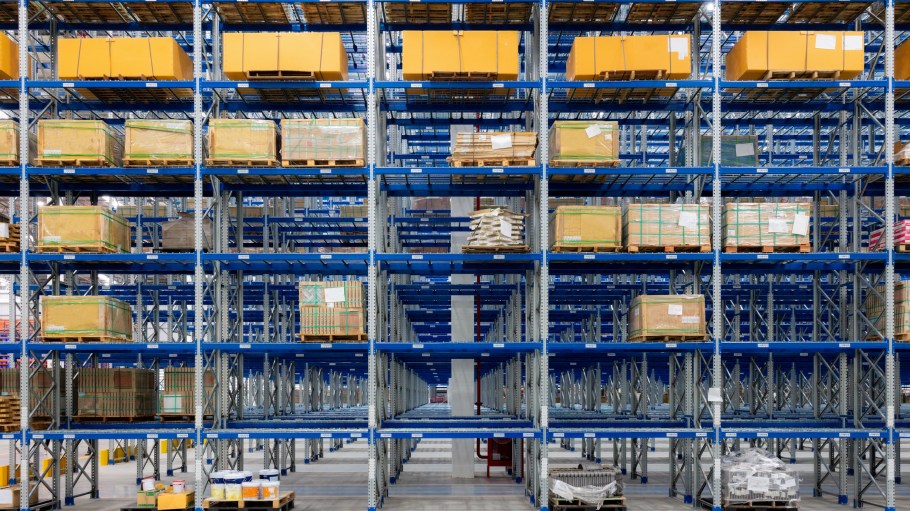
Warehouse space across the U.S. has risen to levels unseen in more than a decade as tariff pressures led businesses to stockpile inventory in their existing facilities, while pumping the breaks on any new leasing activity.
The national industrial vacancy rate rose to 7.1 percent in the second quarter, which is the highest such rate calculated by commercial real estate services firm Cushman and Wakefield since 2014.
The number is a full percentage point above the 6.1 percent industrial vacancy rate from just a year prior, and well above the 4.8 percent 10-year quarterly average from 2015 to 2024.
Related Stories
“The uncertainties surrounding the fluid tariff environment has certainly caused a bit of pause for some occupiers for long-term decision making,” Jason Price, senior director, Americas head of logistics and industrial research at Cushman & Wakefield. “But even with some front-loading of goods into the U.S.—many tenants already had the capacity in their warehouses to stock the goods without the need for expansion (in some cases—they used excess space they were marketing for sublease to house the extra volumes coming in).”
Even as U.S. businesses turned to other alternatives like bonded warehouses and foreign trade zones (FTZs) to mitigate the tariff hit from goods entering the country starting in April, the second quarter vacancy rate saw a slight sequential uptick from the previous quarter’s 6.9 percent.
“Although the appetite for bonded warehouses has certainly surged, this is not a quick process,” Price told Sourcing Journal. “Warehouses which are already bonded typically have already been accounted for—and the process to get a warehouse to become bonded can take up to three months. Meanwhile, the application and activation process for FTZs can take up to six to 12 months. These are more long-term investments for occupiers to mitigate rising tariff costs.”
Despite the historic highs, demand for logistics space remains “resilient,” said Jason Tolliver, president of logistics and industrial Americas at Cushman & Wakefield, in a statement.
“Looking forward, market fundamentals are expected to strengthen, with demand gradually improving and supply falling rapidly,” said Tolliver.
If that happens, it would be reversing a three-year trend.
The vacancy rate marked eight consecutive quarters of increasing vacancy across industrial real estate since hitting a pandemic-era low of 3.1 percent in the 2022 second quarter.
Warehouse demand has struggled to fill excess space built up since those lows, which were powered by a red-hot market characterized by record e-commerce growth that had everyone in retail looking for more storage space.
Today, the pace of new supply still continues to prop up the vacancy rates, according to Price, with Cushman & Wakefield completing 70 percent of its 146.2 million square feet in deliveries this year on a speculative basis—meaning built on anticipated demand.
“Approximately 75 percent of the 102 million square feet of speculative space was delivered without a tenant in place, thus exerting upwards pressure on vacancy rates,” said Price.
Throughout the uncertain period, tenant leasing activity has stalled.
For the first six months of 2025, new leasing is up 0.3 percent year over year to 308.9 million square feet, with seven major markets topping 5 million square feet in new leases. But the total square footage leased is down 5 percent from 2019 levels, before all the new construction was built during the pandemic boom.
Instead of leasing new space, retailers, manufacturers and wholesalers used their excess warehouse capacity for stowing away extra merchandise, said Mark Russo, head of industrial research at real estate services firm Savills.
Tenants are instead looking to sublease their property, rather than taking on new space, Russo told the Wall Street Journal.
More than 225 million square feet of U.S. warehouse space was listed for sublease in the second quarter, marking a record high, according to Savills. This number is up 25 percent from the same period a year earlier.
Smaller warehouses haven’t been hit as hard as their larger counterparts. Vacancy rates for under 100,000 square feet remained low at 4.4 percent, although this segment also experienced an 80-basis-point year-over-year jump from the 3.6 percent in 2024’s second quarter.
Rates have risen despite the rising vacancy rate. Average asking rents rose 2.6 percent from the year prior to $10.12 per square foot. On a sequential basis, rent increased 0.9 percent.
“For tenants the next six to 12 months may present the best opportunity to secure favorable lease terms,” Tolliver said.
As the market slumps, Brookfield Asset Management acquired a $428 million portfolio of 53 warehouses from Stonelake Capital Partners.
The 3.6-million-square-foot industrial portfolio has a 96 percent occupancy rate across American Sun Belt markets including Dallas, Houston, Atlanta and Nashville.
“Given the increased market uncertainty and rising replacement costs over the past several years, particularly in the light industrial space, we believe this transaction represents the opportunity to capitalize on strong supply/demand fundamentals for assets in irreplaceable locations in top markets where Brookfield has experience within our existing operating portfolio,” said Andy Smith, head of North American investments for logistics at Brookfield Asset Management, in a statement.
Whether Stonelake shares the same optimism for the industrial real estate market as its buyer is uncertain. Over the past six months, Stonelake has sold off 91 warehouses across 7.6 million square feet, according to a separate announcement.