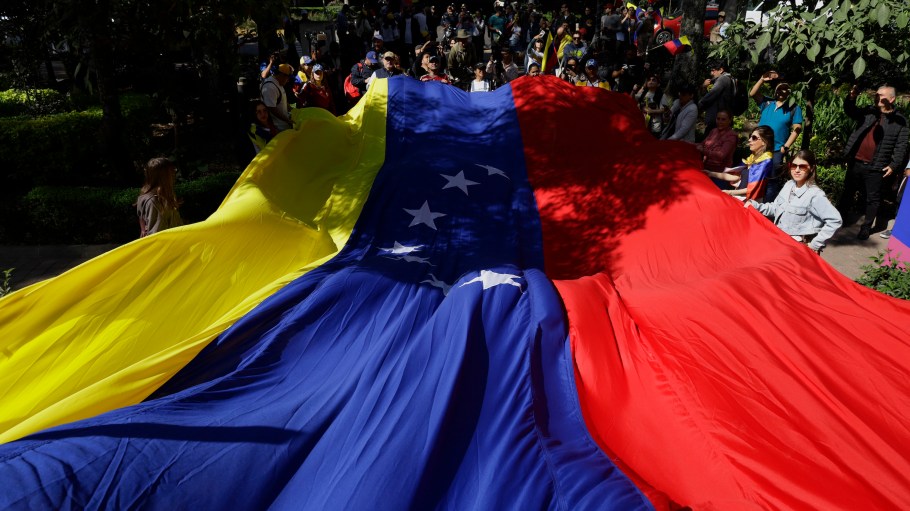
The U.S. military operation in Venezuela that led to the capture and arrest of President Nicolás Maduro shook geopolitical waves Saturday morning. But President Donald Trump’s implication that Latin American countries like Colombia, Cuba and even Mexico could potentially draw U.S. military intervention of their own has brought focus back to one of his most coveted strategic assets in the region—the Panama Canal.
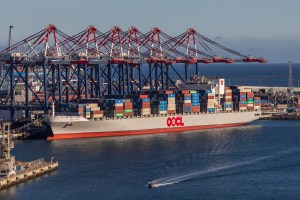
Approximately 40 percent of U.S.-bound container vessels travel through the Panama Canal, making it an essential corridor for U.S. trade. The Commander in Chief has made various overtures signaling a desire to bring the canal under U.S. control, or at the very least, ensure America has primary influence over the trade conduit.
Related Stories
One month after he was elected to return to the Oval Office, the then-president-elect asserted that the U.S. needed to “take back” the Panama Canal on the grounds that China’s influence on both the waterway and Latin America was problematic for U.S. national security interests. Weeks later, he said he would not rule out using military force to take control of the artery.
“The way he framed this statement is enough to cause both insurance companies and carriers to be in a higher state of caution than they may otherwise be,” said Marcus Denning, a principal and senior lawyer at commercial law firm MK Law.
Trump’s follow-up Sunday that a military operation in neighboring Colombia “sounds good to me” could add to shipper concerns for cargo moving through the area.
“This type of rhetoric will increase perceived escalation risk along all Caribbean and Central American routes regardless of any additional orders being given,” Denning told Sourcing Journal.
However, Judah Levine, head of research at Freightos, doesn’t expect the broader container shipping market to see much change in terms of volumes or accessibility to the canal, even in the event of military escalation in other areas throughout the Caribbean.
“Even with the blockade [on Venezuelan oil tankers], there were still container vessels moving in the region, so it would have to be pretty extreme for vessels to consider it unsafe to transit there,” Levine said.
The action in Venezuela, and the Trump administration’s fixation on expanding U.S. spheres of influence to territories like Greenland, has increased bettors’ conviction that some form of American intervention would take place at the canal.
As of 5 p.m. Tuesday, a poll from prediction market exchange Kalshi lists a 38 percent chance that President Trump would take back the Panama Canal, which the U.S. initially conceded to Panama in 1999 as part of the Torrijos-Carter Treaties signed by the countries in 1977.
The number was 28 percent before Saturday’s operation took place.
While the future outlook is unpredictable, the current status quo at the Panama Canal remains unchanged. Panama has already pushed back on some desires from the Trump administration, such as last year when the Panama Canal Authority did not budge on pressure to allow U.S. ships to transit the waterway for free.
In the short term, the uncertainty regarding the U.S.-Venezuela relationship has “no operational impact but major strategic relevance,” according to Kyle Peacock, principal at international trade consultancy Peacock Tariff Consulting.
“The U.S. operation [in Venezuela] doesn’t change the canal operations, but it raises the canal’s strategic importance,” Peacock told Sourcing Journal. “The U.S. acted in Panama in 1989 to protect the canal and acted in Venezuela now to secure regional assets. That parallel signals renewed U.S. focus on Western Hemisphere chokepoints, more scrutiny of foreign influence near the canal, and tighter U.S.-Panama security alignment.”
On Friday, just hours before Maduro’s extraction took place, Panama’s President José Mulino insisted that the bilateral relationship between Panama and the U.S. was repaired after last year’s ongoing threats. In the wake of the operation, President Mulino urged the Trump administration to ensure a democratic transition in Venezuela.
With President Trump insisting that the U.S. would “run” Venezuela in the wake of Maduro’s ouster, the developments are seen largely as an American deterrent against China. China has invested billions in Venezuela’s infrastructure over the past two decades and purchases an estimated 80 percent of its oil. The South American country’s oil reserves became the chief talking point for the Trump administration on its rationale for the operation.
A U.S. presence in Venezuela—the level of which that may be is still unknown—could mark a massive loss for China in its ambitions in the region.
Actions to box out China from the region have already been playing out near the Panama Canal, where two ports on both sides of the waterway were set to change hands in a $22.8 billion megadeal tentatively agreed upon 10 months ago.
Under that transaction, Hong Kong-based port operator CK Hutchison sold off the Balboa and Cristóbal ports to a consortium including U.S.-based hedge fund BlackRock and Swiss container shipping giant Mediterranean Shipping Company (MSC).
At the time, the move was seen as a major win for the Trump administration, although the parties involved have always maintained geopolitics were not involved in the decision.
China’s ensuing ire with the deal has largely held up the transaction, with the country first opening an antitrust probe into the acquisition, before demanding that state-owned Cosco Shipping get a controlling stake in the ports.
But the recent events in Venezuela put China in a significant disadvantage in this battle. Robert Khachatryan, CEO at Freight Right Global Logistics, said that the “brazen action” by the Trump administration ultimately would enable the U.S. to gain more control over the Panama Canal and the trade that passes through it.
“China’s threats to terminate the deals BlackRock and MSC reached in March over ownership of ports nearby the Panama Canal, if Cosco isn’t a majority shareholder, is further evidence this move is about not just securing the U.S. against whatever threads the Trump administration sees coming from China, but securing all of the West against China,” said Khachatryan.
The status of the ports and their ownership is unlikely to make or break volumes moving through the canal, according to Levine.
“Even if that deal were to fall through, I don’t think it would impact traffic through the Panama Canal,” Levine said.
For now, U.S. control over the Panama Canal still seems farfetched, but in such a scenario where that does occur, the waterway would likely shift from its neutrality-driven model for commercial shipping to a more security-driven channel.
“Washington would prioritize military control, chokepoint security and protection of Western shipping, with tighter oversight of foreign influence and stricter rules on vessels linked to adversarial states,” said Peacock. “Commercial operations would continue, but under a far more security‑centric framework than Panama’s current administration.”