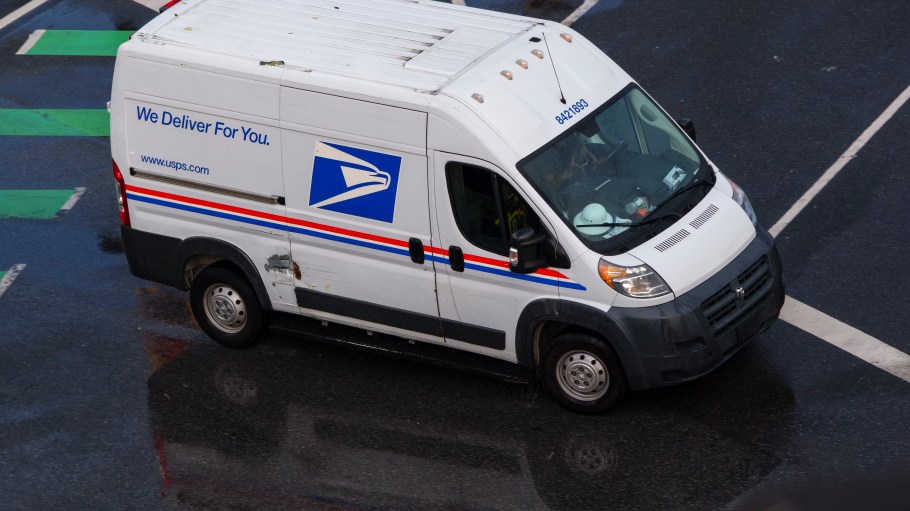
As David Steiner preps to assume the role as the next Postmaster General this month, industry stakeholders took to Capitol Hill in a rebuke of the United States Postal Service’s (USPS) Delivering for America turnaround plan to share how the national courier could best move forward.
“The plan is failing to meet the needs of the American people,” said Jim Cochrane, CEO of the Package Shippers Association, at a House of Representatives subcommittee hearing on June 24.
During the hearing, participants called for the USPS to put certain aspects of the Delivering for America plan on hold until Steiner and the organization’s new leadership team conduct a full assessment of the program.
Related Stories
Cochrane noted the difficulties the USPS has had with insourcing more of its workload from third-party shipping platforms, as well as the overbuilding of processing facilities as part of its widely criticized network overhaul under previous Postmaster General Louis DeJoy, who resigned in March four years into the ambitious plan.
He noted that this ran counter to an anticipated reduction in future volume forecasts, suggesting that the agency instead invests in modernizing its last-mile capabilities.
Michael Plunkett, president and CEO of the Association for Postal Commerce, said during the hearing that the Postal Service has lost 28.2 percent of volume since 2015, yet total employment increased 2 percent in the same period.
The Postal Service has continued to be a massive money pit since the turnaround plan first took effect, with the agency failing to reach its breakeven goals in both 2023 and 2024. Last year, the USPS incurred a net loss of $9.5 billion, with $6.6 billion of that resulting from workers’ compensation and unfunded liabilities for its retirement plans.
The USPS projects a net loss of $6.9 billion in 2025.
One major commonality among the representatives at the hearing was a push against privatization of the agency. President Donald Trump flirted with the idea during his first administration, and had publicly mentioned it as a possibility ahead of his inauguration.
More recent commentary from the Commander-in-Chief indicated that the USPS would instead be merged with the Commerce Department, but no updates regarding the agency’s structure have been unveiled since DeJoy’s resignation.
Brian Renfroe, president of the National Association of Letter Carriers (NALC), the largest union representing USPS postal workers, said privatization puts the agency’s ability to fulfill its universal service obligation at risk.
“A privatized model of the postal service would disproportionately affect those that live in rural areas, which in many cases are the people that that rely on us the most,” Renfroe said during the hearing. “Private business—as it should—exists to make profit, so it’s very natural they would be interested in delivering to locations where it’s profitable, but not to locations where it’s not profitable. That would likely be mostly rural areas.”
Cochrane instead suggested that the Postal Service should further engage in public-private partnerships, particularly on the middle mile, where mail and packages are transported between processing facilities.
“Partnering with established private carriers…could significantly reduce cost, improve transit times and enhance overall network fluidity,” Cochrane said. “This would allow the Postal Service to focus on its core strength—universal access and last-mile delivery while benefiting from the optimized infrastructure and expertise of the private sector.”
Advocacy group calls for slowdown in stamp rate hikes
On Thursday, nonprofit advocacy group Keep US Posted urged Steiner to review and rescind the Delivering for America plan, citing the service changes, delivery delays and increase in consumer costs.
In a letter to Steiner, Keep US Posted executive director Kevin Yoder also criticized the agency’s expected rate increase on stamp prices on July 13. This rate hike would bump the current price of 73 cents up 6.8 percent to 78 cents, and be the first of five increases by 2027.
Yoder acknowledged the need for “prudent, strategic” price increases, but called out the six rate hikes under DeJoy as being the “exact opposite.”
Stamp prices are up 36 percent since early 2019 when they were 50 cents.
“If such escalations continue, the price of a single stamp could be $1.19 by 2030,” Yoder remarked. “These increases are unnecessarily forcing out customers, and have put the Postal Service on a path to insolvency—destroying our nation’s ability to send and receive mail, and putting 8 million mailing industry employees out of a job.”
In the letter, Yoder asked Steiner to call on the USPS board of governors to freeze mailing rates until he assumes the role of Postmaster General.
“We believe it is counterproductive for another postage surge to take place immediately before you undertake leadership of the Postal Service, as it will deprive you of the ability to thoroughly assess, and potentially rectify, one of the most destructive policies in DeJoy’s Delivering for America plan,” said Yoder.
During the June hearing, Plunkett said the increased rates could reduce incentives for the agency to move mail to locations closer to the end consumer, thus clogging more upstream processing centers.
“There’s the real possibility of gridlock in the middle of July when those incentives are taken away, and all of a sudden, mailers just dump all of their mail at the point of origin,” Plunkett said.