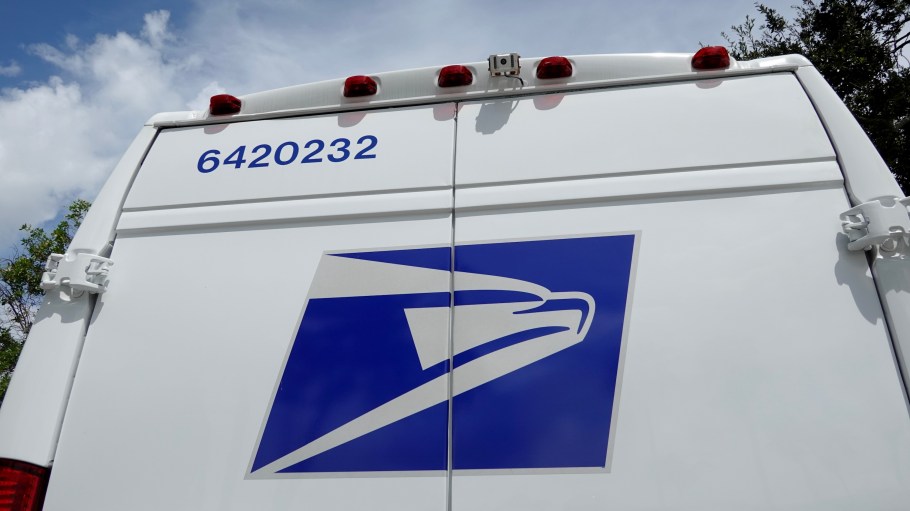
The M.O. of the U.S. Postal Service (USPS) in recent years has been slashing costs, but new Postmaster General David Steiner sees growth as a way to drive the national courier out of its yearslong malaise.
“We cannot cost cut our way to prosperity—we have to grow,” Steiner said during the USPS Board of Governors meeting on Friday. “We need to stop the revenue decline and grow volumes at a faster pace.”
The Postal Service saw net losses of $9 billion in its 2025 fiscal year, with total operating revenue increasing 1.2 percent to $80.5 billion.
Related Stories
Jumpstarting revenue growth at the USPS will require more expansion of its first- and last-mile delivery assets, Steiner said.
“We previously encouraged access to this valuable asset for only a few high-volume customers,” Steiner said. “I believe this undervalued our reach, limited business partnerships, and restricted revenue generation.”
The recently appointed Postmaster General observed that the USPS recently partnered with UPS to expand its last-mile coverage, in which the former will provide parcel delivery for the latter’s low-cost Ground Saver service.
Steiner said the agency was also in talks with “similarly situated” companies for expanded last-mile service.
“Additionally, we want to open up the last mile for retailers, large and small, so we can offer same-day and next-day delivery to their customers,” Steiner said. “We have begun discussions with a number of retailers, and the desire for fast, reliable and affordable delivery is certainly strong among all retailers.”
Steiner asserted that he did not see the need for the Postal Service to reassess the company’s processing and logistics modernization strategies that were a major part of the larger 10-year “Delivering for America” turnaround plan, despite repeated prodding to do so by industry stakeholders. But he did acknowledge the need to improve execution and said the agency may change initiatives within the plan in the future.
That “Regional Transportation Optimization” (RTO) strategy moved more mail processing away from local communities into regional processing and distribution centers (RPDCs) as part of the cost cuts, but resulted in mail delivery delays across major metropolitan areas that garnered attention from U.S. lawmakers. The holdups prompted multiple Senate hearings that forced the USPS to temporarily pause some of the network efforts last year. consolidation
Weeks before Steiner started his tenure in late July, multiple stakeholders had called on the agency to put certain aspects of the wider 10-year plan on ice, and at the very least, conduct a full assessment of the program.
The concerns have lingered in the months since, with the co-chairs of the bipartisan Congressional Postal Service Caucus calling on Steiner to suspend the RTO plan.
The plan “must…be paused until it can be updated to ensure that rural customers, like the ones we represent, are not going to experience further delays as a result of its implementation,” penned Reps. Nikki Budzinski, (D-Ill.), Jack Bergman, (R-Mich.), Chris Pappas, (D-N.H.) and Andrew Garbarino (R-N.Y.) in the October letter.
The combination of the delivery delays stemming from the RTO program and the widening net losses played a major part in the resignation of Steiner’s predecessor, Louis DeJoy, earlier in 2025.
Steiner appeared to shrug off these concerns within the speech.
“Without a doubt, the Postal Service is in a better place today than it would have been without these initiatives,” Steiner said. “They dramatically improved our middle-mile operations to transform the Postal Service into a logistics powerhouse.”
Steiner acquiesced that “service is still not where we expect it to be, nor is it what our customers deserve.”
Currently, USPS operates nine of these RPDCs, 19 regional transfer hubs, 17 local processing centers and 133 sorting and delivery centers, Steiner confirmed.
Over the past four years, mostly under DeJoy’s tenure, Steiner said the delivery service has invested $20 billion in capacity and infrastructure upgrades. For example, USPS increased its daily package processing capacity from 60 million to 88 million through the deployment of more than 600 package sorters in that time frame.
Additionally, Steiner was optimistic about the possibility of expanding its role in the returns market, which he called “the white whale of the package industry that no one has quite caught.”
With a first-mile footprint of 33,000 facilities, USPS should be “the most convenient returns facilitator across the U.S.,” Steiner said, noting that the management team will work on more ideas to bolster returns capabilities that will be shared publicly in the coming months.
Amazon recently began offering doorstep pickup from the USPS for select customer returns.
Coinciding with its earnings release, the USPS released its rate hikes for 2026, which are set to take Jan. 18.
The courier is set to raise prices approximately 6.6 percent for its Priority Mail service, 5.1 percent for its Priority Mail Express, 7.8 percent for USPS Ground Advantage and 6 percent for Parcel Select.
The price of a First-Class Mail stamp will not change in January, in a shift from prior plans. It currently costs 78 cents to mail a one-ounce letter. The next increase is expected to take place in July.
Amber McReynolds, who was re-elected chair of the Postal Board of Governors on Friday, bemoaned that the USPS bottom line was also being weighed down by “longstanding and unnecessary restrictions.”
McReynolds said the ongoing financial challenges highlighted an urgent need for executive and legislative action to achieve long-term financial sustainability at the federal agency.
The chair called for congressional updates to USPS’s pricing system, its workers’ compensation program and its borrowing limits, which haven’t been changed since 1991.
Steiner, who was previously a board member of FedEx before his appointment as Postmaster General, said the USPS “should be able to borrow like our competitors, who are not limited by statute.”
According to Steiner, this could enable the courier to bring artificial intelligence into its logistics network, and possibly expand the services it provides for the government.