A series of coordinated joint retaliatory U.S.-U.K. air strikes on Houthi military targets in Yemen Thursday night has intensified tensions in the conflict-ridden Red Sea as container ships continue to spurn the waterway to take detours around southern Africa’s Cape of Good Hope.
The air strike came a half-hour after the Iran-backed Houthis fired an anti-ship ballistic missile from Yemen into international shipping lanes in the Gulf of Aden, according to U.S. Central Command, which oversees U.S. military operations in the Middle East.
Related Stories
One commercial vessel reported that it visually observed the missile impact the water; however, there were no injuries or damage reported.
The Houthi attack was the militant group’s 27th on vessels in the area since Nov. 19, and came two days after the rebels launched their largest assault yet, when American and British naval forces shot down 21 missiles and drones in the Red Sea Tuesday.
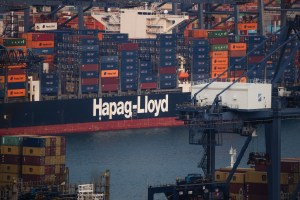
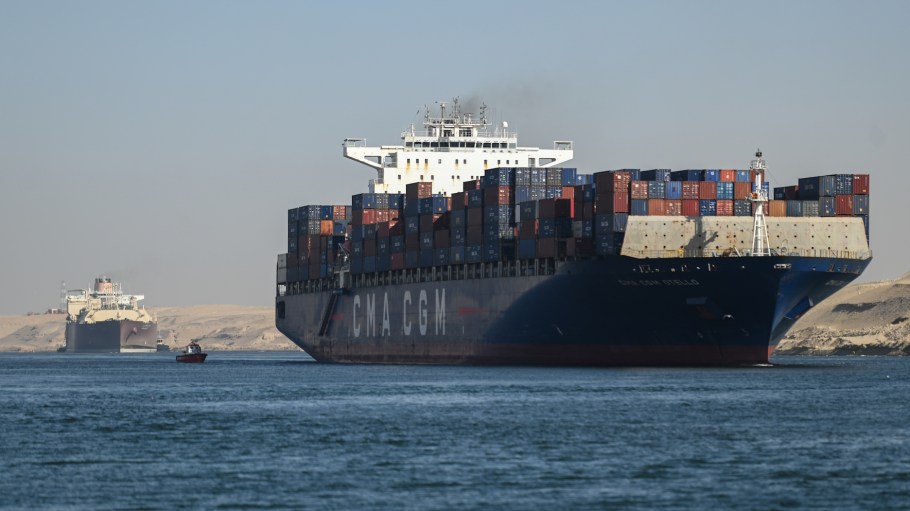
The extended risk posed by the Houthis has forced container shipping giants including Mediterranean Shipping Company (MSC), Maersk, CMA CGM, Hapag-Lloyd and Evergreen to divert their vessels from the Red Sea’s chokepoint, the 18-mile wide Bab el-Mandeb Strait. This means that fewer containers are being shipped through the Suez Canal, an important gateway for global trade, namely from Asia to Europe and the U.S. East Coast.
On Friday, the Combined Maritime Forces (CMF), a multinational naval partnership led by the U.S. out of its naval base in Bahrain, has warned all ships to “stay well away” from the Bab el-Mandeb, according to a report from Reuters.
On Thursday, ahead of the U.S.-U.K. air strikes, Maersk CEO Vincent Clerc told The Financial Times that it could take months to return to the Red Sea trade lane.
“It’s unclear to us if we are talking about reestablishing safe passage into the Red Sea in a matter of days, weeks or months…It could potentially have quite significant consequences on global growth,” Clerc said.
As of Thursday, 517 carrier vessels accounting for roughly 7 million TEUs of capacity (almost 25 percent of global capacity) are actively diverting, will divert or have already diverted the Suez Canal, according to data from Flexport. This is out of roughly 735 vessels that either typically transit the Suez Canal or have been diverted from the Panama Canal to the Suez.
The Houthi attacks and ensuing mass vessel diversions have had consequences on a global scale. A new report by the Kiel Institute for the World Economy outlined that global trade fell almost 1.3 percent between November and December.
The number of containers shipped in the Red Sea fell drastically by more than half in December, Kiel reports. As of Thursday, total container volume was only around 200,000 containers per day, compared to around 500,000 containers per day in November.
Clerc warned that the diversions, which have already contributed to a major uptick in ocean freight rates, could result in higher prices for consumer goods. Drewry’s World Container Index, which measures spot freight rates across eight major ocean trade lanes, increased by 15 percent to $3,072 in the week of Jan. 7.
“At this time when inflation is a big issue, it’s putting inflationary pressure on our costs, on our customers, and ultimately on consumers in Europe and the U.S.,” Clerc added. “In the short run, it could cause significant disruptions at the end of January, February and into March.”
According to Central Command, the U.S. Air Force struck more than 60 targets across 16 Houthi militant locations in those strikes, launching more than 100 precision-guided munitions. The multinational action targeted radar systems, air defense systems, and storage and launch sites for one-way attack unmanned aerial systems, cruise missiles and ballistic missiles.
“Today’s defensive action follows this extensive diplomatic campaign and Houthi rebels’ escalating attacks against commercial vessels,” President Joe Biden said in a statement Thursday. “These targeted strikes are a clear message that the United States and our partners will not tolerate attacks on our personnel or allow hostile actors to imperil freedom of navigation in one of the world’s most critical commercial routes. I will not hesitate to direct further measures to protect our people and the free flow of international commerce as necessary.”
The strikes marked the first U.S. military response to what has been a persistent campaign of drone and missile attacks on commercial ships, which the Houthis claim is in response to the Israel-Hamas war.