Expectations of a shorter, earlier peak shipping season in 2025 appear to be coming closer to fruition as uncertainty related to President Donald Trump’s tariffs persists through the summer.
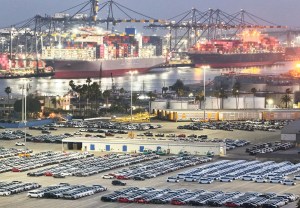
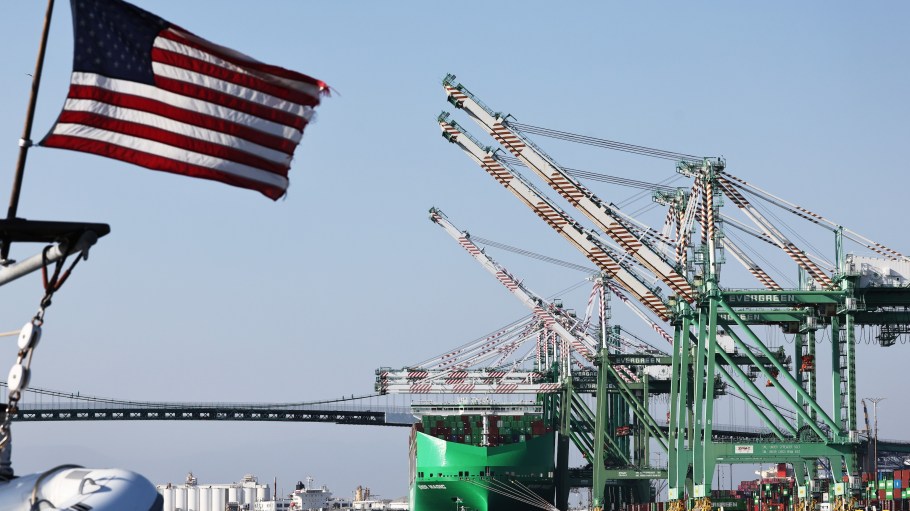
Inbound cargo volume into major U.S. ports is forecast to reach 2.36 million 20-foot equivalent units (TEU) in July, up 2.1 percent year over year. The total TEUs would mark the most ocean-borne imports entering the country since May 2022.
That month saw 2.4 million TEUs going through America’s top ports, according to the Global Port Tracker from the National Retail Federation (NRF) and maritime trade consultancy Hackett Associates.
Related Stories
A flurry is expected in the wake of President Trump’s executive order on Monday, which delayed the country-specific “reciprocal” tariffs on trade partners from going into effect until Aug. 1.
When that deadline hits, duties on imports will change from their current baseline level of 10 percent, with apparel sourcing countries like Bangladesh (35 percent), Cambodia and Thailand (36 percent each) seeing substantial tariff rate increases.
This is expected to push shippers into bringing in more goods into the U.S. ahead of the deadline, resulting in the three-year-high TEU total.
“The tariff situation remains highly fluid and retailers are working hard to stock up for the holiday season before the various tariffs that have been announced and paused actually take effect,” said Jonathan Gold, vice president for supply chain and customs policy, NRF. “Retailers have brought in as much merchandise as possible ahead of the reciprocal tariffs taking effect, and the latest extension to Aug. 1 is greatly appreciated.”
We already saw this play out with goods from Vietnam, which agreed to a deal with the U.S. on July 2. That trade agreement includes a 20 percent tariff on Vietnamese exports to the U.S., and a 40 percent tariff on any transshipped cargo that originated from a third country.
According to container tracking platform provider Vizion, weeks 23 to 27 (June 2 to July 6) showed strong front-loading as shippers moved to beat the prior July 9 trade negotiation deadline.
Across those five weeks, 270,879 TEUs were booked from Vietnam to the U.S., a 22.2 percent jump from the year prior.
The Aug. 1 deadline is expected to come with a sharp downturn in inbound cargo volume, similar to what already was seen throughout various tariff announcements in April and May. At the time, “Liberation Day” tariffs in April were briefly implemented, and tariffs on Chinese goods had at one point escalated to 145 percent—effectively putting a large swath of trans-Pacific cargo on ice.
In May, American ports handled 1.95 million TEUs, an 11.8 percent decline from April and down 6.4 percent from the year prior. The month saw the first year-over-year decline since September 2023 and marks the lowest volume since 1.93 million TEUs of throughput in May 2024.
With that in mind, August is supposed to see the same 11.8 percent month-over-month decline from July to 2.08 million TEUs, with a 10.4 percent contraction from last year’s totals.
Total inbound cargo volume is expected to sequentially fall every month from there through November, the Global Port Tracker says.
September is projected to reel in 1.82 million TEUs, down 19.9 percent year over year for the lowest monthly total since 1.87 million TEUs in December 2023. October is forecast at 1.81 million TEUs, down 19.2 percent year over year, while November is expected to fall to even bigger lows.
Estimates for that month are expected to plummet 21.3 percent to 1.7 million TEUs, well below the previous low of 1.78 million TEU in April 2023.
The Global Port Tracker noted that the tariffs aren’t the only factor that are swinging the typically peak season months on a downward pace. While the duties continue to play a role, the large year-over-year percentage declines from August through November are partly because imports in late 2024 were elevated due to concerns about East Coast and Gulf Coast port strikes.
Further adding to the uncertainty of the import landscape coming months, what remains to still be seen is how the tariff landscape with China plays out.
Although the U.S. and China have ironed out a framework for a trade deal that lowered punitive tariffs to 55 percent, very little detail has been revealed since the truce took place. That framework is still set to expire on Aug. 12.
“A flurry of tariff-related announcements from the Trump administration has only served to further increase supply chain uncertainty,” Hackett Associates founder Ben Hackett said in a statement. “The global supply chain functions best in a trade environment that is smooth and predictable. Instead, it has been forced to contend with erratic policies and geopolitical volatility.”