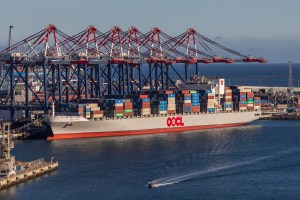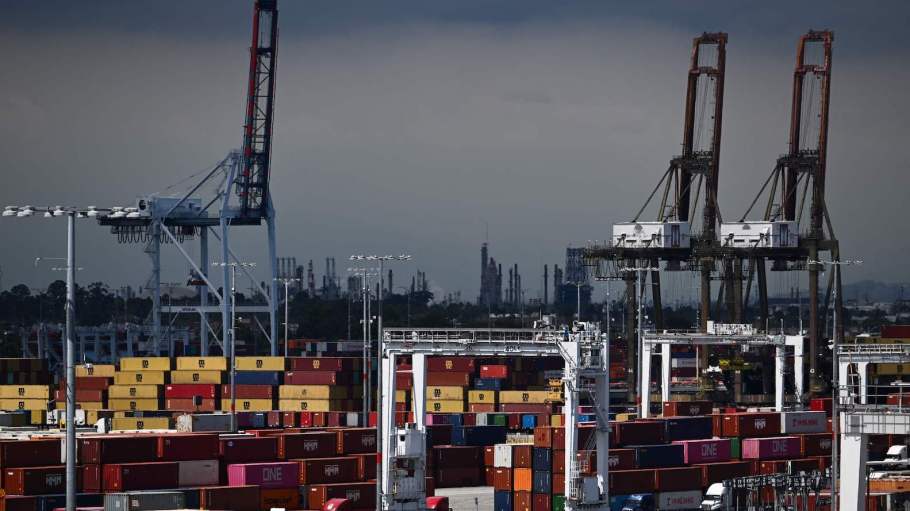
Cargo entering U.S. ports totaled 2.03 million 20-foot equivalent units (TEUs) in September, the first time imports have reached the 2 million TEU mark since October 2022.
While numbers were down 0.2 percent from last year, according to the Global Port Tracker from the National Retail Federation (NRF) and maritime consultancy Hackett Associates, they exceeded expectations set last month, when September imports were projected at 1.94 million TEUs.
By topping August’s 1.96 million TEU, September became the year’s busiest import month so far and is likely the peak of the shipping season.
Related Stories
The year-over-year import decline factors into expected 2023 holiday retail sales. NRF is forecasting sales growth between 3 percent and 4 percent over last year, lower than in recent pandemic-era years, but still expected to reach a record $957.3 billion to $966.6 billion.
The retail trade association remains optimistic in the face of the slower peak season, given inventory numbers should be more in line consumer demand, as opposed to the excess inventory that dominated the 2022 holiday.
“Retailers expect record-setting sales during the holiday sales season this year, and they have their shelves stocked to meet demand whether it’s in stores or at distribution centers to fulfill online orders,” said Jonathan Gold, vice president for supply chain and customs policy, NRF, in a statement. “Port, railroad and delivery service labor contract issues that caused worries earlier in the year are behind us, and the supply chain is running smoothly. Shoppers should have no trouble finding what they want this year.”
Container shipping giants could very well be the indicator of how the holiday season will actually play out. Most products that will be sold during the shopping extravaganza have already arrived in the U.S.
In its third quarter, Maersk‘s revenue fell nearly 47 percent to $12.1 billion while net income fell 94.5 percent to $8.8 billion. The global logistics company anticipates annual worldwide container volume performance to decline in the range of 2 percent to 0.5 percent.
And while Maersk said it’s cutting 10,000 jobs as part of what CEO Vincent Clerc called “a new normal with subdued demand,” competitor Hapag-Lloyd is cutting services on key global routes. CEO Rolf Habben Jansen said the company has cut one of five sailings from Southeast Asia to North Europe, as well as one of six services from Southeast Asia to the U.S. East Coast. Revenue for Hapag-Lloyd declined 55 percent in the quarter to $4.5 billion, while net income nosedived 94 percent to $293 million.
While U.S. ports have not yet reported October numbers, the Global Port Tracker projected the month at 1.92 million TEU, down 4.2 percent year over year.
November represents a turn upward from last year, with forecasts at 1.88 million TEU, a 5.8 percent increase from the 2022 month. This would mark the first year-over-year gain since June 2022. December should see an even bigger improvement forecast at 1.85 million TEU, up 6.8 percent from the year prior.
Those numbers would bring 2023 to 22.1 million TEU, which is down 13.5 percent from last year, and only a slight improvement over 2020’s 22 million TEU, a then-record year. In the years between, imports during 2022 totaled 25.5 million TEU, down 1.2 percent from the official record of 25.8 million TEU set in 2021, when e-commerce orders surged.
The Global Port Tracker expects the rebound to continue in 2024, although the early comparisons are up against a time when consumer spending was waning and retailers deliberately cut down on inventory shipments.
January 2024 is forecast at 1.87 million TEU, up 3.7 percent year over year, but still down from January 2019 import totals of 1.89 TEU.
February—historically the slowest month of the year because of Lunar New Year factory shutdowns in Asia—is forecast at 1.72 million TEU, up 11.1 percent from last year. March is forecast at 1.73 million TEU, up 6.5 percent year over year.
As the future of imports remains in influx, Hackett Associates founder Ben Hackett said economic conditions in the U.S. are still better than Europe and Asia. A decline in consumer demand brought on by recessions in both regions has left shipping companies with excess capacity on new vessels built in response to the cargo surge of the past few years.
“U.S. consumers stand out in the global economy as they continue to benefit from job and wage growth and are still able to dip into savings accumulated during the pandemic,” Hackett said. “While U.S. consumers are doing well, a global recession in cargo trade could potentially affect the supply chain.”