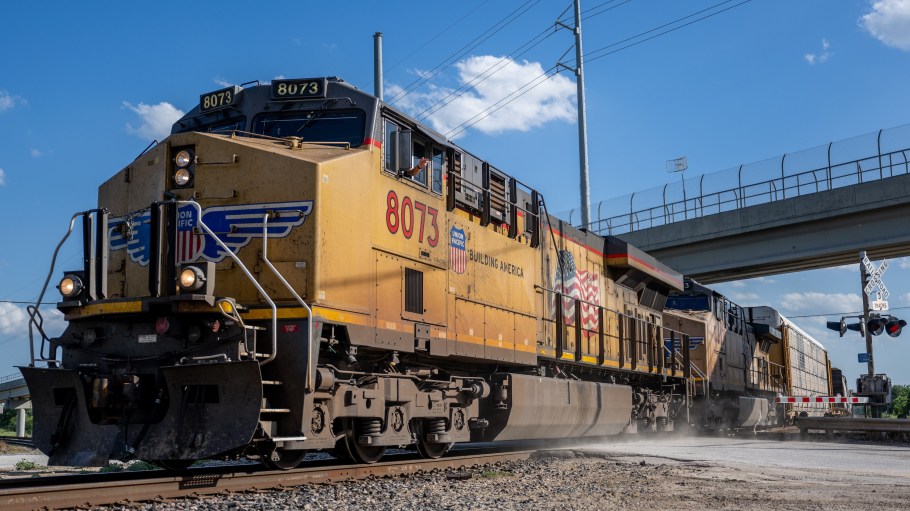
Union Pacific and Norfolk Southern have unveiled an agreement to merge, setting the groundwork to create America’s first transcontinental railroad.
Under the terms of the agreement, Union Pacific will acquire Norfolk Southern for $85 billion in stock and cash, resulting in a combined enterprise value of $250 billion for both companies.
The deal will connect more than 50,000 miles of tracks across 43 states, combining UP’s presence in 23 states in the western and Midwestern U.S., along with NSC’s network across 22 states on the East Coast, southeast and Midwest.
Related Stories
Union Pacific CEO Jim Vena said in a Tuesday morning conference call that the new network would create new direct single-line services—where trains traveling in both directions share the same track—that will design new routes and open options to and from underserved areas like the Ohio Valley and the Mississippi River Watershed.
These services are expected to reduce strain at interchange points in areas like Chicago, Memphis and New Orleans, where carloads are transported from one railroad to the other. Vena said this would cut transit times on those routes by one-to-two days.
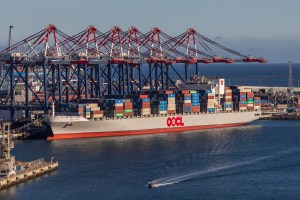
As one railroad network, the new Union Pacific will operate out of roughly 100 U.S. ports and serve 10 international gateways with Mexico and Canada.
“The combined network will capitalize on the strength of Union Pacific’s West Coast ports and Norfolk Southern’s East Coast ports,” said Vena. “Merging the strength of both companies’ intermodal networks facilitates the capture of international trade volumes and domestic truck conversion. The beauty of U.S. ports is the population centers around the ports as well as the inland reach, thus making our ports a more natural destination.”
The board of directors of both Union Pacific and Norfolk Southern unanimously approved the transaction, which is subject to review and approval by the U.S. railroad regulatory body, the Surface Transportation Board (STB). The deal still needs approval from shareholders.
The companies are targeting closing the transaction by early 2027. Vena will lead the combined company, while Norfolk Southern CEO Mark George will join Union Pacific’s board of directors. Both railroad’s management teams will operate independently until the deal closes.
But the path to getting there could be arduous, as the companies have to convince the STB that the merger is both in the best interests of the public, and will enhance competition on the Class I railroads.
The companies expect to file their application with the STB within six months. After the filing, the combined railroads will be up for a review process that lasts 16 months.
Potentially working in the deal’s favor is the possible shifting role of the STB, which is currently reforming its regulatory framework under President Donald Trump-appointed chairman Patrick Fuchs.
Union Pacific brass argues that creating a coast-to-coast railroad covers both the STB’s standards for rail consolidation, noting that such a railroad will compete more effectively with Canadian railroads to win back U.S. freight volume and American jobs.
Additionally, the company says the deal will strengthen competition with North American truck networks, with Vena noting that the merger will reduce highway congestion.
While the railroads are bullish on bringing back freight volumes, whether it be from the trucking industry or the rail sector north of the border, a transcontinental network may not be the panacea needed to fight off wider secular headwinds.
“Carload has been on a secular decline since the Global Financial Crisis, with carload volumes falling by ~400,000 units monthly today relative to 2007,” said Jason Miller, interim chairperson, department of supply chain management at Michigan State University’s Eli Broad College of Business. “I’m skeptical that the railroads can do much to convert more truck traffic to carload moves.”
And although intermodal traffic increased nearly 15 percent from the same period to 1.13 million units, according to data from the U.S. Bureau of Transportation Statistics, they have struggled to stay above 1.2 million units a month since first amassing the mark in March 2018, observed Miller.
“While a UPNS merger may allow for more rapid movement across a unified network, I don’t see this being a catalyst for substantial intermodal market share gains, especially given intermodal remains ~25 percent cheaper than dry van truckload based on Journal of Commerce’s Contract Intermodal Savings Index,” Miller told Sourcing Journal.
The transaction doesn’t have solid support from laborers working at the rail companies.
SMART Transportation Division, the largest railroad operating union in North America with more than 500 locals and 125,000 active and retired workers, said in a statement that it intends to oppose the deal in proceedings before the STB.
The IAM Union Rail Division said it was “closely monitoring” the acquisition, calling it out for raising “serious concerns about community safety, job security/workers’ rights, competition, and long-term industry stability.”
As of now, union jobs won’t be impacted as part of the merger, but Vena did not comment on non-organized labor.
“All of our union employees who have a job today will have jobs tomorrow in our merged company,” Vena said in the call.