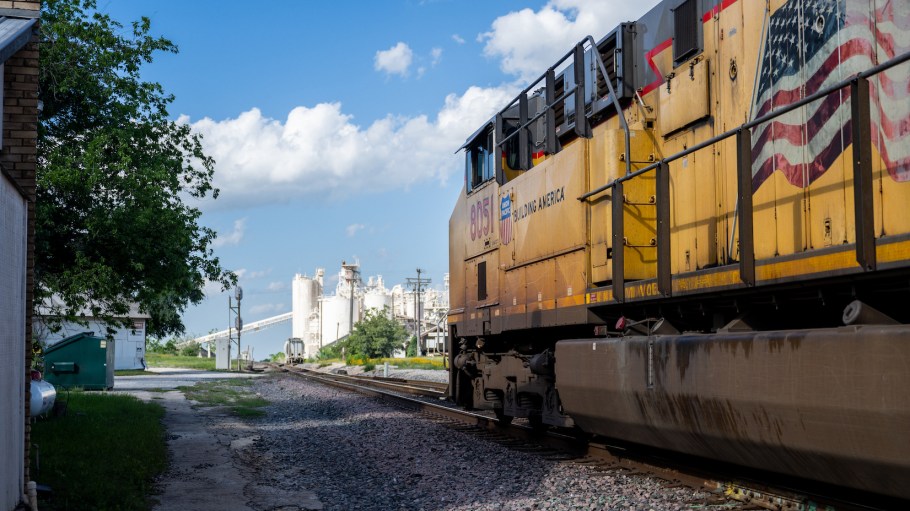
Union Pacific is clapping back against a federal class-action lawsuit claiming the railroad operator concealed the presence of toxic and hazardous contaminants after chemical spills in Wichita, Kan. that happened five decades ago.
In a motion of dismissal, the rail company’s lawyers argue the plaintiffs lack sufficient facts to back up their claims. Additionally, they say the suit is barred by both a three-year statute of limitations and a 10-year statute of repose, similar to a statute of limitations.
Related Stories
The motion pushed back on the complaint’s initial claims, namely that Union Pacific knew about the release and leak of contaminants at the site and the associated health risks, concealed their presence, and covered up the fact that the toxins were being released onto, into and around the homes of residents nearby. The 28-page complaint, filed Oct. 10, also claimed the railroad operator mishandled the management and cleanup of the waste released from the site.
“Plaintiffs cannot credibly claim that Union Pacific concealed the presence of the alleged contamination and prevented plaintiffs from discovering it because they concede in the complaint that the material facts relating to their allegations have been publicly known and available to them for more than 20 years,” the company said in a memorandum supported the motion.
Union Pacific has denied that it concealed the contaminants, but said in a statement it would continue to cooperate with the Kansas Department of Health and Environment (KDHE) to investigate and address the spill’s effects.
Chris Nidel, a lead counsel for the plaintiffs, told Sourcing Journal that Union Pacific is “arguing process over the facts,” noting that their case has sufficient facts to overcome both statutes.
“We think they should be held accountable under the law. There’s certain facts as to how they discharge, and what they’ve known that they’ve never told the public, that we don’t feel that the statute of repose applies,” Nidel said. “We’re confident that we’ll address those technical legal issues in court.”
The spill emerged in the public eye in September last year when state officials sought residential feedback on a $13.9 million plan to clean up the contaminated railyard in Wichita, known as 29th and Grove.
That month, the KDHE presented the first in a series of public meetings informing the community about the TCE contamination and related public health risks.
The concerns escalated two months later when Wichita resident Kiah Duggins wrote to the EPA and White House Council on Environmental Quality informing them of the dangers associated with the spill.
City officials claim the spill happened in the 1970s, 1980s or earlier, and first identified the carcinogenic groundwater known as Trichloroethylene (TCE) in 1994. The chemical is linked to health risks including kidney cancer, non-Hodgkin’s lymphoma and heart issues.
The spill is said to have originated from wastes from chemical degreasing agents that Union Pacific used, transported, carried or handled at the yard, which resulted in contaminants being released into the soil, ground water and air at the site.
“The main theme is that [Union Pacific is] attempting to avoid the facts, which they are not denying—that they are responsible for the discharge of TCE into this neighborhood of hundreds, if not thousands of homes,” Nidel said. “Now they’re depriving people of their day in court to force them to take responsibility for it by arguing process over the facts.”
The suit names two plaintiffs—Faye Black and Jeannine Tolson—who live in neighborhoods impacted by the contaminated groundwater. But the lawsuit was filed on behalf of everyone who owns residential property within the area impacted by the compromised water.
According to KDHE regulators, 2,793 addresses are impacted in the affected area, with the groundwater plume extending approximately 2.9 miles south of the site.
Union Pacific signed a consent order with the state of Kansas in 2002 to clean up the contamination, taking severals steps like installing a system to prevent it from spreading any further.
The suit does not include any claims of health issues caused by the contamination, despite evidence that TCE can cause negative health effects.
In the memorandum of law it filed Monday with the Kansas federal court, Union Pacific alleged that Black and Tolson didn’t provide facts supporting their claims, including the locations of the properties they claim to have damaged, the characteristics of their properties (such as whether they contain drinking water wells) or how long they have owned the properties.
The plaintiffs seek a jury trial, requesting to be awarded relief for alleged loss of property value, stigma, unjust enrichment and punitive damages.
The railroad operator said the “generic list” of damages didn’t specify the claims across property damage, diminution of property value, economic loss and exposure to toxic substances, among others.