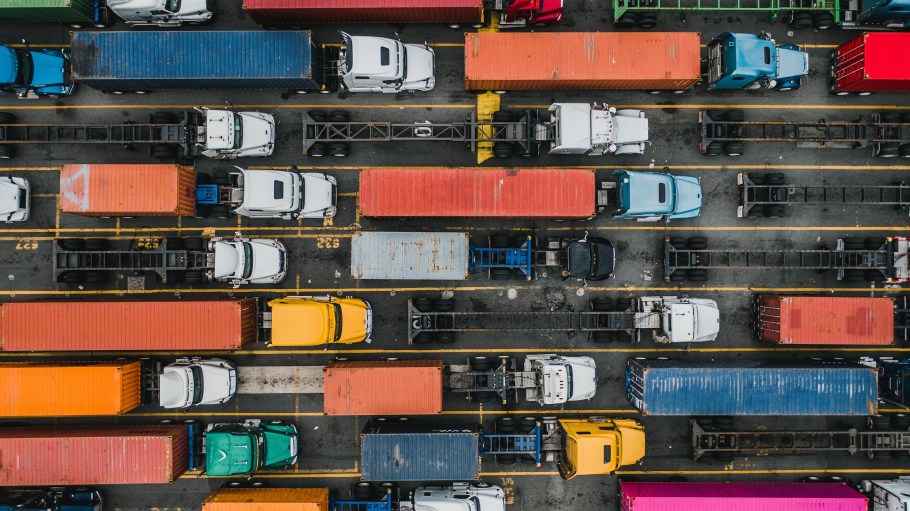
U.S. President Donald Trump handed down an executive order Friday decreeing that medium and heavy-duty trucks will be subject to duties of 25 percent, effective Nov. 1.
The tariffs apply to Class 3 through Class 8 trucks, which include tractor-trailer trucks, semi-trucks and delivery trucks. Heavy-duty trucks have a maximum operating weight of 26,000 pounds, and medium-duty trucks weigh between 10,001 26,000 pounds.
The president had previously discussed his plans for the trucking industry in a Truth Social post, but had been vague on details. The Trump administration formalized the details of the tariffs late last week. Beyond trucks, 10-percent duties will also apply to buses.
Related Stories
The president’s actions mirror those his administration has taken on cars and automobiles.
The president is using the results of a Section 232 investigation, conducted by Secretary of Commerce Howard Lutnick, as the justification for the sector-specific tariffs. That differs from some of his prior actions on so-called “reciprocal tariffs,” which relied on the International Emergency Economic Powers Act (IEEPA).
In his order, Trump said he is adding duties to the truck and bus industries in the name of “national security.”
Trump wrote that the tariffs are meant to “strengthen supply chains; bolster industrial resilience’ create high-quality jobs that will expand the skilled workforce in the United States and increase domestic capacity utilization and United States-produced market share for MHDVs, certain MHDVPs and buses.”
When the president shared his plans for the tariffs on Truth Social earlier this month, questions over whether trucks exempted under the United States-Mexico-Canada Agreement (USMCA) would remain that way.
While some experts harbored doubts, the administration’s order confirmed that trucks that “qualify for preferential tariff treatment under the USMCA shall not be subject to the additional ad valorem duty rate.” That same treatment does not, however, apply to buses, the order noted.
The Wall Street Journal reported last week that White House officials said countries that have worked to strike nation-specific deals with the Trump administration will be subject to lower tariff rates for truck. That would include Japan and the European Union.
Some domestic truck producers previously expressed worries about tariffs on imported parts. The Trump administration said it will allow MHDV manufacturers that assemble their trucks in the U.S. to apply for import adjustment offsets. According to the order, “an MHDV manufacturer may apply to the Secretary [of Commerce] for an import adjustment offset amount equal to 3.75 percent of the aggregate value of all MHDVs assembled in the United States” on an annual basis. That provision is set to last for five years.
Organizations, like the U.S. Chamber of Commerce, had actively spoken out about Trump’s plan for tariffs on trucks.
But others, including one of the country’s largest unions, support Trump’s executive order.
The International Union, United Automobile, Aerospace and Agricultural Implement Workers of America—more commonly known as the United Auto Workers (UAW)—said in a statement that it welcomes the executive order and has long lobbied for such protections for American companies.
The union said the tariffs represent “a major win for UAW members who build heavy trucks at Mack, Daimler, Navistar, Volvo and more.” Shawn Fain, UAW president, said existing and previous policies have negatively impacted the trucking manufacturing industry in the U.S.
“For decades, heavy truck makers have rushed to kill good blue-collar jobs from Allentown, Pennsylvania, to Gastonia, North Carolina, in order to pay poverty wages abroad while Wall Street makes a killing. That ends November 1st,” Fain said in a statement. “Our members lobbied and mobilized to save these communities, and made their voices heard in Washington, DC. We have pushed for action like this for decades, and we congratulate President Trump for delivering for heavy truck workers everywhere. Let’s keep going and rewrite our broken trade rules.”