A new report from the Gold Institute for International Strategy warns that the next cost-of-living spike could land in Americans’ closets, not just at the pump or checkout line—depending on how quickly apparel supply chains adjust to new tariff conditions.
Because if tariffs are a structural shock, the small DC-area nonprofit argued, then its fix is distributed sourcing under a “many-nodes, one-standard” regime across the Bangladesh–Kenya–Peru corridor—what the Gold Institute explicitly framed as aligned with Trump-era economic doctrine.
Related Stories
“Turning Tariffs into Opportunity: How the Global South Can Reshape U.S. Textile Supply Chains” examined how elections and industrial reform are reshaping apparel sourcing—plus, the resulting direct implications on both stateside shops and their shoppers.
“America First ultimately seeks to reshape globalization so that critical value chains reinforce American security, strategic leverage and middle-class prosperity,” the Baltimore-based “think-and-do-tank” said. “The doctrine prioritizes reducing dependence on adversarial states by dispersing production across a broader network of democratic, reform-oriented partners rather than concentrating it within a single authoritarian hub.”
The nonprofit organization—self-characterized as dedicated to fostering strategic, forward-thinking policy to counter authoritarianism and emerging global threats—argued that U.S. tariffs are, actually, not so bad. Rather than simply raising costs, tariffs can create a strategic opening to rebuild a more resilient, diversified and values-aligned apparel supply chain.
“This new tariff architecture has generated far-reaching effects across the global economy, with labor-intensive supply chains bearing the brunt of adjustment pressures. The apparel sector exemplifies this vulnerability: few industries rely so heavily on cross-border inputs, sequential processing and tight cost margins.”
The report asserted that the tariff actions introduced in April 2025—including a “10 percent baseline tariff” on almost all imports, followed by “reciprocal measures” that raised duties on some categories above 50 percent—have reset the economics of apparel sourcing, the organization argued.
It goes further, attributing to Yale Budget Lab an estimate that the effective U.S. tariff rate reached roughly 22.5 percent—an estimate the report characterizes as the highest level since 1909. Yale’s own top-line summary on average effective tariff didn’t quite translate.
Shared last summer, the nonpartisan policy research center placed the average effective tariff rate at 18.6 percent (the highest since 1933), with post-substitution at 17.7 percent (the highest since 1934). And, according to the lab that’s been closely tracking the progress and fiscal impacts of the trade agenda, tariffs “directly reduce the purchasing power of low-income households—either by decreasing nominal incomes or by increasing prices.”
The Gold Institute’s report did not publish a full methodology or tariff-line list in the public text.
With that in mind, the charity did claim that reciprocal U.S. duties on major exporters—including Bangladesh, Vietnam and Cambodia—now sit in the high-40-percent range. Those costs, the report warned, can translate into consumer price increases without rapid supply-chain adjustment.
“This pressure is compounded by reciprocal U.S. duties on other major textile- and apparel-exporting nations,” per the paper; what the Gold Institute reported as “representing the steepest increase in decades and a structural shock to low-cost apparel pricing.”
In fact, the Gold Institute doubled down, stating that tariffs are now a “new normal,” not a blip—and that if supply chains don’t reroute, U.S. consumers pay. The report claims that “the 2025 tariff package” could lift apparel prices by roughly 38 percent in the short term and keep them around 17 percent higher in the long term.
How? Well, by “shifting production from China toward a coordinated global South network—anchored in Bangladesh, Kenya and Peru—under shared labor, environmental and transparency standards.”
The Gold Institute’s proposed fix to tariff-driven cost shocks and sourcing volatility is a tri-regional production network—organized under a “many-nodes, one-standard” sourcing model—meant to distribute risk while maintaining compliance and credibility.
With Bangladesh positioned as the scale anchor, Kenya was framed as a preferential-access play contingent on the African Growth and Opportunity Act.
The Gold Institute said that without it, tariffs would snap back—reaching “the mid-teens for cotton garments and exceeding 30 percent” for key synthetics. The report noted, however, that the risk has been “temporarily contained by U.S. support for a one-year AGOA extension now before the United States Congress, preserving duty-free access through 2026.”
Peru, meanwhile, was pitched as a nearshoring and duty-free option under the bilateral U.S.-Peru Trade Promotion Agreement (PTPA).
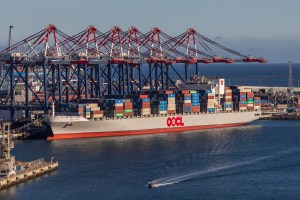
“Major upgrades at Callao and the new deep-water port of Chancay are expected to further reduce lead times and strengthen Peru’s nearshore value proposition,” the report reads. “These infrastructure investments are projected to add $4.5 billion to the economy and will lift GDP by approximately 1.8 percent, reinforcing Peru’s emergence as a strategic logistics hub in the hemisphere’s reconfigured industrial landscape.”
To make the corridor “work,” the Gold Institute’s proposed policy architecture is aimed squarely at brands’ operational pain points—such as a Trusted Textiles accreditation regime for streamlining customs and enforcement. It’s a proposed trade facilitation framework that was designed to modernize how the U.S. interacts with its supply chain partners by rewarding reform and compliance.
In its recommendations section, the report called for a “Trusted Textiles” accreditation modeled on trusted-trader programs, pairing streamlined treatment with enforcement mechanisms.
Drawing on models such as U.S. Customs and Border Protection’s Customs-Trade Partnership Against Terrorism, aka CTPAT, and Australia’s Trusted Trader scheme, the accreditation effort “would allow compliant factories to move through green-lane clearance, mutual recognition, and reduced inspections, while snap-back penalties would deter non-compliance,” the report reads. “This rewards the very reforms the U.S. seeks to encourage.”
It also called for expanded U.S.-backed finance for renewable energy and water-efficiency upgrades in export zones, pointing to a 40 MW rooftop solar array in Bangladesh’s Korean Export Processing Zone—the country’s first and largest private industrial park located in Anwara, Chattogram—as proof of concept.
“Taken together, these steps align tariff policy with economic diplomacy,” the report reads. “By backing verifiable ESG standards, green infrastructure, flexible market access and multi-node operations, the U.S. can build a supply network that is resilient, diversified and consistent with American values—a future-proof model of globalization rather than a retreat from it.”