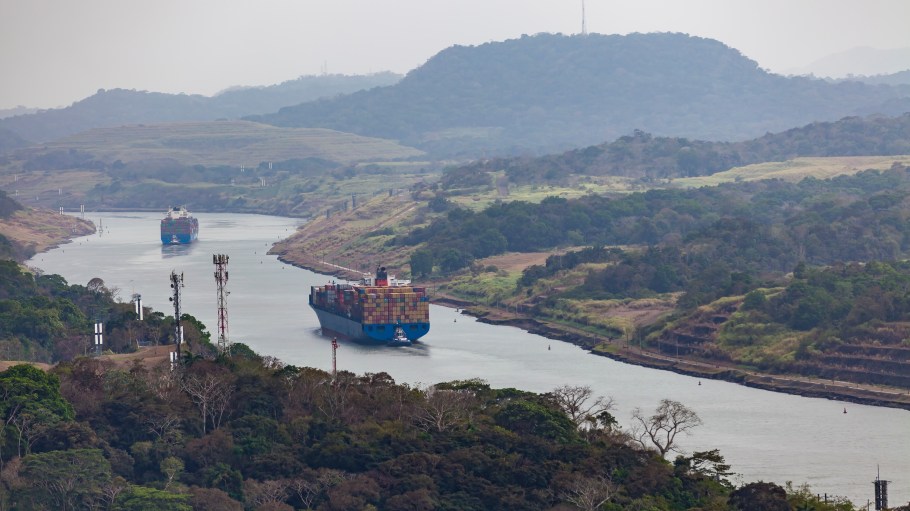
The Panama Canal is set to open the selection process for its net-zero transit reservation system next month, offering shipping companies an incentive to accelerate the adoption of alternative fuels and low-carbon technologies.
The first competition to allocate this slot will take place on Oct. 3, applicable to the transit week of Nov. 2-8, 2025. Beginning on that date, one weekly slot will be reserved exclusively for vessels that meet low-emission criteria.
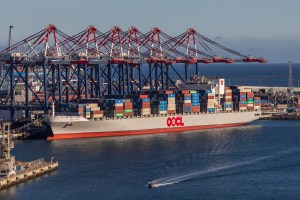
Neopanamax vessels, which are larger container ships that have a maximum length of 1,215 feet and a 45-foot draft, are eligible for the weekly slot.
Related Stories
According to the Panama Canal Authority (ACP), the move supports the canal’s commitment to achieving net-zero carbon emissions by 2050, and is aimed at pushing more carriers toward adopting dual-fuel ships and encouraging decarbonization across the maritime industry.
“The NetZero Slot is an unequivocal signal of our commitment to sustainability and the competitiveness of global trade,” said Ilya Espino de Marotta, the canal’s deputy administrator and chief sustainability officer, in a statement. “Through this initiative, we aim to support our customers in the transition toward a low-emissions future.”
In this initial phase of the slot rollout, vessels must be registered as dual-fuel and capable of operating on at least one fuel with a carbon intensity factor equal to, or less than 75 grams of carbon dioxide equivalent per mega joule —a unit used to measure the wake-to-wake carbon intensity or greenhouse gas emissions associated with producing and consuming a fuel or activity.
Eligible fuels include green methanol, green ammonia, bio-liquified natural gas or bio-liquified petroleum gas. While immediate use of these fuels will not be required, the canal will recognize the investment and capacity to operate them once supply becomes available.
“The Panama Canal acknowledges that the availability and scalability of such fuels are still under development,” said Boris Moreno Vásquez, vice president for operations at the Panama Canal Authority, in a shipping advisory Friday. “Therefore, vessels will not be required to use lower-carbon fuels immediately; however, we will recognize the investment in, and capability of, operating with them once they become available for bunkering.”
The “NetZero Slot” will not be auctioned, the ACP says. Instead, vessels will compete weekly under a prioritization process based on cargo condition and tonnage capacity. Preference will be given to loaded vessels and those with higher tonnage. If a tiebreaker is necessary, the canal will also account for combined payments from tolls, maritime services and fees from prior transits.
To participate in the slot competition, customers must submit their requests through the ACP’s transit reservation system including the intended transit day of the week.
Winners of each weekly selection will be able to select their preferred transit date within the assigned week and have guaranteed transit within 24 hours. Additionally, the canal will allow swap and substitutions among vessels that have the same characteristics used when the slot was allocated.
Ships will also have access to the canal’s just-in-time transit service at no additional cost. This service allows the booked vessel to arrive at a pre-established time confirmed by the authority.
The second phase of the NetZero Slot implementation is planned for 2026, but the ACP has not revealed any details.
First-time transit vessels will not be eligible to compete for the net-zero option, as they must first undergo inspection. This checkup typically takes place upon the vessel’s initial arrival in canal waters, prior to its maiden transit.
The ACP’s net-zero development came days after the Panama Canal revealed there were 313 Neopanamax vessels that sailed through the trade artery in August, with 125 having booking slots. In total, there were 1,009 oceangoing transits across all vessel sizes, amounting to 32.5 transits per day.
And during an official visit to Japan, Panama’s President José Raul Mulino also unveiled the country was developing a gas pipeline that will form part of the new interoceanic energy corridor for the canal.
The pipeline will be the first major project of this infrastructure platform, aimed at strengthening Panama’s competitiveness and addressing a strategic need in the global energy market.
The project is part of the Panama Canal revenue diversification strategy, which seeks to expand service offerings, increase cargo capacity without additional water use and aims to position Panama as a key global trade hub. The corridor is expected to include an intermodal logistics hub with terminals for container transshipment and storage areas.
The government estimates the pipeline will cost between $4 billion and $8 billion. Officials expect over 6,500 construction jobs and nearly 9,600 permanent positions once it runs.