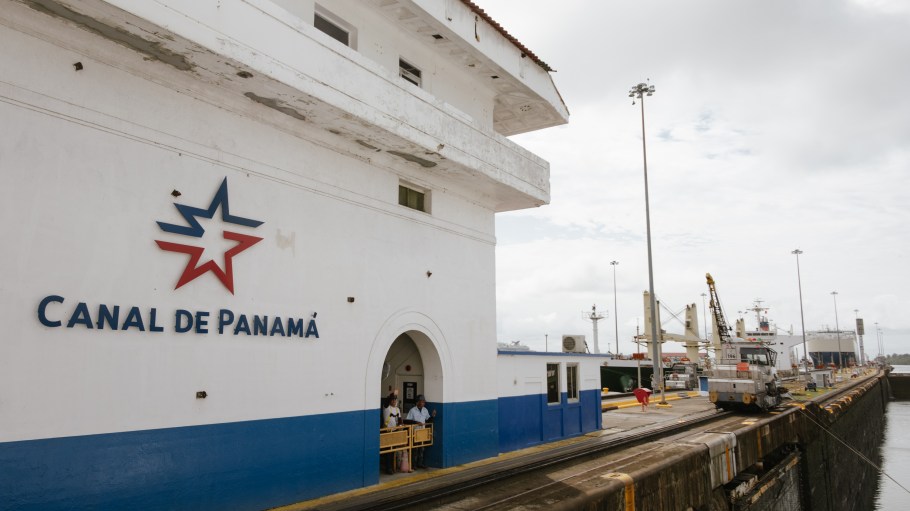
As America and China spar over the ports that sit on both sides of the Panama Canal, the waterway’s operator wants to enter the ports business on its own.
The Panama Canal Authority (ACP) expects to open a tender to operate one port on the Atlantic coast and another on the Pacific, both of which would connect to a proposed liquefied petroleum gas pipeline along the canal’s west bank. The two ports would be owned by the canal, but operated by a third party.
“We are coming into the game of port terminals,” canal administrator Ricaurte Vásquez Morales told Bloomberg on Monday.
Related Stories
The ACP is taking matters into its own hands as Panama has felt a rush of pressure from the U.S. to banish alleged Chinese influence from the canal, its adjacent ports and the wider region. President Donald Trump threatened to “take back” the waterway and bring it under U.S. control late last year, and falsely asserted that China has control over the canal. Washington’s wider concerns stem from the Hong Kong-based port operator CK Hutchison’s ownership of the Balboa and Cristobal ports.
CK Hutchison agreed to sell 43 ports, including the Panama ports, to a consortium including U.S. asset management giant BlackRock and the world’s largest ocean carrier, Mediterranean Shipping Company (MSC), for $22.8 billion.
But that deal has been on thin ice due to the geopolitical stakes involved. China, as expected, was unhappy with the Hong Kong-based company selling both ports to an American firm. After China’s antitrust regulator probed the deal, CK Hutchison said it was seeking a major Chinese investor to be included in the merger. Reports have tied MSC’s ocean carrier rival Cosco Shipping to the transaction, although the company has not confirmed its involvement in any discussions.
The pressure from both the U.S. and China has seemingly made Panama more gun-shy about those ports shifting hands, with numerous officials putting CK Hutchison’s partnership with the Panamanian government under scrutiny. Both Panama’s attorney general and comptroller general have accused the port operator of financial irregularities tied to the company’s previous and current 25-year contracts with the government.
Even Vásquez has previously indicated that if the ports changed hands, it would put the canal’s neutrality at risk, namely if one container shipping company had a dominant concentration of the ports’ terminals.
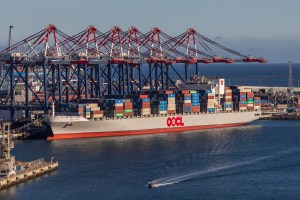
If the ACP is intent on building its own ports, Vásquez wants to upgrade the technology within them, the Bloomberg report said. The Panama Canal plans to use newer crane technology than what is currently used at the existing ports, that is designed to move cargo more efficiently and compete with Colombia’s Port of Cartagena, Vásquez said.
The ACP’s plan will be part of $8.5 billion in capital expenditures proposed over the next seven years. Part of that includes the gas pipeline aimed at reinforcing Panama’s status as a key transit corridor for U.S. liquified petroleum gas exports to Asia.
Another chunk of the spending will go to the $1.6 billion Indio River reservoir project, which is slated to begin construction in 2027. That project is designed to address the water supply problem that bogged down the canal throughout the second half of 2023 into early 2024, when a months-long drought forced the ACP to restrict the size and daily number of ships allowed through the waterway. Additionally, the reservoir expansion plan is expected to open the canal to 15 more transits per day.
Although the Panama Canal experienced a down period of sorts throughout the drought, 2025 has been fruitful for the trade artery. Vásquez told Bloomberg that revenue for the full year, which ends in September, is expected to be roughly $5 billion this year.
In a third quarter market update early in July, Vásquez said the Panama Canal was operating at full water capacity, supporting data from Alphaliner that previously indicated container ships traversing the waterway hit record highs through May.
“We have remained at 50 feet of draft throughout the dry season, and we will continue to have a relatively wet winter, or rainy season for the remainder of the year in preparation of the next dry season in early 2026,” he said. During the peak of the previous drought, maximum draft for larger Neo-Panamax vessels was 44 feet.
On average, 33.1 vessels arrived at the Panama Canal per day in July, up from 31.9 and 31.6 ships respectively in the two months prior, but down from 2025’s peak of 35.1 ships in February. In July 2024, the daily average was 29.9 vessels as the canal had just returned to normal conditions.