While Nike had a slow first quarter to begin its fiscal year, seeing 2 percent revenue growth to $12.9 billion and a 1 percent net income decline to $1.5 billion, the athleticwear and footwear giant says it is driving more profitability throughout the supply chain.
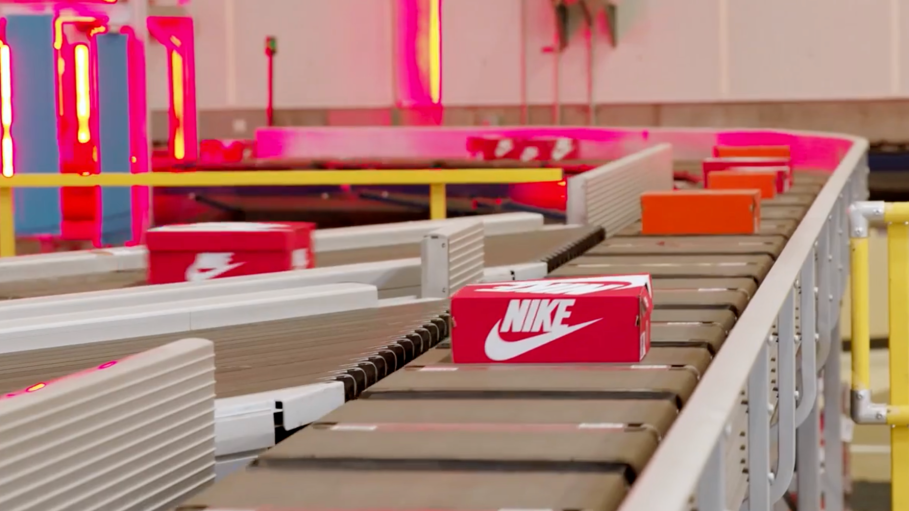
Prior to Amazon’s regionalization efforts this year, Nike had invested heavily in regional service centers, which have enabled the Swoosh to reduce digital split shipments and improve digital outbound fulfillment costs, according to Matt Friend, chief financial officer of Nike, in an earnings call.
Related Stories
In cutting “digital split shipments,” Nike is cutting back on instances where consumers get multiple boxes for the same order, Friend said.
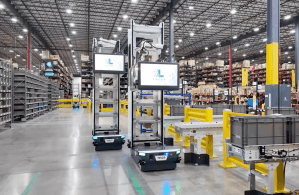
Nike’s three regional service centers in the U.S. are located in Dallas, Ontario, Calif. and Bethlehem, Pa., and were built as part of an early pandemic-era decision to expand beyond its national distribution center in Memphis, Tenn.
“One of the opportunities we continue to see, and we saw some benefit of it this quarter, is lowering our supply chain costs,” Friend said. “We’ve increased the size of our supply chain in the last few years to be able to address the growth that we’ve seen in our business, both overall and in digital. And now our teams are very focused on driving greater efficiency in the way that we serve consumer demand across channels.”
A European regional service center is located in Madrid, Spain to take the heat off its Belgium logistics campus, which already serviced audiences across Europe, the Middle East and Africa.
Nike is also establishing more pick-up points that are closer to European consumers, “all with the intention of building a supply chain that enables us to serve demand closer to consumers,” said Friend.
The reduction in fulfillment costs comes as Nike also is undergoing a significant cut in inventory, which peaked at $9.7 billion in last year’s first quarter—a then-44 percent increase over the past year.
To close the most recent quarter, inventories for Nike were $8.7 billion, down 10 percent compared to the prior year, primarily driven by a decrease in units. The decline exists across both the brand itself and its wholesale partners, of which now again include DSW after a year break in the partnership.
“Partner-owned inventory units are in line with the previous year, with levels planned to remain lean through our second quarter, a meaningful accomplishment after higher levels of wholesale sell-in during fiscal ’23,” Friend said. “On the whole, we are very comfortable with the level of inventory in the marketplace in relation to the retail sales that we’re seeing as we begin increasing levels of wholesale sell-in in our second half.”
Friend said Nike also recently implemented a new transportation management system, crediting it as a reason for improving profitability throughout the supply chain.
While the supply chain may generate better income flow, overall gross margins are still lower than the year prior. Gross margin decreased 10 basis points (0.1 percentage point) to 44.2 percent, primarily driven by higher product costs and unfavorable changes in net foreign currency exchange rates.
The margin headwinds were largely offset by “strategic pricing actions,” which saw Nike brand average selling prices up across footwear and apparel across geographies.
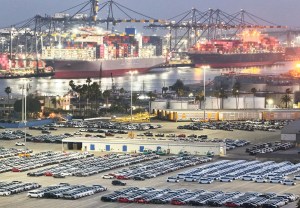
As stated in June when Nike released its fourth-quarter earnings, the brand expects benefits from a new ocean freight contract that is at “near pre-pandemic levels” to give the company a bit of a margin boost.
The “world’s most valuable brand” expects second quarter gross margins to expand approximately 100 basis points (1 percentage point) versus the prior year, reflecting benefits from the strategic pricing initiative, improved markdowns and lower ocean freight rates partially offset by higher product input costs.
“As we get into the second half of this year and we think about our gross margins, we’re going to start to see even more impact from ocean freight because those benefits are rolling in midway through this quarter,” Friend said.
Although Friend acknowledged that Nike is also lowering supply chain costs in Greater China, which was a weak point for the company a year ago, he did not specify where the costs have improved. The market has had a bounce back of sorts for the Deion Sanders collaborator, with revenues jumping 12 percent to $1.7 billion.
During the call, the CFO also gave progress on Nike’s ERP implementation, indicating that the technology went live on the North America retail business, and is expected to be rolled out in the market’s wholesale business by the end of the year.
“That is our largest investment in transformation of our supply chain and enabling us to operate like a retailer,” said Friend.