The U.S. Department of Transportation (DOT) is accusing the Mexican government of violating the countries’ bilateral aviation agreement when it rescinded some flights for American air carriers and required them to relocate air cargo operations in Mexico City.
Transportation Secretary Sean Duffy said Mexico has not been compliant with the 2015 U.S.-Mexico Air Transport Agreement since 2022, when the country began shifting cargo-only flights to newly opened Felipe Angeles International Airport (NLU) and started reducing slots at Benito Juarez International Airport (MEX).
Related Stories
At the time, the transition was put in place to ease chronic congestion at MEX. According to DOT, Mexico claimed the shift was necessary to allow for construction to alleviate the congestion, but “that has yet to materialize three years later,” the department said.
“By restricting slots and mandating that all-cargo operations move out of MEX, Mexico has broken its promise, disrupted the market and left American businesses holding the bag for millions in increased costs,” a press release said.
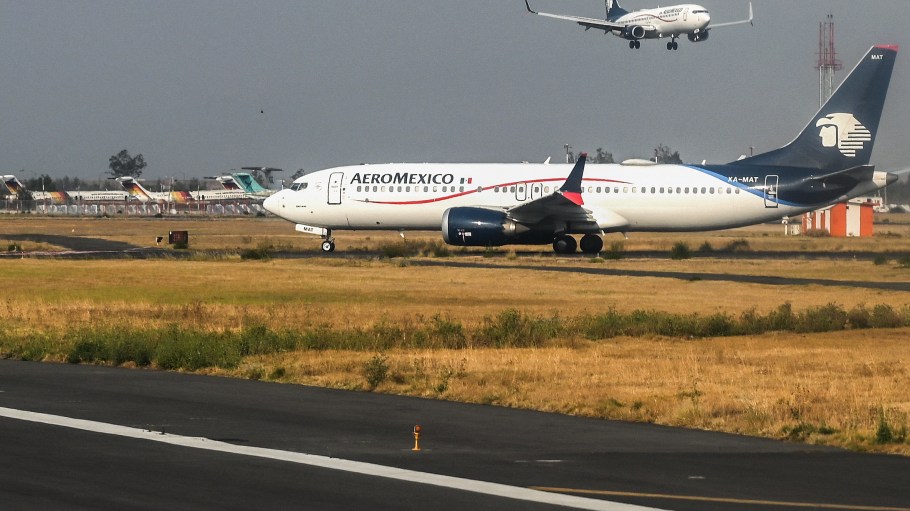
In September 2022, MEX reduced the number of authorized landing and takeoff slots per hour from 61 to 52, and later to 43 flights per hour—a 20 percent reduction effective October 2023. This affected the “big three” U.S. airlines: American Airlines, Delta Air Lines and United Airlines. Three Mexican carriers (Aeromexico, Viva Aerobus and Volaris) also were impacted.
The Transportation Department says it has repeatedly reached out to Mexico regarding the status of the slots, but the Mexican government has not provided any information regarding when they would be reopened, or if any major construction projects at MEX have come to fruition.
Mexico’s requirement for air carrier relocation also caught grief from the International Air Transport Association (IATA), which said in January 2023 that it was not feasible to expect airlines to move cargo operations on short notice. The move provided U.S. cargo carriers with 108 business days to make the shift to NLU.
Should Mexico opt not to address U.S. concerns or take corrective action, DOT said it could disapprove new flight requests from the country.
Thus far, the DOT has taken steps to counter the moves, requiring Mexican airlines to file schedules with the department for all their U.S. operations by July 29. Another order requires prior DOT approval before operating any large passenger or cargo aircraft charter flights to or from the U.S.
Additionally, the department is proposing to withdraw antitrust immunity from Delta’s joint venture with Aeromexico, in what would be a blow to their partnership that started in 2016.
If the DOT went through with the withdrawal, Delta and Aeromexico would be required to discontinue cooperation on items such as common pricing, capacity management and revenue sharing.
Delta and Aeromexico would be able to continue their partnership via activities such as codesharing, marketing and frequent flyer cooperation. Delta will also be able to retain its equity stake in Aeromexico and maintain all its existing flying in the U.S-Mexico market unimpeded.
“Mexico’s actions harm airlines seeking to enter the market, existing competitor airlines, consumers of air travel and products relying on time-sensitive air cargo shipments traded between the two countries, and other stakeholders in the American economy,” DOT’s show cause order said.
On Monday, Mexican President Claudia Sheinbaum said that the government has not yet received formal notification from the U.S. over potential measures against Mexico’s airline sector, adding that she sees no justification for such sanctions.
“There is no reason for Mexico to receive any sanctions for changes made to the capital’s airport system,” Sheinbaum said at her daily news conference.
Sheinbaum ruled out any reallocation of flights in Mexico City.
The actions by the DOT follow President Donald Trump’s insistence earlier this month that Mexico will face 30 percent tariffs starting Aug. 1—up from the 25 percent imposed near the start of his term.
Those tariffs apply to products that aren’t covered by the U.S.-Mexico-Canada Agreement (USMCA), a deal that Commerce Secretary Howard Lutnick said Trump would “absolutely” look to renegotiate when it is up for review in July 2026.
Mexico may not be the only country locked in trade negotiations with the U.S. that is impacted by the DOT’s decisions.
The department said it is “taking note” of multiple other countries, including European states, to ensure do they not implement operational aviation restrictions.
The Cargo Airline Association (CAA) endorsed the DOT aviation sanctions on Mexico, saying the move to require U.S. all-cargo carriers to move out of MEX disrupted critical air cargo operations.
Additionally, the CAA said Mexico’s decision set a dangerous precedent for how all-cargo carriers may be treated in global markets and created uncertainty about how potential safety emergencies could be handled.
“Today’s announcement sends a clear and necessary message: the United States will not tolerate unfair, anti-competitive behavior that is counter to the tenants of the U.S. Open Skies framework and harms American businesses,” said Lauren Beyer, president of the CAA, in a statement. “We applaud the Department’s use of its authority and regulatory tools to restore fairness and accountability in the U.S.-Mexico aviation market.”