Three days after a second pause on Red Sea-bound traffic, A.P. Moller-Maersk now says it will avoid the war-torn waterway “for the foreseeable future.”
Maersk and container shipping rivals including Mediterranean Shipping Company (MSC), CMA CGM, Hapag-Lloyd, Cosco Shipping, Evergreen and ZIM have diverted ships from the Red Sea and its chokepoint, the Bab el-Mandeb Strait, around southern Africa’s Cape of Good Hope amid repeated drone attacks from Yemen-based Houthi militants since November.
Related Stories
Of the major ocean freight lines, only CMA CGM and Cosco are sticking it out in the conflict-ridden region.
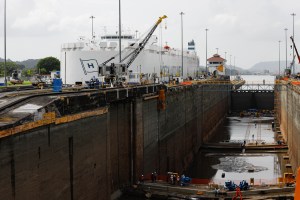
The diversion of ships from the Red Sea has limited container shipping traffic through Egypt’s Suez Canal, a gateway for 12 percent of global trade. According to estimates from Project44, ships rerouting around the Cape of Good Hope typically take anywhere between seven and 20 days more to reach their destination.
Impacts have already been felt at European retailers like Ikea and Next, both of which expect delays due to the longer transit times. And on a macroeconomic level, freight rates have risen significantly in the wake of the Houthi attacks, with Drewry’s World Container Index jumping 93 percent since Nov. 30 to $2,670 per 20-foot equivalent container unit (TEU).
By suspending voyages through the Red Sea and the neighboring Gulf of Aden, Maersk wants to bring customers “more consistency and predictability” in the wake of the delays, according to a company statement.
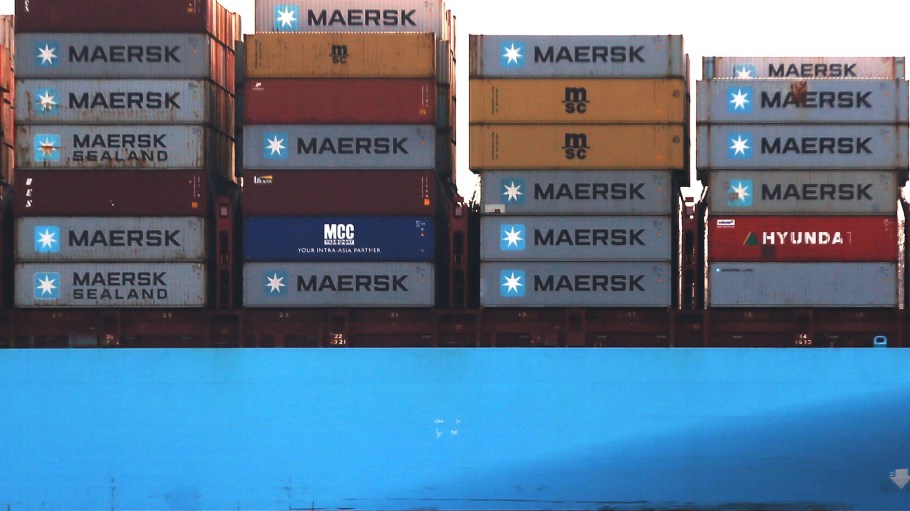
Maersk made its decision less than a week after one of its container ships, the Maersk Hangzhou, was attacked by the Houthis. While the ship’s security team and the U.S. Navy successfully thwarted the attack and prevented injuries, uncertain conditions appeared to spook Maersk away from the region.
On Thursday, Maersk rerouted four out of five southbound ships that already passed through the Suez Canal, sending them north into the canal to circumvent Africa altogether. All five ships were poised to travel south past Yemen when the pause was announced, with one remaining near Saudi Arabia’s Port of Jeddah.
“The situation is constantly evolving and remains highly volatile, and all available intelligence at hand confirms that the security risk continues to be at a significantly elevated level,” Maersk said in a statement. “We understand the potential impact this will have on your logistics operations, but please rest assured that all decisions have been carefully considered and ultimately prioritize the safety of our vessels, seafarers and your cargo.”
The move also suggests Maersk might doubt the abilities of Operation Prosperity Guardian (OPG), the U.S.-led multinational maritime security operation initiated in to protect ships in the area from the ongoing missile attacks.
Maersk made the call two days after the U.S., the U.K. and 10 international allies gave a final warning to the Yemeni militant group to stop the attacks, saying in a statement that it would face “consequences should they continue to threaten lives, the global economy and free flow of commerce in the region’s critical waterways.”
The World Shipping Council, the International Chamber of Shipping and the Baltic and International Maritime Council (BIMCO) lauded the international warning shot and condemnation in a joint statement.
“These attacks are unacceptable, illegal and directly threaten the freedom of navigation that is fundamental to global trade,” the statement read. “On behalf of our members and their seafarers and customers throughout the world, the organizations thank these 12 nations for their strong commitment to defending rules-based international order and to holding malign actors accountable for unlawful seizures and attacks.”
The Houthis ignored the warning, detonating an unmanned, explosives-laden drone boat Thursday in the Red Sea. The explosion detonated “within a couple of miles” of merchant ships and U.S. Navy vessels, according to Vice Admiral Brad Cooper, commander of the U.S. Naval Forces Central Command. No one was hurt, and the target of the attack is not clear.
According to the Pentagon, the drone boat incident is the 25th such attack attempted by the Iran-backed Houthi militants. The rebels say the continued attacks on commercial vessels in the region are in protest against Israel’s military operations against Palestinian Islamist group Hamas in Gaza.
While Maersk isn’t sailing the Suez, Hapag-Lloyd instituted a short-term workaround for shippers by introducing a shuttle service transporting Red Sea cargo via Jeddah.
The container shipping company set up the land-based service to connect cargo in the Red Sea market with Europe, North America and Latin America while avoiding the waterway itself. The route will originate in Jeddah and will stop at Damietta, Egypt and Tangier, Morocco. Hapag-Lloyd plans to maintain a 10-day frequency for this service.
A feeder service has also been arranged so that cargo headed to Aqaba, Jordan and Port Sudan, Sudan will be routed via Jeddah.
“We understand that this doesn’t cover all Red Sea cargo, so we will continue to provide updates as we come up with more solutions,” the shipping line noted.