Maersk is gearing up contingency plans in the event of a nationwide rail strike across Canada on May 22, while the country’s government is seeking to push back the date of the possible work stoppage.
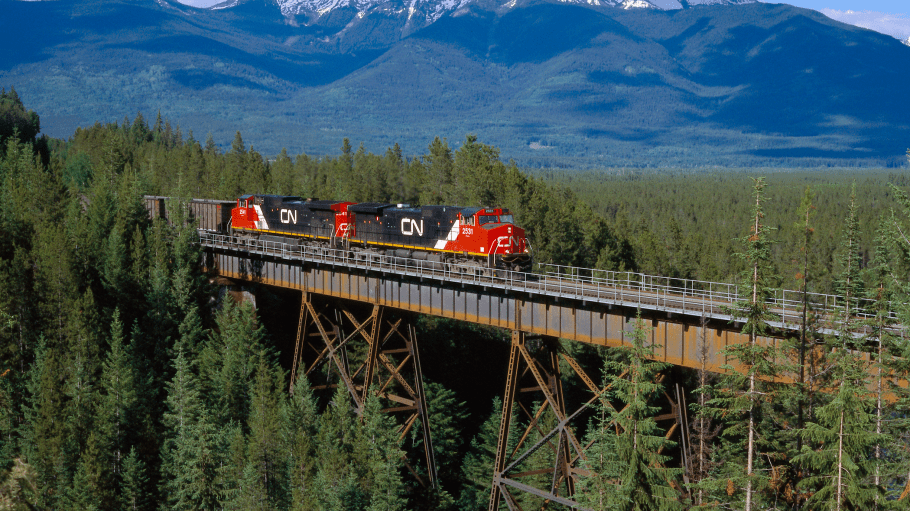
More than 9,300 workers at the country’s two major railroads, Canadian National Railway (CN) and Canadian Pacific Kansas City (CPKC), voted to authorize a strike, which could slow down supply chains in North America at the end of the month if a new deal isn’t struck.
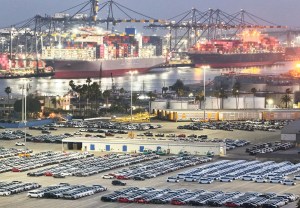
Maersk said it is currently working closely with CN, CPKC and terminal operator DP World to accelerate and optimize operations at the Canadian West Coast ports to reduce potential congestion.
Related Stories
This would include diverting cargo from Centerm, a major terminal at the Port of Vancouver, to the Port of Prince Rupert, which is roughly 630-miles north. Although both are dependent on railroad shipping, Prince Rupert may have additional storage capacity for idle goods.
Should a strike take place, the Port of Tacoma will take on four upcoming sailings on Maersk’s trans-Pacific TP1 service that typically only services the British Columbia ports. The Tacoma port would be used to handle U.S. import and export rail cargo during the work stoppage, rather than having it dispatched in Vancouver and transported cross-border to the U.S.
Calls at Tacoma will begin with the vessel Maria Y, due to arrive at Prince Rupert on May 30, and Vancouver on June 3, and continue with weekly calls for the next month.
The ocean carrier says it is reviewing feasible rail routings and transit times to U.S. destinations via Tacoma, and also reviewing limited truck options for west-to-east and east-to-west intra-Canadian transport to help move goods across the country.
Across North America, the impact on consumer goods, including textile goods like apparel and footwear, will be far less pronounced than other industries, says Jason Miller, interim chairperson, department of supply chain management at Michigan State University’s Eli Broad College of Business.
According to carload data from all seven Class I railroads submitted to the U.S. Department of Agriculture shared by Miller, CN and CPKC combined to move just 8 percent of total intermodal container volume across North America in 2023.
“We see a very disproportionate effect on metallic ores and coke (the coal-based fuel), which raises concerns about disruptions in steel production (for traditional blast furnace operations),” said Miller. “We also see pulp and paper products, petroleum, building materials, fertilizers, grain, and chemicals are all heavily represented.”
According to the data shared by Miller, CN and CPKC combine to host 74 percent of metallic ores across all Class I railroads, 37 percent of petroleum coke and 26 percent of pulp and paper products—illustrating the potential industrial concerns.
Canada itself is still likely to see an effect on consumer goods. Containers hold the leading share of type of freight moved by both railroads, comprising 27 percent of total goods moved by both railroads at 1,240,530 carloads. Metallic ore comes in second at 12 percent.
The impacts on Canadian commerce are concerning industry groups like the Freight Management Association of Canada, prompting Canada’s Labour Minister Seamus O’Regan to request the Canada Industrial Relations Board to look at whether the strike might have national safety implications.
The board is set to examine agreements between workers and management about what critical work must continue in the event of a strike or lockout. Until the board has issued a decision, the strike cannot start.
A report from Reuters indicated that O’Regan acted after associations expressed concern about a strike’s impact on healthcare infrastructure, with one such example being a possible propane shortage, which is used as a backup generator fuel for rural hospitals.
In the event of a work stoppage, Maersk advised customers can anticipate significant backlogs with knock-on effects and an extended recovery period should the disruption last for more than a few days.
The contract between the rail lines and the union workers expired on Dec. 21, 2023.
The workers are represented by Teamsters Canada, the country’s largest transportation union. The parties began a mandatory 21-day “cooling off” period on May 1 but have scheduled additional meetings for May 13 with the assistance of the Federal Mediation and Conciliation Services (FMCS) to negotiate a contract.
The Teamsters must give a 72-hour strike notice prior to any work stoppage action.