The Iran-Israel conflict could raise costs for the readymade garment (RMG) industry in Bangladesh, according to the new head of the South Asian country’s biggest apparel association.
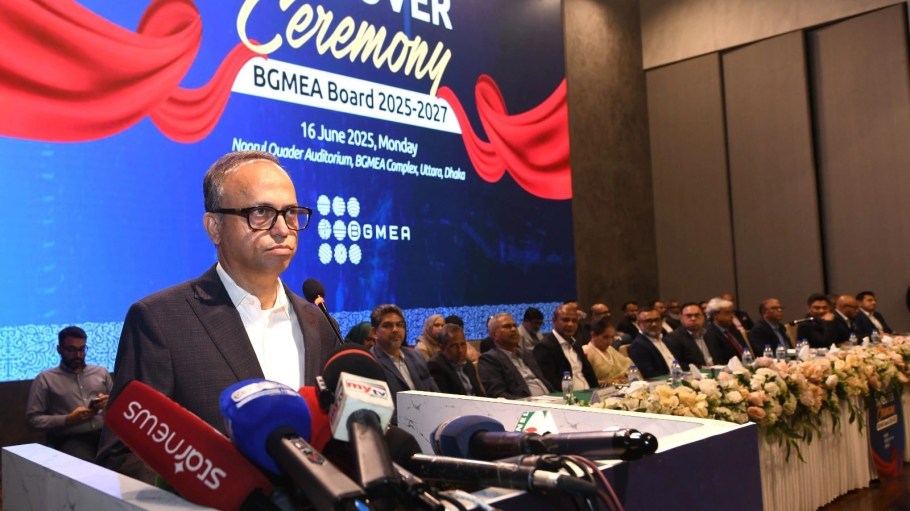
Mahmud Hasan Khan Babu, the recently elected president of the Bangladesh Garment Manufacturers and Exporters Association (BGMEA), pointed to oil prices as a catalyst for potential headwinds in his inaugural remarks at the trade group’s complex in Dhaka on Monday.
“Oil price volatility resulting from the conflict will directly affect the energy and logistics expenses of our industry,” Babu said. “If oil prices go up, there will be a spillover effect and the RMG sector will not be immune from the danger.”
Related Stories
As both Israel and Iran continue to trade strikes, the new BGMEA president also shared concerns with Bangladeshi publication The Business Standard over potential disruption of global shipping routes, making parallels to the industry’s experiences since the Red Sea crisis began in late 2023.
“We already faced major disruptions from the Houthi attacks, which cost us time and additional charges due to longer shipping routes to avoid danger,” Babu told the publication on June 13. “Our effort to ease port congestion would worsen further if shipping lines were hampered.”
Apparel carries Bangladesh’s export economy, with the country exporting $36.6 billion in RMGs throughout the first 11 months of the 2024-2025 fiscal year through May, according to the Export Promotion Bureau.
That represents 81.3 percent of the $44.9 billion in Bangladesh’s total exports. Worries of slower, more expensive shipping could damage the apparel industry’s competition with other foreign markets, the association notes, which could ultimately hinder the country’s wider economy.
During his inaugural speech in Dhaka, Babu called out other concerns facing the RMG industry, including the reciprocal tariffs placed on the country by the U.S., India’s suspension of transshipment facilities for Bangladeshi exports, and other economic topics including high inflation, rising wages and elevated interest rates.
At the event, which celebrated the handoff of BGMEA leadership to a new 35-member board of directors, Babu pledged to advocate for the establishment of a dedicated government ministry for the RMG sector. Garments typically fall under the purview of the country’s commerce ministry, but Babu has argued that the industry has gotten too big to not have its own representation in government.
While Bangladesh’s apparel industry is apprehensive of the current geopolitical environment, it is also dealing with a slowdown of cargo in and out of the country’s largest seaport.
Chattogram Port, also known as Chittagong Port, is seeing significant congestion in the wake of the Eid al-Adha holiday, which lasted from June 5-9. In the seven days prior to June 13, the average waiting time for a vessel at the port was 5.6 days, according to Kuehne+Nagel’s weekly port operational update.
Normal waiting times at the port are typically estimated at one to two days. A report from supply chain publication The Loadstar said roughly 100 vessels are awaiting to dock at the port.
The congestion comes as the port continues to handle containers in droves, both from the ships at berth and from 19 private inland container depots established outside of the hub.
In a 24-hour span starting the morning of June 8, only 437 20-foot equivalent units (TEUs) of import containers were delivered and transferred, according to Bangladeshi publication The Daily Star. On an average day, the port will see about 4,500 TEUs moved.
On June 9 and June 10, workers at the port transported 1,381 TEUs and 1,787 TEUs, respectively.
The congestion caps off a year where the port still moved more cargo than ever.
According to the Chattogram Port Authority, the port handled a record 3,171,779 20-foot equivalent units (TEUs) in the 2024-25 fiscal year as of June 15. The number is a 4.6 percent increase from the previous fiscal year, when not accounting for the final 15 days of June.
The record number came even as Bangladesh experienced nationwide student protests that resulted in a government overhaul, on top of additional factors that led to major delays at Chattogram like flooding and a software glitch within its customs clearance systems.
The authority recently proposed a 70 percent to 100 percent tariff hike for cargo handling at the port to Bangladesh’s shipping ministry. According to the group, the added rates would cover the rising costs of nearly 50 services, including port dues, berthing fees, forklift charges, and utility costs.
Port officials argue that Chattogram’s fees remain far below regional peers, as unloading one TEU costs $100 in Colombo, $75 in Singapore, and just $43.40 at Chattogram, according to The Business Standard.
Some parties have sought to give some pushback on the tariff, with former BGMEA director Belayet Hossain telling the publication that a more phased increase was necessary.
“A 10 percent to 20 percent rise is manageable,” Hossain said. “Anything more will hurt at both ends—raw material imports and finished goods exports.”
Nurul Qayyum Khan, president of the Bangladesh Inland Container Depot Association, agreed that a 15 percent hike would be more reasonable, noting that businesses already have to deal with currency depreciation, freight costs and rising port storage rents.