India and Pakistan have traded blows to each other’s supply chains as tensions between the south Asian countries rise in the wake of a deadly terrorist attack in the historically disputed Kashmir region.
On Saturday, India’s government announced a ban on imported goods originating from or transiting through Pakistan and a prohibition on Pakistani-flagged ships entering Indian ports.
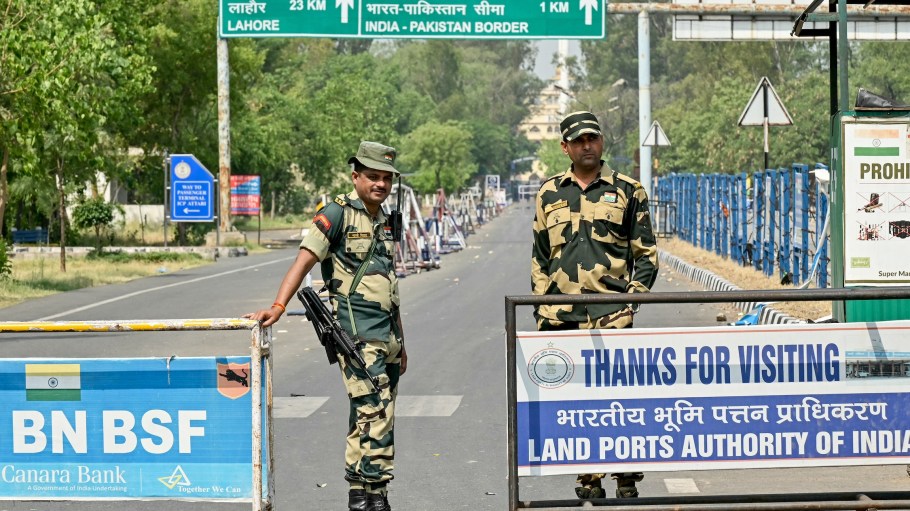
The move comes days after India first closed the Attari land port situated on its border with Pakistan. This prompted Pakistan to suspend all trade with India. including routes through third countries. Both countries have since closed airspace to the opposite nations’ airlines.
Related Stories
April 22’s militant attack in Pahalgam, a resort town in India-administered Kashmir, resulted in the death of 26 people. India has accused the Pakistani government of supporting the militants. Pakistan has denied the accusations.
“Direct or indirect import or transit of all goods originating in or exported from Pakistan, whether or not freely importable or otherwise permitted, shall be prohibited with immediate effect, until further orders,” said a May 2 notification by India’s directorate general of foreign trade, an arm of the commerce ministry. “This restriction is imposed in the interest of national security and public policy.”
The ban also suspends all mail and parcel exchanges into India.
The order to turn away Pakistani ships from Indian ports was issued “to ensure safety of Indian assets, cargo and connected infrastructure, in public interest and for interest of Indian shipping,” according to the country’s directorate general of shipping.
Any exemption from the order would have to be examined and decided on a case-to-case basis.
In retaliation, Pakistan’s ministry of maritime affairs prohibited Indian-flagged ships from docking at any of its ports and barred Pakistani ships from accessing Indian ports.
Ryan Petersen, CEO and founder of Flexport, said in a post on X Monday morning that ocean shipping is seeing some disruptions due to the rising tensions.
“The Pakistan to India feeder route has gained popularity due to limited direct shipping options from Pakistan, longer transit times to Colombo and persistent congestion,” said Petersen. “Carriers are now adjusting their services, with some vessels being redirected back to Pakistan to unload cargo, while others are rerouting to Colombo.”
Despite the ban, Petersen said there are no confirmed restrictions on Pakistan cargo yet, “with a port call in India remaining on board for its final destination.
The trade relationship between the apparel producers and exporters has deteriorated in recent years. Even before the cutoff, any benefits have been one-sided in favor of India.
“The move is largely symbolic,” said Ajay Srivastava, co-founder of the Global Trade Research Initiative, in a research note. “India doesn’t depend on Pakistani goods, so the economic impact is minimal. On the other hand, Pakistan still needs Indian products and may continue accessing them through third countries using recoded or unrecorded routes.”
The sharp decline in bilateral trade between India and Pakistan came after a previous attack—a suicide bombing in 2019 that killed 40 Indian police officers. In response to the attack, India levied a 200 percent tariff on all Pakistani goods and withdrew the country’s “most favored nation” status.
In 2019, India’s exports to Pakistan had once peaked at $2.1 billion, while imports stood at $495 million. In between April 2024 and February 2025, the export total decreased substantially to just $491 million. Imports have cratered to roughly $420,000, and are niche items like figs, Himalayan pink salt and select herbs such as basil and rosemary, according to Srivastava.
India’s supply chain squabbles extend beyond its neighbor to the west, with the country engaging in another tit-for tat with Bangladesh over the past month.
Bangladesh first restricted land imports of cotton yarn from India after a request from local textile mills that the raw materials should only be allowed via seaports.
India then revoked Bangladesh’s access to its transshipment hubs, which the latter’s exporters had previously used to ship goods out of the country via Indian customs stations, ports and airports.
Indian exporters had urged the government to end the service for Bangladeshi businesses, citing backlogs seen at airports and ports due to the cargo from both countries.
Relations between both countries have soured in the wake of the ousting of former Bangladesh Prime Minister Sheikh Hasina, who is currently in exile in India.