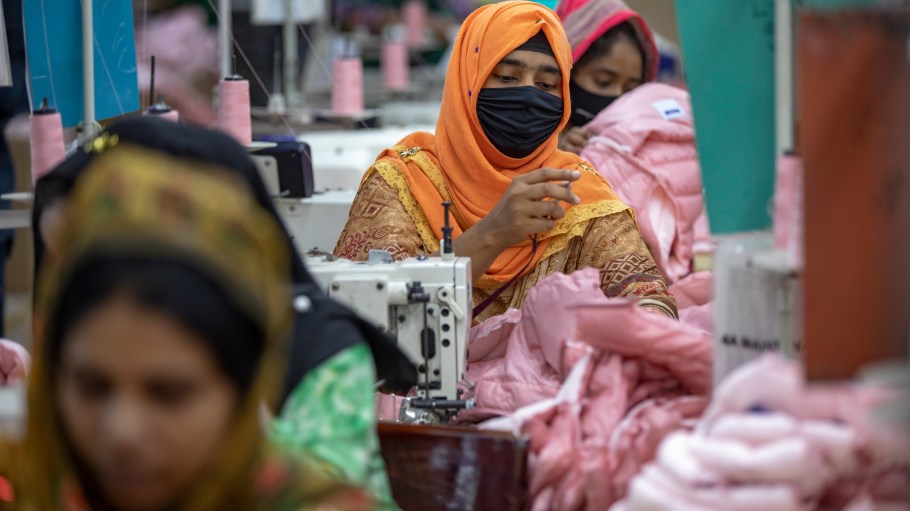
India has imposed restrictions on Bangladesh’s readymade garments (RMGs) from entering the country via its land ports, forcing the latter’s exporters to rely on longer, more expensive shipping routes.
Bangladeshi cotton and cotton yarns, as well as items such as processed foods, plastic goods and wooden furniture, will no longer be allowed through six land ports in northeast India, under certain restrictions imposed by Directorate General of Foreign Trade Saturday.
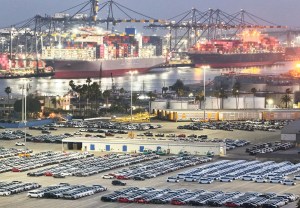
Garments will be allowed to enter India only through the Nhava Sheva and Kolkata seaports, according to the notification.
Related Stories
According to the Bangladesh Garment Manufacturers and Exporters Association (BGMEA), in the first 10 months of the current fiscal year, RMG exports to India have already reached $563 million. A whopping 93 percent of cargo shipped goes through land ports.
“Land ports provide easy access for various goods. Shipping through seaports will take significantly more time,” BGMEA administrator Anwar Hossain told Bangladesh publication The Business Standard. “We are currently consulting with exporters to understand the full impact. Once that’s assessed, we’ll approach the relevant authorities to seek solutions and explore alternative channels.”
Exporters rerouting goods through Kolkata would require the cargo to travel roughly 1,200 kilometers via road or rail to reach other northeastern cities closer to the Bangladesh-India border. While sending goods through land routes to India typically can take one-to-three days, the sea routes would take two weeks.
According to a report from another Bangladesh publication, The Daily Star, hundreds of trucks carrying India-bound goods were stuck at land ports or forced to leave without dropping off goods in the wake of the directive. At Benapole, the largest land port in Bangladesh, at least 36 trucks carrying ready-made garments were stranded on Sunday.
Bangladeshi Garment exporter Energypac Fashions Ltd reported three containers of formal suits and pants worth over $300,000 were stuck at Benapole.
India’s government likely made the decision to help open more opportunities for the country’s expanding domestic textile sector, and curb the indirect entry of Chinese fabrics routed through Bangladesh.
According to India’s National Textile Committee, the policy could generate between 1,000 and 2,000 crore Indian rupees, or between $117 million and $234 million.
Indian textile stocks surged early Monday on the news, with Siyaram Silk Mills jumping more than 8 percent and Kitex Garments and Raymond Limited increasing 5 percent.
Under India’s commerce ministry, the directorate implemented the trade policy shift in another escalation of tensions between the two countries since Bangladeshi Prime Minister Sheikh Hasina was ousted last summer. Hasina is currently residing in India under self-imposed exile, with the Bangladesh government seeking her extradition. India has yet to comply with the request.
The restrictions will not apply to Bangladeshi exports to Nepal and Bhutan transiting to India. Additionally, imports of fish, liquefied petroleum gas, edible oil and crushed stone from Bangladesh can still pass freely through Indian land ports.
The move to impose entry to RMGs and the other exports will hit 42 percent of India’s total inbound trade from Bangladesh, affecting $770 million in product, according to a report from New Delhi-based Global Trade Research Initiative (GTRI) released Sunday. Readymade garments are valued at $618 million, the report calculated.
India and Bangladesh have both imposed supply chain restrictions on each other in recent weeks amid the growing tensions.
In April, India revoked Bangladesh’s access to transshipment services, which allowed the latter to export goods via India’s land borders and customs stations. Bangladeshi exporters used the service to ship goods out of India’s airports and seaports, with Indian exporters urging the government to end the service to the congestion that had built up.
Bangladesh had implemented some barriers of its own, halting foreign yarns from being imported into its own land ports in a move that pleased textile mills but frustrated apparel exporters in the country. Bangladesh orders roughly 45 percent of India’s total cotton yarn exports.
The country also restricted rice imports from India through the same land routes last month, and placed bans on paper, tobacco, fish and powdered milk imports.
GTRI founder Ajay Srivastava said in the report that the cumulative actions, along with operational delays and tightened port inspections, have hampered Indian exporters and triggered calls for a “calibrated response.”
“Top global brands like H&M, Zara, Primark, Uniqlo and Walmart source apparel from Bangladesh, some of which enters India’s domestic market,” said Srivastava. “Indian manufacturers have long expressed concern over the uneven playing field: they pay a 5 percent GST on locally sourced fabric, while Bangladeshi firms import fabric duty-free from China and receive export incentives for sales to India—giving them an estimated 10–15 percent price advantage.”
India implemented a 20 percent import tariff on nine varieties of knitted fabric in February to control flooding of cheap textiles apparel into country—namely from China.