Yemen’s Houthis are again saber-rattling in the Red Sea, having declared a “fourth phase” of escalation in the region on July 27, threatening to attack any ship from companies docking at Israel ports or tied to Israeli interests.
The Houthi threat had been dormant throughout the first half of the year before attacking multiple ships in the waterway to kick off July. The Yemini group killed four seafarers in an attack on one of those vessels, the bulk carrier MV Eternity C, before taking 11 others as hostages.
Related Stories
The merchant ship had tried to fight off the repeated grenade, missile and drone attacks over a 16-hour stretch, but no naval ship from the U.S. or a partner had defended the vessel. Another commercial ship helped rescue four mariners from the Red Sea.
According to the Houthis, its “military blockade” would target ships regardless of nationality of their operating company, and that they will “be targeted anywhere that can be reached or within the reach of our missiles and drones.”
Yemeni Armed Forces spokesperson Yahya Sare’e had said the recent attacks and escalation were in response to “rapid developments” of events in Gaza in solidarity with Palestinian citizens amid the ongoing Israel-Hamas war. The Houthi military campaign in the Red Sea and neighboring Gulf of Aden began in November 2023 weeks after the Haas-orchestrated Oct. 7 terrorist attacks and Israel’s offensive against the group.
The Houthis and the U.S. have an apparent ceasefire in effect in the wake of the American air campaign against the Iran-backed group, as long as the Houthis do not attack U.S. ships. But that truce has not covered non-U.S.-flagged ships.
Ocean carriers have largely avoided the Red Sea and the surrounding bodies of water since the attacks began in late 2023, even after the Houthis had stopped their onslaught in the first half of 2025. Instead, major carriers have often opted to travel around southern Africa’s Cape of Good Hope, which adds 10-14 days of ocean travel time in most instances.
Many of these carriers have cited safety concerns, while the costs of war-risk insurance premiums escalated throughout the crisis. The aftermath of last month’s Houthi attacks resulted in a new spike, with the premiums rising to around 0.7 percent of the value of a ship as of July 10. This escalated from around 0.3 percent before the attacks took place, with some underwriters pausing cover for some voyages, according to a report from Reuters.
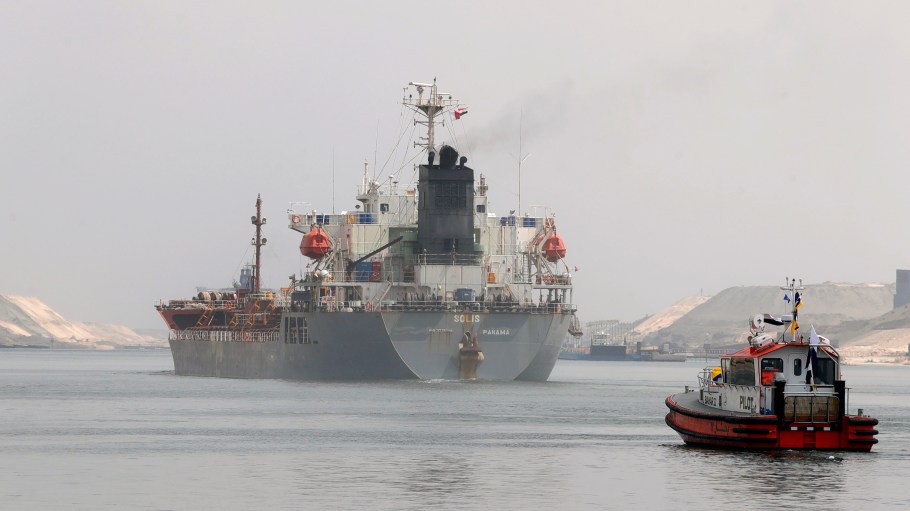
Transits are still down in the Suez Canal as cargo ships and tankers remain hesitant to return. As of Sunday, the canal saw a seven-day moving average of 32 ships per day, down from 39 the year prior when the attacks were more prevalent, according to data from IMF PortWatch.
But the Red Sea is seeing a recent “quiet revival” of sorts among regional carriers, according to a market update from maritime intelligence firm eeSea.
The number of unique service versions on the trade has doubled since the 2024 third quarter, from eight services to 16, according to chief analyst Destine Ozuygur.
In mid-July, the Suez Canal Authority (SCA) said 10 container ships had thus far taken advantage of the waterway operator’s 15 percent rebate program to transit the canal. That program applied to all container ships exceeding 130,000 tons as an incentive to get traffic to return to the trade artery. The plan was implemented in May and was originally set to last three months, but the rebate was recently extended to remain in force through Dec. 31.
According to the SCA, the incentives have attracted six transits of CMA CGM ships, alongside the passage of four vessels from Mediterranean Shipping Company (MSC).
On July 19, the 11,800 20-foot equivalent unit (TEU) CMA CGM Zephyr was the latest to travel through the canal using the rebate program.
CMA CGM has been more open about making returns to the Suez Canal than its peers, as its ships are escorted through the waterway by the French Navy. In June, the 15,536-TEU CMA CGM Osiris was the first large vessel to pass through the canal and the Bab el-Mandeb Strait in 15 months.
The French container shipping giant rerouted its Med Express (MEDEX) service to the Suez Canal in June and is set to launch a new regional service, the Levant Red Sea Express focused on linking Eastern Mediterranean ports with the Red Sea.