Two container shipping giants are prepping for a second strike at the East and Gulf Coast ports by tacking on extra surcharges for imports entering the hubs.
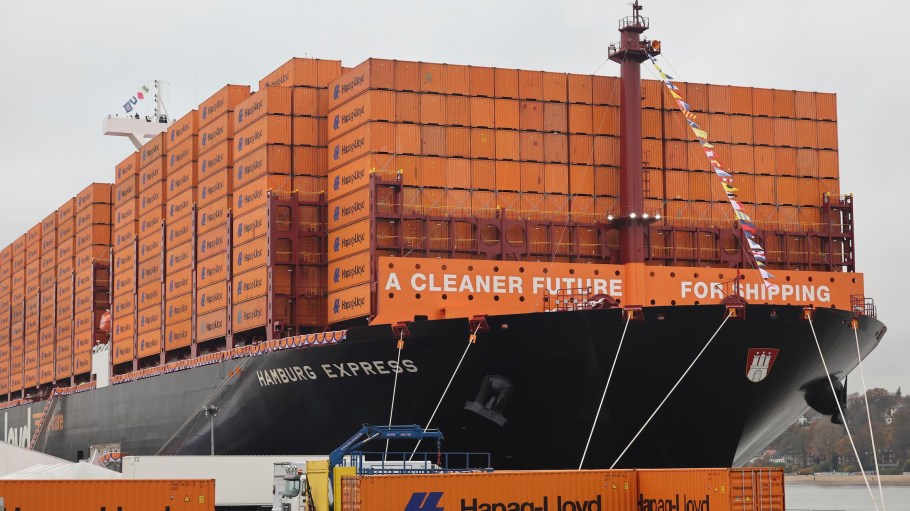
Hapag-Lloyd’s Work Disruption Surcharge (WDS) and Work Interruption Destination Surcharge (WID) are effective Jan. 20, 2025, if a strike occurs. That would be five days after the current contract expires on Jan. 15, and also be the same day Present-elect Donald Trump is sworn into office.
“This surcharge covers additional costs from labor disruptions, strikes, slowdowns, unrest, congestion and other unforeseen events that may delay operations and incur extra handling, storage and feeder service costs,” said Hapag-Lloyd in a note to customers. “We are committed to minimizing these impacts.”
Related Stories
The surcharge will only be applied if disruptions occur and will be waived if no disruptions take place, the German shipping company said. It will not apply to containers already on the water or gated in before Jan. 20 and will only affect cargo gated in on or after this date.
Both the WDS and WID will result in an extra $850 per imported 20-foot equivalent unit (TEU), or $1,700 per 40-foot container, across all equipment types.
The WDS applies to imports from all ports in northern Europe, the Mediterranean, Africa, the Middle East, the Indian subcontinent, Oceania and Latin America. Meanwhile, the WID pertains to imports from all ports in East Asia/Japan, the Republic of Korea, Taiwan, Hong Kong, China, Macau, Vietnam, Laos, Cambodia, Thailand, Myanmar, Malaysia, Singapore, Brunei, Indonesia and the Philippines.
Hapag-Lloyd’s Tuesday announcement came less than a week after Israeli ocean carrier ZIM said it would implement its own surcharge ahead of the strike on Jan. 10.
Unlike Hapag-Lloyd’s added fees, ZIM’s dues apply to cargo both entering and exiting the East and Gulf Coast ports. Surcharges are $1,000 per TEU and $2,000 per 40-foot container.
If no strike or disruption occurs, the surcharge will not apply, ZIM says.
This is the second series of surcharges for ZIM, which applied the same fees when the initial strike occurred on Oct. 1. Mediterranean Shipping Company (MSC) also applied similar fees of $1,000 per TEU and $1,500 per 40-foot container to kick off the strike. MSC hasn’t announced a second round of levies yet.
Both Hapag-Lloyd and CMA CGM had prepped their own surcharges for October, but they wouldn’t have kicked in until later in the month.
Throughout December, major container shipping lines like Hapag-Lloyd, Maersk and CMA CGM have issued customer advisories about the ongoing contract negotiations between their association, the United States Maritime Alliance (USMX), and the dockworkers at the International Longshoremen’s Association (ILA).
“Despite ongoing efforts to reach a resolution, the risk of disruption is increasing as the deadline approaches, though the situation remains dynamic,” said the Hapag-Lloyd note.
Both the CMA CGM and Maersk advisories said that gate and rail services at the East and Gulf Coast ports would be suspended if a work stoppage occurred, and that terminals and nearby depots will not be open to accept empty returns. The carriers requested customers to hold their empty containers until the terminals and depots reopen.
As the container lines prepare for disruption ahead of January, the ILA and USMX are still at a standstill over automation. The parties agreed to terms on a 61.5 percent wage increase over six years after striking for three days to start October.
Negotiations between the parties picked up again in November before breaking down after just two days at the table.
The dockworkers have President-elect Trump in their corner—an indicator that the union has a major advantage against their employer in the negotiations.
While the USMX-member carriers have contemplated how to handle the impending potential strike activity, they are also adding surcharges for other major global uncertainties.
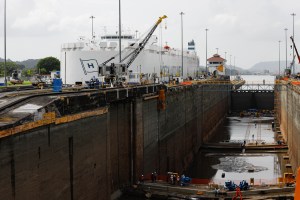
MSC and CMA CGM are levying Panama Canal transit fees in 2025 as the waterway rebounds back to normalcy.
Effective Jan. 1, MSC will introduce a $40-per-TEU surcharge for goods traveling from Southeast Asia, China, South Korea and Japan to the U.S. East and Gulf Coasts. That date, CMA CGM will also launch the same $40 fee from ports in Asia to the U.S. East and Gulf Coasts and the Caribbean, while cargo out of South America’s West Coast will cost an extra $150 per TEU to go that direction starting Jan. 5.
Both surcharges are in response to the canal’s introduction of a reservation system that allows customers to secure transit slots up to a year in advance. The slot booking system was designed to improve on the auction process that was frequently used when the canal had reduced available daily transits amid a months-long drought that extended from the 2023 summer into early 2024.
On top of the reservation system, the Panama Canal has changed its tariff structure, and introduced new tariffs including a late fee and last-minute reservation duties.