A second strike at the East and Gulf Coast ports looks to have been averted.
The International Longshoremen’s Association (ILA) and United States Maritime Alliance (USMX) have reached a tentative agreement for a new six-year master contract, enabling importers, exporters and logistics operators to finally exhale after months of contentious labor negotiations.
The deal was made on the third day of negotiations since talks resumed on Sunday. According to a joint statement, the tentative deal was reached “on all items,” indicating that both sides came to an agreement on the future of automation projects at ports from Maine to Texas.
Related Stories
Automation had been the central sticking point in a new deal that had kept the ILA and USMX apart. The union broke off talks in November due to concerns over the impact of technologies like rail-mounted gantry cranes (RMGs) already in use at the Port of Virginia and the Port of New York and New Jersey.
“We are pleased to announce that ILA and USMX have reached a tentative agreement on a new six-year ILA-USMX Master Contract, subject to ratification, thus averting any work stoppage on Jan. 15, 2025,” the two sides said in a joint statement. “This agreement protects current ILA jobs and establishes a framework for implementing technologies that will create more jobs while modernizing East and Gulf coast ports—making them safer and more efficient, and creating the capacity they need to keep our supply chains strong.”
Details of the new tentative agreement will not be released to allow ILA rank-and-file-members and USMX members to review and approve the final document.
According to a report from CNBC, full automation was off the table, but the USMX can implement the technology its terminal operator members feel would modernize the ports. On the other side, the ILA has the guarantee that more workers would be hired that would complement any specific equipment being added, the report said.
“This is a win-win agreement that creates ILA jobs, supports American consumers and businesses, and keeps the American economy the key hub of the global marketplace,” the statement read.
The two sides agreed to continue to operate under the current contract until the union can meet with its full wage scale committee and schedule a ratification vote, and USMX members can ratify the terms of the final contract. No date was given for either of these meetings.
Both the ILA and USMX had been tied up in the negotiations since nearly two years ago, when talks between the alliance and local dockworker unions commenced in February 2023. Those talks went on and off through the duration of the contract until its Sept. 30, 2024 expiration date.
On Oct. 1, the ILA’s 45,000 dockworkers went on strike, with the work stoppage lasting three days before both parties came to an agreement on a 61.5 percent wage bump over the six-year duration of the contract.
That wage increase gave the ILA and USMX some breathing room that enabled both parties to suspend the strike and extend their current contract until after the U.S. presidential election and holiday shopping season and push it into the new year.
Shippers that had been front-loading goods into the U.S. ahead of a possible strike still have to contend with other looming supply chain uncertainties, namely the Jan. 20 inauguration of President-elect Donald Trump.
Trump, who voiced his support for the ILA in December and likely put more pressure on the USMX to cater to the union’s automation demands, is expected to levy a series of added tariffs on goods headed to the U.S. from China, alongside Canada and Mexico.
ILA president Harold Daggett credited Trump in helping the union secure the new contract.
“President Trump clearly demonstrated his unwavering support for our ILA union and longshore workers with his statement ‘heard round the world’ backing our position to protect American longshore jobs against the ravages of automated terminals,” said Daggett in a post on Facebook. “President Trump’s bold stance helped prevent a second coast-wide strike at ports from Maine to Texas that would have occurred on Jan. 15, 2024, if a tentative agreement was not reached.”
The combo of the strike and tariff threat resulted in more vessel arrivals than usual. Everstream Analytics’ data of container ships arriving at the East and Gulf Coast ports show a surge of ship arrivals in the weeks after the last port strike and right before Christmas, with more than 400 ships calling on the East and Gulf Coast ports.

“This is about 10 percent higher than the yearly average,” said Mirko Woitzik, global director of intelligence for Everstream Analytics. “This situation is similar to the weeks leading up to the October port strike, which also saw a significant increase of about 10 percent to 15 percent in vessel arrivals.”
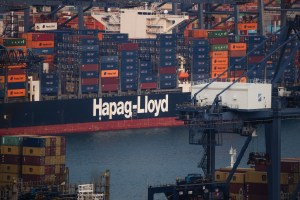
With a tentative deal in place, it is likely that container shipping giants like Mediterranean Shipping Company, Hapag-Lloyd, ZIM and more will scrap the extra surcharges they had added in the event a second strike occurred.