While master contract negotiations between the International Longshoremen’s Association (ILA) and the United States Maritime Alliance (USMX) were expected to resume Tuesday after a two-month hiatus, one report indicates the talks already began over the weekend.
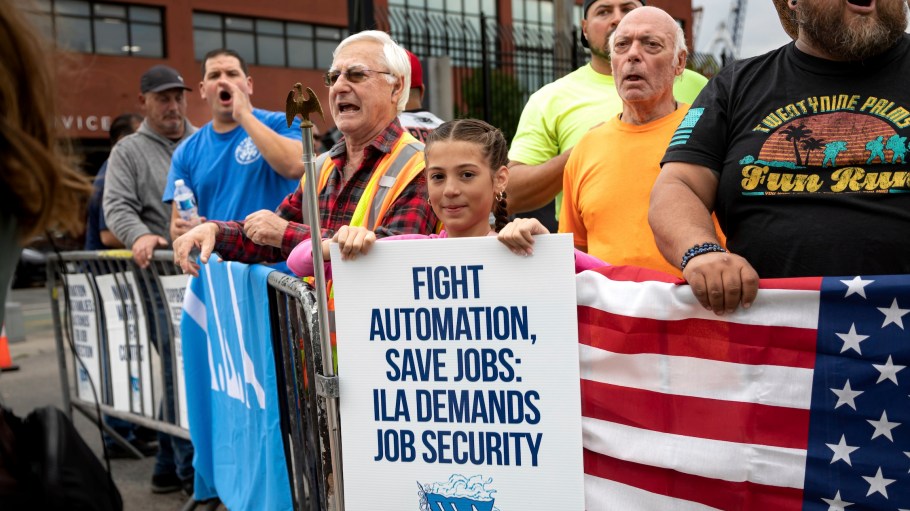
Key members of the ILA and USMX reportedly held a meeting on Sunday in an effort to find common ground on automation at the East and Gulf Coast ports, according to CNBC. Automation has been the main point of contention between the dockworkers union and its maritime employers that resulted in an impasse at the negotiation table.
Related Stories
The ILA and USMX have not confirmed the Sunday meeting, and still have not confirmed the prior reports of negotiations resuming Tuesday. A Wall Street Journal report says Tuesday marks the first of three days of scheduled talks.
Sourcing Journal reached out to both parties, with the ILA declining comment.
Both the ILA and USMX are in crunch time, with a little over a week before their temporary contract extension expires.
If a new contract isn’t agreed to by 11:59 p.m. on Jan. 15, then the ILA will go on strike for a second time across ports from Maine to Texas. The 45,000 dockworkers already walked off the job for three days to start October—halting container flow in and out of the ports—before agreeing to terms on a tentative 61.5 percent wage increase over six years.
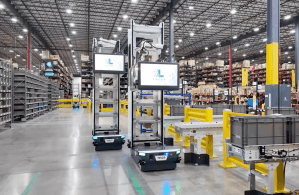
The reported meeting included individuals from terminals where contested technologies like rail-mounted gantry (RMG) cranes are already being used, both in the Port of New York and New Jersey, and the Port of Virginia.
ILA president Harold Daggett and his son, executive vice president Dennis Daggett, attended the meeting, alongside Virgil Moldonado, president of the Bayonne, N.J.-based ILA 1588 local chapter.
The USMX’s representatives including CEO Paul Demaria, as well as Joe Ruddy, chief operations officer of the Port of Virginia. Executives from member terminal operators showed up as well, including Kevin Price, president of Gateway Terminals; John Atkins, president of GCT USA; and Anthony Ray, executive vice president of operations at Maher Terminals.
The CNBC report says language on automation was drawn up to assist the full bargaining committee review process set to restart Tuesday.
According to a document reviewed by the news network, the agreement states that the ILA reserves the right to add union workers in the future to complement any new technologies and “there is a commitment by the parties to research and utilize all technology that would assist an operator in being more efficient and productive.”
Although the reported language suggests that the USMX is willing to cater to some of the union’s concerns over jobs, the report says “critical” details still need to be ironed out.
Whether the port and terminal operators agree to modify terms on automation or risk another strike is still up in the air. One anonymous USMX member said in the CNBC report that the requirement to match any port technology implementations with new jobs should take the 61.5 percent tentative wage increase for the dockworkers “off the table.”
As the deadline to Jan. 15 counts down, more logistics companies are warning U.S. importers to clear cargo before the date to avoid demurrage, detention or additional fees linked to port congestion and delays. Importers have already been front-loading goods into the country in recent weeks amid the strike concerns and possible tariffs levied by the incoming Trump administration—mimicking the behavior exhibited ahead of the Oct. 1 work stoppage.
In anticipation of a strike, container shipping firms like Hapag-Lloyd, ZIM, CMA CGM and Yang Ming have added some extra surcharges for importers looking to ship goods into the East and Gulf Coast ports.
In a client advisory, Seko Logistics projected that the initial impact phase of disruption within the first seven days of a strike would result in terminal congestion reaching 85 percent to 90 percent of capacity, with vessel queuing beginning at anchorage points.
During this stretch, cargo scheduled for inbound intermodal freight would face three-to-five-day delays, while local delivery windows would be extended by 48 to 72 hours. Empty container returns would be restricted, Seko says, echoing prior encouragements from Maersk to return all empties before the negotiation deadline.
For each day of closure, major ports accumulate backlogs of approximately 25,000 to 30,000 20-foot equivalent units (TEUs), said the advisory.
Given what had occurred during the first three-day strike in October, ports like New York and New Jersey and Savannah will face a slower return to normalcy due to their operational complexity and cargo volumes.
“Seko experts predict that these larger ports will typically require an additional one to two weeks for full recovery compared to smaller ports,” said the logistics provider in the advisory. “This extended timeline stems from their intricate networks of terminals, carriers and inland connections. Ports with significant rail dependencies are particularly vulnerable to prolonged recovery periods, as the ripple effects of port closures cascade through the inland transportation network.”