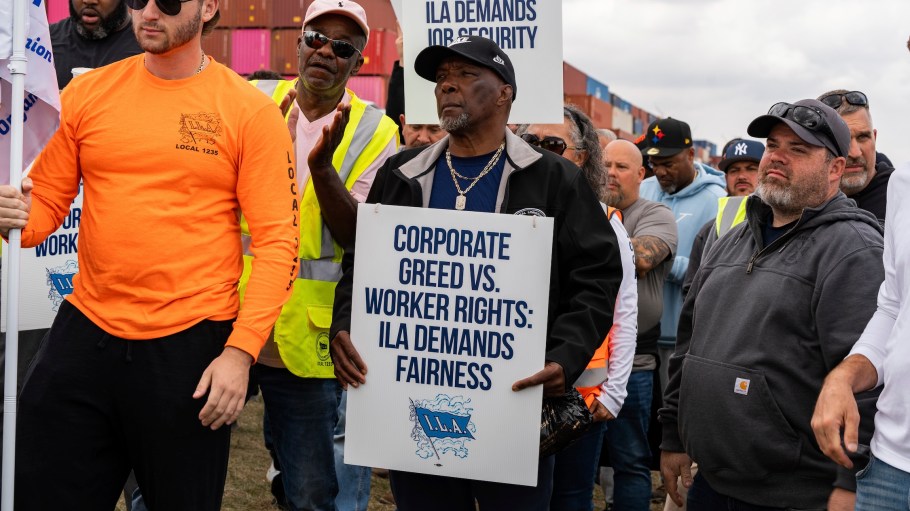
Union dockworkers at the East and Gulf Coast ports officially ratified a new six-year deal with their maritime employers Tuesday evening, closing the book on more than two years of negotiations and putting any chance of a strike to bed once and for all.
Nearly 99 percent of rank-and-file members of the International Longshoremen’s Association (ILA) voted in favor of the new master contract agreement with the United States Maritime Alliance (USMX). The deal impacts 25,000 of the union’s 45,000 workers across 14 ports from Houston to Boston.
Related Stories
The extension to the master contract is retroactive to Oct. 1, 2024, and runs through Sept. 30, 2030.
The labor battle between the ILA and the USMX was often contentious in the public arena, and resulted in a three-day strike to kick off October. That work stoppage ended after both parties signed a tentative agreement on wages, extending the original contract to Jan. 15 and putting off any labor action until after.
After a three-month back-and-forth on automation, the ILA and USMX came to a tentative six-year deal a week ahead of the contract negotiation deadline, averting a second strike at the ports.
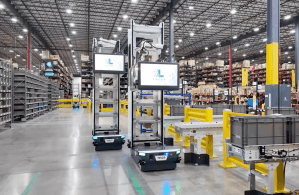
Automation had been the central sticking point of the negotiations, with the union breaking off talks in November over the impact of technologies like rail-mounted gantry cranes (RMGs) at the Port of Virginia and the Port of New York and New Jersey.
In the weeks before the ratification, the union’s locals reviewed both the master contract and local port area contracts before giving their stamp of approval.
ILA president Harold Daggett described the new agreement as the “gold standard” for dockworker unions globally, highlighting that there are “full protections against automation.”
The union did not provide specific details on the protections, or how hiring practices and technology and automation deployments will complement each other.
No new technology will be implemented until the parties mutually agree to related manning levels as part of a more stringent technology review process, ILA executive vice president Dennis Daggett previously said.
According to a CNBC report after January’s tentative deal, ILA members are assured that more workers would be hired that would complement any specific equipment being added.
“This is an incredible contract package,” President Daggett said in a statement, indicating that the estimated cost to the employers surpasses $35 billion. That figure is “a conservative estimate,” the ILA boss claims.
The ILA-USMX deal includes a 62 percent wage increase, with hourly base rates jumping to $63 from $39.
The agreement also includes accelerated wage raises for new ILA workers; full container royalty funds returned to the union; raises in retirement contributions; and stronger health care, vacation and holiday benefits.
The parties will formally sign the six-year deal on March 11.
Daggett also heaped praise on President Donald Trump for his “invaluable” assistance in the negotiation process. A month after winning the presidential election, Trump voiced his support for the union and cited the harm he felt automation caused American workers. This likely boxed the USMX in a corner
Trump’s stance was similar to his predecessor, President Joe Biden, in that both positioned the negotiations as a clash between U.S. employees versus foreign-owned corporations. None of the USMX container shipping firms are American, and many member terminals are owned by foreign entities.
This dynamic was also inflamed by the fact that the ocean carriers made record profits during the Covid-19 pandemic and again in 2024.
Despite the fiery rhetoric throughout the negotiations, largely coming out of the ILA’s camp, President Daggett also praised his USMX counterpart Paul DeMaria in helping to bring about a settlement.
“Thank goodness USMX made Paul DeMaria the lead negotiator for management’s side when they did,” Daggett said. “Paul was uniquely qualified to move negotiations in the right direction and his appointment to this new role was instrumental in avoiding a second strike.”
The USMX has not commented on the deal.
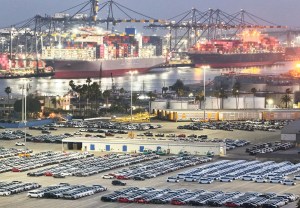
The ongoing negotiations were a major factor in an increase in imports flooding into the U.S. during the summer and winter, as shippers front-loaded their cargo ahead of possible strikes and the expected imposition of tariffs by the Trump administration.
Both the Los Angeles and Long Beach ports had record container handling months in December and January, in clear signs of coastal shifting over the two months to hedge against a second ILA strike.