The fast-approaching holiday respite hasn’t slowed President-elect Donald Trump’s seemingly unrelenting campaign to gin up controversy with international trade partners.
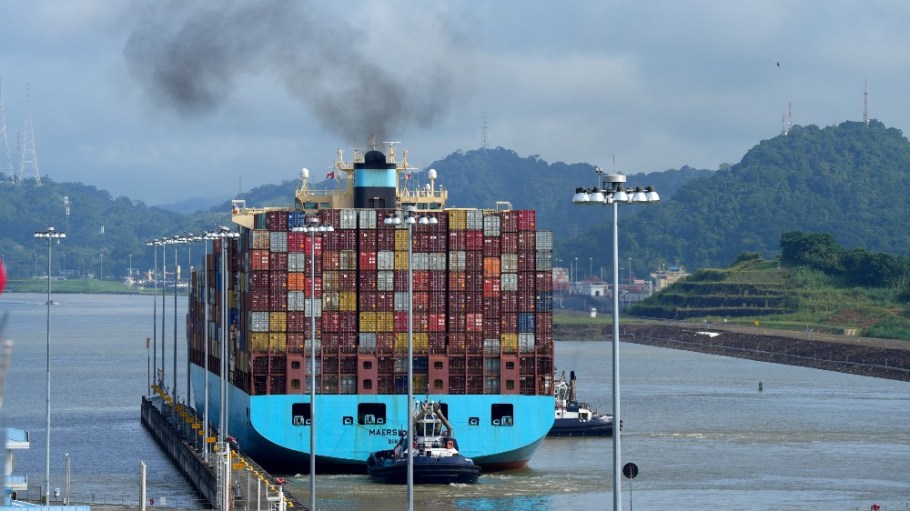
At a Sunday event, the incoming Commander in Chief suggested that the U.S. should “take back” control of the Panama Canal—the foremost conduit for maritime cargo between the Atlantic and Pacific oceans.
“We’re being ripped off at the Panama Canal like we’re being ripped off everywhere else,” he said at Turning Point USA’s AmericaFest in Phoenix, Ariz. In a lengthy post on Truth Social that followed, Trump detailed the importance of the waterway and “its critical role to America’s Economy and National Security.”
Related Stories
“A secure Panama Canal is crucial for U.S. Commerce, and rapid deployment of the Navy, from the Atlantic to the Pacific, and drastically cuts shipping times to U.S. ports,” he wrote.
Trump intimated that China’s growing influence over the Panama Canal presents a danger to American interests. According to the U.S. Department of Commerce, the Canal accounts for 46 percent of the total market share of containers moving from Northeast Asia to the East Coast of the U.S.
While China doesn’t control the Canal, Hong Kong-based CK Hutchison Holdings has operated pivotal ports at the Caribbean and Pacific entrances to the Canal for 27 years. The U.S. Southern Command, a branch of the Department of Defense, has warned officials about China’s growing influence within Latin America’s industries and logistics infrastructure.
The president-elect’s ire also likely stems from new reservation fees and tariffs set to come into play in the new year.
Last week, the Panama Canal announced that it would implement changes to its reservation system designed to “provide a better experience and convenience for customers while ensuring the efficient use of Canal resources,” upping fees by amounts ranging from $1,000 to $3,000 depending on the type of service and cargo. This will pay for Long-Term Slot Allocation (LoTSA), allowing carriers to secure transit slots up to a year in advance.
The Canal said it will also implement harsher penalties for no-shows; vessels that don’t arrive within seven days of their bookings will be slapped with penalties of up to 250 percent.
“Our Navy and Commerce have been treated in a very unfair and injudicious way. The fees being charged by Panama are ridiculous,” he added. “We would and will NEVER let it fall into the wrong hands!” the president-elect wrote.
Panamanian President José Raul Mulino quickly released a statement pushing back on Trump’s tenuous claims to the Canal.
“Rates are not a whim,” he wrote. “They are and will be established, publicly and in an open audience, considering market conditions, international competition, operating costs and the maintenance and modernization needs of the interoceanic waterway.”
The Canal’s recent history
The Panama Canal has seen major transit fluctuations over the past two years due to dry conditions and low water levels. A months-long drought persisted throughout 2023, slowing cargo traffic to a relative trickle during an especially inopportune time for global logistics. Traffic moving through the Suez Canal in the Red Sea was also drastically disrupted as ships were besieged by Houthi rebels, forcing ships to reroute around Africa’s Cape of Good Hope.
The confluence of chaos at both gateways through a wrench into the international flow of goods. Panama has scrambled to address the issue, though conditions still have not normalized. The Panama Canal Authority (PCA) is working through plans to build a new $1.6 billion reservoir to lubricate the Canal during dry periods. In November, it also proposed the building of a land bridge that it said would allow the Canal to move at least 5 million more containers per year by 2045. It’s seeking between $1.2 billion and $1.4 billion to fund the project.
Built by American workers over a century ago during President Teddy Roosevelt’s administration, the U.S. signed over control of the Canal to Panama in 1999 under the provisions of a 1977 treaty signed by President Jimmy Carter.
Since that time, the “Gateway to the Pacific” has come to see up to 14,000 ships sail through annually, accounting for some 40 percent of U.S. cargo traffic and about 2.5 percent of global maritime trade. It serves over 144 maritime routes connecting 160 countries reaching 1,700 ports across the globe, the International Trade Administration (ITA) estimates.
The Panama Canal has become an essential transitory tool due to its ability to save ships time and miles by circumventing a trip around South America. It’s estimated that ships traveling from San Francisco to New York shave about 7,875 miles off their journeys by cutting through the waterway.
“When President Jimmy Carter foolishly gave it away, for One Dollar, during his term in Office, it was solely for Panama to manage, not China, or anyone else. It was likewise not given for Panama to charge the United States, its Navy, and corporations, doing business within our Country, exorbitant prices and rates of passage,” Trump wrote Sunday.
Panamanian leader Mulino isn’t backing down in the face of Trump’s intimidation tactics.
“As President, I want to express precisely that every square meter of the Panama Canal and its adjacent area belong to PANAMA, and will continue to be,” he said. “The sovereignty and independence of our country are not negotiable. Every Panamanian, here or anywhere in the world, carries it in their heart, and it is part of our history of struggle and an irreversible conquest.”
Mulino pointed to the recognition of Panamanian sovereignty and the full transfer of the Canal to Panama in 1999, saying the agreement established the “permanent neutrality” of the Canal and guaranteed its open and safe operation for all nations.
“Any contrary position lacks validity or support on the face of the earth,” he wrote. “Panama respects other nations and demands respect. With the new United States government, I aspire to preserve and maintain a good and respectful relationship.”
While Mulino said the country is “open to dialogue,” he reiterated that his country comes first. “That, for this Panamanian President, is not negotiable.”
Mexican President Claudia Sheinbaum on Monday lent her voice to the growing mix of global leaders weighing in on issues of Western Hemisphere trade.
“Our solidarity, our support for the President of Panama, for the people of Panama,” she said.
Trump recently threatened Mexico with tariffs of up to 25 percent if it doesn’t address the flow of fentanyl and dangerous drug precursors into the U.S., along with mass migration. He extended the threat to Canada, kicking off a maelstrom of political turmoil in the country in recent weeks.