The International Longshoremen’s Association (ILA) now has its most important backer yet in its ongoing fight for a new contract for East and Gulf Coast dockworkers.
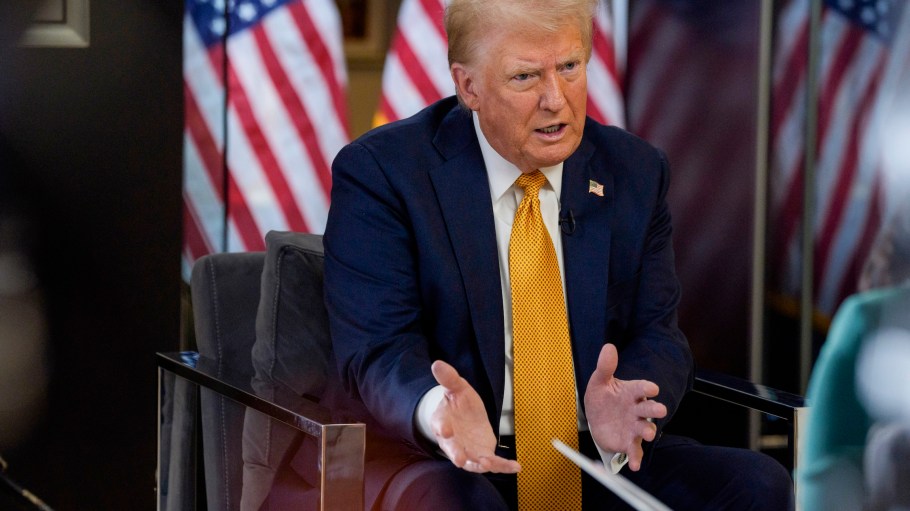
President-elect Donald Trump voiced his support for the union Thursday evening after meeting with the ILA, which has been at an impasse with its maritime employers, the U.S. Maritime Alliance (USMX), over the implementation of automation across ports from Maine to Texas.
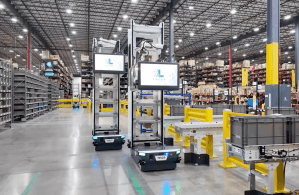
The union, whose contract covers 45,000 dockworkers on the East and Gulf Coasts, already went on strike for three days to start October and has been threatening to do so again if a deal is not done before the current contract’s extended Jan. 15 expiration date. In November, the ILA walked away from the negotiating table after just two days of talks due to the head-butting on automation, particularly around the expanded use of semi-automated rail-mounted gantry cranes.
Related Stories
In a post on his social media platform Truth Social, Trump said he met with ILA president Harold Daggett and executive vice president Dennis Daggett, and parroted both Daggetts’ prior talking points on the negative impacts automation could bring the union workforce.
Like President Joe Biden after the first strike took place, Trump framed the ILA-USMX battle as one of U.S. workers versus foreign-owned corporations like Maersk, Mediterranean Shipping Company (MSC), Hapag-Lloyd, CMA CGM and Cosco Shipping.
“There has been a lot of discussion having to do with ‘automation’ on United States docks…The amount of money saved is nowhere near the distress, hurt and harm it causes for American Workers, in this case, our Longshoremen,” Trump said. “Foreign companies have made a fortune in the U.S. by giving them access to our markets. They shouldn’t be looking for every last penny knowing how many families are hurt. They’ve got record profits, and I’d rather these foreign companies spend it on the great men and women on our docks, than machinery, which is expensive, and which will constantly have to be replaced.”
Trump will be sworn in just five days after the Jan. 15 negotiating deadline, which would further incentivize the ILA to lengthen the negotiation process into his administration.
Peter Sand, chief analyst at freight rate benchmarking service Xeneta, said Trump’s pledge of support fully disrupts the current negotiation process between both parties, speculating the USMX would now see this as “an obvious defeat one month from now.”
“The real question remains, how long will the port strike last, and how big a loss will this be for the USMX,” Sand told Sourcing Journal. “It may just be that if they’re going to lose this battle, they could potentially benefit from a longer-lasting strike than the one we saw in early October.”
“I don’t think they would waste another minute negotiating with the ILA, because it will be pointless,” Sand said. “The ILA have also been razor sharp in how they see their position—nothing that remotely looks like automation. What the USMX will probably do in the coming month or so, will be not talking to ILA, but trying to convey their side of the story to the general public.”
In the hours after Trump’s post, the USMX published its own statement, focusing on the shared goal of the alliance, the union and the president-elect on protecting and adding “good-paying” American jobs at the ports.
The USMX again beat the port modernization drum, saying the new deal would support American consumers and help U.S. businesses gain better access to the global marketplace.
“To achieve this, we need modern technology that is proven to improve worker safety, boost port efficiency, increase port capacity, and strengthen our supply chains,” the USMX said, also arguing “ILA members’ compensation increases with the more goods they move—the greater capacity our ports have and goods that are moved means more money in their pockets.”
Trump’s support suggests that the president-elect, like Biden, would not invoke the Taft-Hartley Act. Under that legislation, if it is determined that a port strike would endanger national public health and safety, the president can request a court order for an 80-day cooling-off period.
That would pause the ILA strike and extend the window for negotiations, but likely draw the ire from the union and put Trump on poor footing with labor organizations immediately into his presidency.
The apparel and footwear industries, which had largely planned their ocean freight logistics efficiently ahead of the October strike, are watching intently.
The American Apparel & Footwear Association (AAFA), which already called on both parties to resume talks, urged the ILA to get back to negotiations. The trade group also advised President-elect Trump to meet with the two parties so a deal could be secured before a second strike takes place.
“A disruption to the East and Gulf Coast ports from a labor strike could reduce U.S. economic activity by $4.5 billion to $7.5 billion per week. The three-day strike in October 2024 caused backlogs that lasted over a month. The East and Gulf Coast ports are used to import the majority of apparel, footwear, and travel goods,” said AAFA president and CEO Steve Lamar in a statement. “In short, a disruption would threaten millions of American jobs, including 3.5 million Americans directly employed by our industry, further raise prices for every hardworking American family already suffering under high inflation, and threaten the growth of the U.S. economy itself.”
According to Jason Miller, interim chairperson, department of supply chain management at Michigan State University’s Eli Broad College of Business, Trump’s latest statement “dramatically” increases the chance of a second round of port strikes in January.
“USMX doesn’t have a strong incentive to cave to the ILA,” Miller said in a post on LinkedIn. “Ocean spot rates jump during disruptions. In the case of a multi-week strike, hundreds of container ships will pile up outside the East and Gulf Coast ports, removing capacity (supply) from the market, and likely driving spot rates higher.”
Sand agreed with the notion of container price increases if a prolonged strike occurs, as some ships rerouted to the West Coast ahead of the October strike, while some during the stoppage opted to call at Canadian ports.
“That kind of carnage and out-of-sync networks only results in a higher price for the importers and those that ship goods around the world,” said Sand. “In the end, that will, of course, only result in higher prices for the consumers, as we’ve seen so many times.”