DHL Supply Chain is investing 500 million euros ($556 million) in Latin America by 2028 as it seeks to expand its regional fulfillment network, decarbonize its transportation fleet and develop greener warehouses.
Despite growth in nearshoring, particularly in Latin American countries like Mexico, DHL Supply Chain’s global CEO Oscar de Bok insists that “just nearshoring is not a solution,” instead urging the industry to prioritize “omni-sourcing.”
“Omni-sourcing makes sure that customers would source their components for more than one source point, or more than one country at the same time,” de Bok said during a press conference unveiling the investment, noting that more DHL customers are taking this approach to sourcing. “You cannot depend on one source. That’s why I say that it’s different from nearshoring, which is only getting close to your end market. Always make sure that you design your supply chain with more than one sourcing point for the key components of your products.”
Related Stories
According to de Bok, a portion of the $556 million would be invested into large multi-customer campuses and industrial logistics centers across countries like Mexico, Brazil, Colombia, Peru and Argentina as DHL seeks to get closer to consumers and provide more sector-specific logistics services to its shipper partners.
De Bok did not detail the level of expansion, or where DHL will build new facilities, but indicated that all warehouses in the region will be carbon neutral by 2025. DHL Supply Chain currently operates 242 warehouses in Latin America covering 3 million square feet. Globally, 50 percent of DHL distribution facilities are carbon neutral.
“To cope with the trends of global trade, e-commerce, digitalization and sustainability, the customer needs flexibility and agility,” de Bok said. “This means facilities like the one we’re in today, and transport management like what you have here today, provides the flexibility and the agility to respond faster to the ever changing and ever unpredictable things that are happening. Supply chains need to be resilient. They need to be able to respond to changes fast.”
The investment would also go toward improvements in technology and transportation, such as decarbonizing its fleet of vehicles and investing in greener alternatives as part of its wider corporate target of zero emissions by 2050. The decarbonization efforts are part of DHL Group’s 7-billion-euro ($7.8 billion) investment in sustainable fuel and clean technologies by 2030.
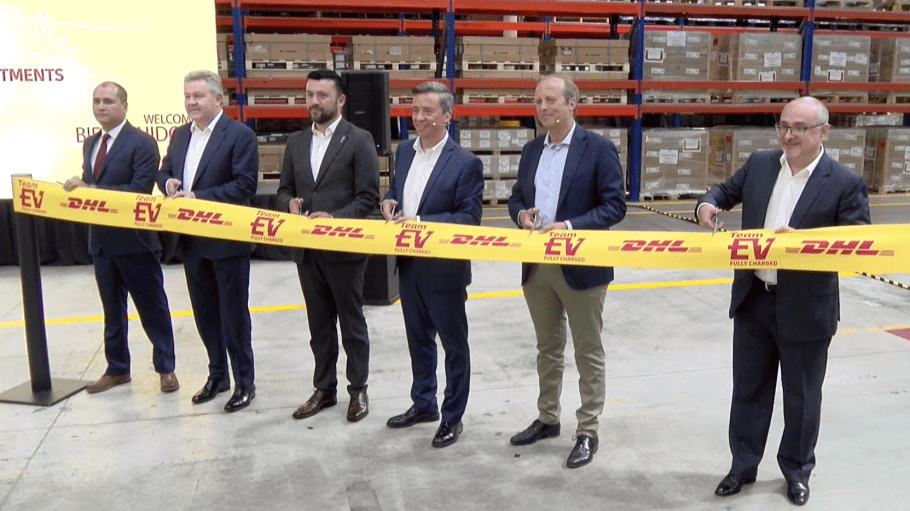
In Latin America, the company plans to expand its fleet of 155 owned electric vehicles (EVs) to 1,500, and will offer more digital freight platforms throughout the region that help shippers and carriers optimize supply chain management.
“This is a model that we’re replicating from Europe and from different geographies,” said Agustin Croche, regional CEO of DHL Supply Chain Latin America. Using the money to electrify 60 percent of its global last-mile fleet by 2030, the company plans to put more than 80,000 EVs on the road. It will also increase its use of sustainable aviation fuels to more than 30 percent by 2030.
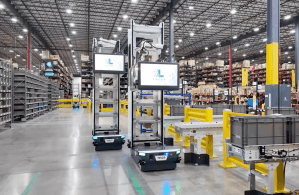
It’s also automating warehouses with Locus Robotics autonomous mobile robots.
“Digitalization is not only about data analytics or robotics. It’s also about how we train people, and how through simulations, we could train people faster in order to get to the service levels we need, and in order to have people grow with us in our business,” de Bok said.
Training and diversity programs will be funded with the investment as well, according to deBok, with a focus on training more female drivers and implementing more diversity, equity, inclusion and belonging (DEIB) programs.
Croche highlighted some of the recent acquisitions that the logistics firm has made in countries like Brazil, Colombia and Mexico, which have helped paved the road for the new investment.
In 2017, DHL acquired Brazilian cold chain logistics providers Polar Transportes and Rio Lopes Transportes, which helped the company’s temperature control transportation efforts in the country. A year later, the shipping giant acquired warehousing and packaging solutions provider Suppla to beef up Colombian operations.
Last year, DHL fortified its Mexico presence by acquiring another cold chain logistics provider, NTA. But while NTA initially focused on the life sciences industry, it has since expanded into retail and fashion under DHL, Croche said.
The announcement comes 10 months after the contract logistics unit began investing the same amount in India, where DHL is adding 12 million square feet of warehousing space.