DHL Group will invest more than 500 million euros ($574.5 million) in the Middle East through 2030, namely two of its fastest-growing markets: Saudi Arabia and the United Arab Emirates (UAE).
With the investment, all four of the logistics giant’s global divisions—DHL Express, DHL Global Forwarding, DHL Supply Chain and DHL eCommerce—will build on their infrastructure in the region as the two markets continue to accelerate their push into international trade and move their economies away from oil dependence.
Related Stories
Saudi Arabia’s non-oil exports reached an unprecedented 515 billion Saudi Riyal ($137 billion) in 2024, marking the highest value in the kingdom’s history. These exports expanded 13 percent last year, and more than doubled (113 percent) since the launch of Saudi Arabia’s Vision 2030 economic development program.
The UAE saw even larger trade expansion over the past year, with non-oil exports growing 28 percent year over year to 561.2 billion dirhams ($153.8 billion).
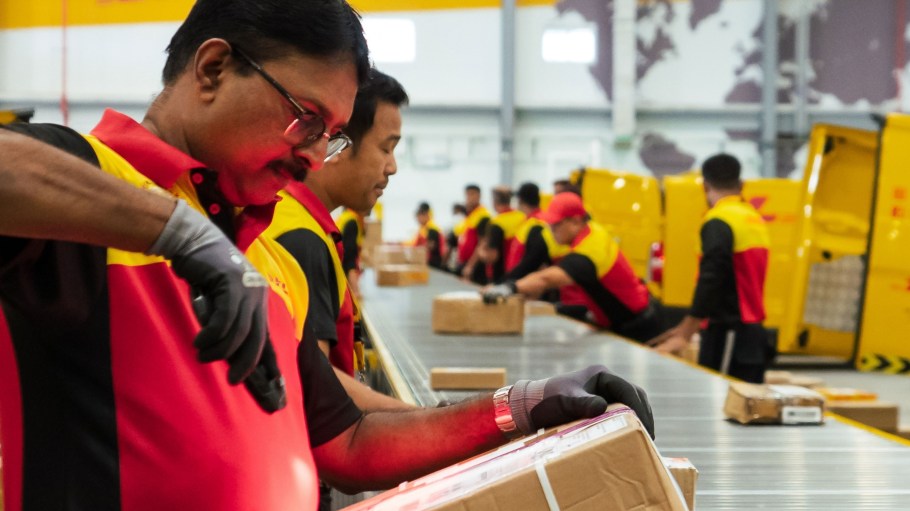
Investments for the DHL Express segment will be made in hub and gateway facilities, as well as enhancing aviation capacity to improve service efficiency and delivery speed.
DHL Global Forwarding will expand its overall presence in the Middle East, invest in fleet of aircraft and trucks and pursue joint venture initiatives such as its recent partnership with Etihad Rail.
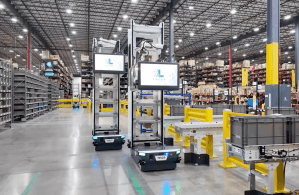
For DHL Supply Chain, there will be an expansion of the contract logistics offering in both the UAE and Saudi Arabia, which includes increasing warehousing capacity, upgrading equipment and integrating advanced technology to optimize operations.
DHL eCommerce entered the Saudi Arabian market in February by acquiring a minority stake in parcel delivery company AJEX Logistics Services, which has a network that includes over 50 facilities and a fleet of more than 900 vehicles.
Although the company is penetrating a region known largely for its oil production, DHL emphasized its commitment to sustainability, including investments in alternative fuel, electric delivery vehicles, aviation fuels in air freight and biofuels for road and ocean freight, as well as solar energy and clean power for facilities.
The commitment is aimed at building more sustainable supply chains, and helping customers achieve their net-zero ambitions.
Both Saudi Arabia and the UAE have net-zero emissions goals for 2060 and 2050, respectively.
Ahead of the investment, DHL’s separate divisions already provided various logistics and transportation services to Middle Eastern customers, including express parcel delivery, air, ocean and overland freight, warehousing, fulfilment and distribution, and customs brokerage operations.
DHL builds in U.K. delivery stronghold with Evri deal
As DHL expands its sphere of influence worldwide, the logistics giant is busy integrating another pivotal acquisition in the U.K. market.
Last month, the company’s DHL eCommerce U.K. branch merged with Evri after DHL Group acquired a minority stake in the parcel delivery company.
The merged Evri business is anticipated to deliver over 1 billion parcels and a further 1 billion business letters annually. Evri’s partners include U.K. retailers like Next, John Lewis and Marks & Spencer, as well as Etsy.
The combined group will consist of 30,000 couriers and van drivers, another 12,000 workers and a fleet of 8,000 vehicles. With the deal, Evri says it plans on hiring 5,000 more couriers for the summer season, with 1,000 expected to be permanent jobs.
Evri intends to expand its own international network for inbound and outbound parcels by leveraging DHL’s cross-border parcel shipping expertise, alongside the company’s global network of nearly 150,000 “out-of-home” global access points in shops and lockers. This includes access to Europe, the U.S. and select Asian markets such as India, and will mean faster transit times, the companies said.
The partnership will incorporate DHL’s UK Mail offering, entering Evri into the business letter market for the first time.
DHL’s other U.K. segments, including DHL Express, DHL Supply Chain and DHL Global Forwarding, are unaffected by the transaction. Evri will continue to be majority owned by Apollo Global Management, which acquired the company for a reported $3.5 billion last year.
On Wednesday, the U.K.’s antitrust regulator, the Competition and Markets Authority (CMA), opened a probe into the merger.
The CMA issued the inquiry into the deal with an invitation for interested parties to submit their comments on the deal June 25. After this, the CMA will formally launch its investigation.
The agency is also probing GXO’s $935 million acquisition of U.K. logistics provider Wincanton, with the regulatory body saying in February that the deal likely lessens competition in the supply of warehousing services to the country’s grocers.