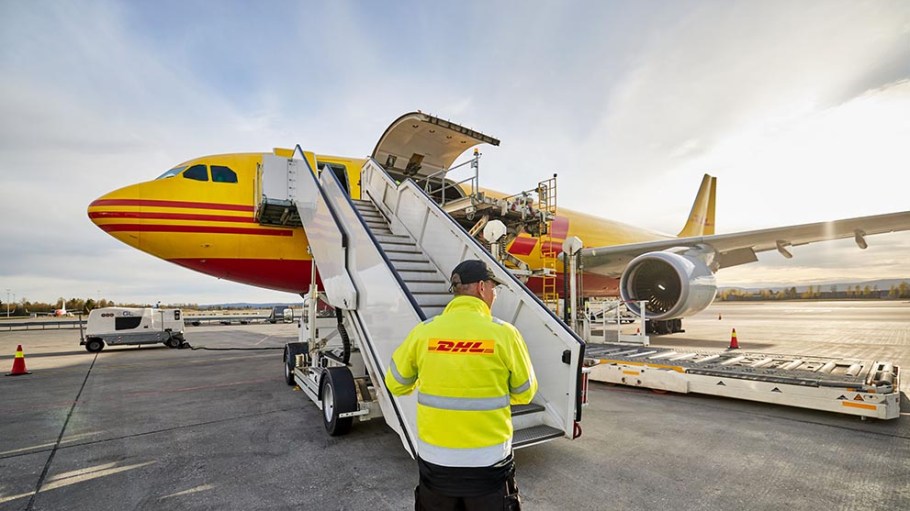
DHL Global Forwarding is hiring more than 200 customs agents as logistics companies and sellers alike adjust to shifts in U.S. trade policy.
According to DHL Global Forwarding CEO Tim Robertson, the Germany-based logistics giant’s investment is “directly tied to the increasing complexity in the U.S. import environment—including the recent elimination of de minimis exemptions and the introduction of new reciprocal tariff structures.”
The courier also wants to help customers simplify the import process and ensure compliance for small and medium-sized importers.
Related Stories
“Importers, particularly small and medium-sized businesses, are facing unprecedented challenges in staying compliant while managing costs and speed,” Robertson said in commentary provided to Sourcing Journal. “Our expanded team will help ensure accurate, efficient and compliant clearances—especially in light of stricter transshipment rules and the evolving 301 and 232 tariff landscape.”
Robertson said the new jobs were primarily focused on entry writing, trade compliance and customer advisory roles.
“This hiring initiative will increase our customs processing capacity by nearly 40 percent and is part of a broader effort to scale our digital customs solutions, including the use of AI-driven tools through our Trade Connect platform,” said Robertson. “It’s about giving customers the support and transparency they need to navigate today’s trade volatility with confidence.”
DHL Global Forwarding includes a customs brokerage to assist shippers with import/export processing and customs duty payments, as well as manage customs formalities for goods moving from one territory to another. The brokerage also provides services to set up duty drawback processing, foreign trade zones (FTZs) and bonded warehouses. In total, DHL employs over 700 customs experts.
While DHL offers an existing onboarding, training and development program designed to upskill entry-level workers quickly, and potentially become a customs broker, Robertson told CNBC there is “a shortage of talent in that space,” citing a need for more experienced customs workers.
Robertson didn’t name the markets new customs employees will be hired to work in. But he highlighted the strength in volumes going from Asia-Pacific into Mexico, Brazil, and Colombia in the wake of the changing trade patterns since the U.S. began levying country-specific tariffs.
Depending on the country of origin, tariff rates on imports have been volatile since April, when the Trump administration first slapped “reciprocal” duties on the nation’s trade partners. This has impacted cargo volumes into the U.S. in the nearly six months since, with importers front-loading goods at certain points to get ahead of separate tariff negotiation deadlines in August.
Combine that with the administration’s clampdown on low-value packages entering the country, starting with China-made goods in May, and customs departments got slammed as costs increased and formal compliance requirements surged.
The logistics giant is beefing up its customs department just weeks after the Trump administration officially ended the duty-free de minimis provision across the board.
Effective Aug. 29, packages worth $800 or less were no longer able to be brought into the U.S. tax free, heavily impacting overseas sellers like Shein and Temu who relied on the trade exemption to ship directly to U.S. consumers. The changes also required all importers to undergo a more formal, arduous documentation process.
Many international parcel companies, including DHL’s own DHL Parcel Germany, temporarily suspended the shipment of packages and postal items to the U.S., largely due to the confusion surrounding the swift changes to compliance procedures. These companies sought clarity on guidelines such as who was responsible for collecting customs duties, as well as what data would be required to ship low-value goods into the U.S.
In response, U.S. Customs and Border Protection (CBP) has tapped 15 companies that are qualified to collect duties on low-value shipments entering the U.S.
As retailers navigate the fluid customs environment, Robertson acknowledged the changing volumes and its impact on seasonality, telling CNBC that this is the most atypical peak shipping season he has ever seen.
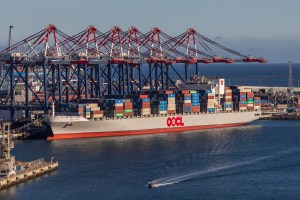
The peak shipping season typically lasts from August to October as companies load up on cargo set to be sold during the holiday season. But the tariff front-loading brought about a brief peak in July, according to the Global Port Tracker from NRF and Hackett Associates. Major U.S. ports handled 2.36 million 20-foot equivalent units (TEUs), the second-busiest month on record for inbound cargo volumes.
Projected August numbers at the ports fell slightly to 2.28 million TEUs, but forecasts into fall indicate more of a collapse, with inbound cargo volumes expected to decrease sequentially throughout the ensuing four months.
“Volumes into the United States are incredibly soft,” Robertson observed. “This is very different compared to what we have seen in the previous years.”
While the customs hiring impacts DHL Global Forwarding, the larger company continues to make broader investments across its other divisions: DHL Supply Chain, DHL Express, and DHL eCommerce, Robertson said.
On Tuesday, DHL Express inaugurated a new $94 million international hub at Barcelona International Airport designed to handle growing volumes of express packages over the next 20 years. The facility has a sorting capacity of more than 20,000 pieces per hour, seven times higher than the previous site.
The 108,000-square-foot warehouse will assist international air routes within Europe, the U.S. and North Africa. The hub features 22 loading positions and nine unloading positions for air containers, as well as 24 docks for trucks from which 120 vans operate to manage both delivery routes and daily collections.