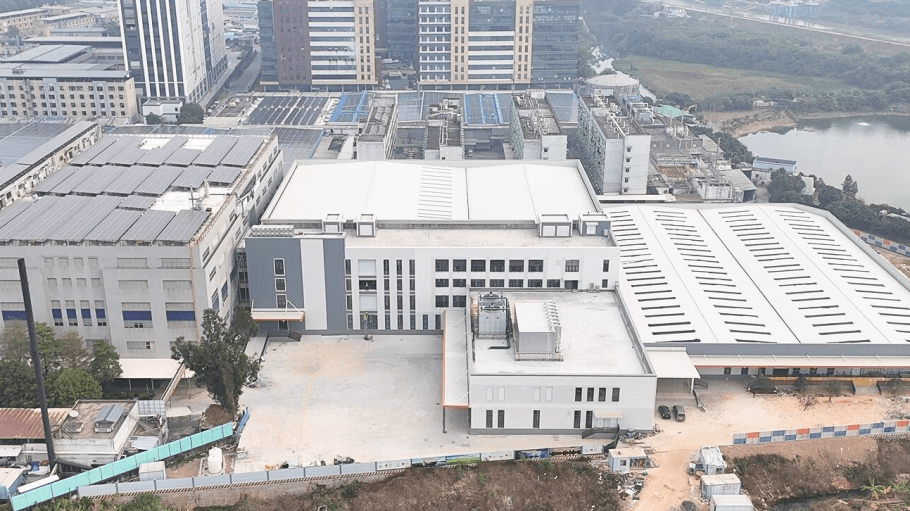
As part of its transition to smart manufacturing operations across its factories, global apparel manufacturer Crystal International Group is building a new logistics center in its lifestyle wear factory in China. The company expects the operation to ramp up during the first quarter of this year.
The logistics center will house an automated cutting workshop and a centralized smart warehouse for materials and finished goods. That centralized smart warehouse uses an automated storage and retrieval system (AS/RS) that enables autonomous flow of fabric materials and finished goods.
Related Stories
Based on real-time data, the AS/RS uses an algorithm to analyze production demand, inventory data and transport routes to determine the most efficient retrieval paths. This allows Crystal International to optimize inventory management and enable just-in-time delivery—for instance, fabric transfer time is cut by up to 75 percent using the system. And the digitized AS/RS system can deliver finished goods from the warehouse to loading areas autonomously as soon as trucks arrive.
The warehouse completes a full closed-loop auto-material flow system that moves information on raw materials, panels, parts, garments and final shipments seamlessly through the production logic model. That model includes four centers—the new logistics center, parts manufacturing center, assembly center and finishing center.
The new logistics center also includes an automated cutting area, where sewn parts are transferred by automated guided vehicles (AGVs) to create an unmanned flow of materials and goods.
“We are driving digitalization and automation in line with the whole group’s ambition, achieving smarter processes, higher operational efficiency and productivity, as well as better sustainability performance. The solution ensures us a winning edge and continued success,” said Sam Lau, general manager of digital manufacturing at Crystal International.
Sustainability was a big driver behind the new facility. Crystal International Group has outlined its environmental goals in its Sustainability Vision 2030, which includes three categories—regenerating nature, resourcing people and revitalizing community. The strategy was built in reference to the United Nations’ Sustainable Development Goals, which include clean water and sanitation, climate action, affordable and clean energy, no poverty and zero hunger.
Last fall, Crystal International joined environmental nonprofit Textile Exchange, pledging to expand the adoption of preferred sustainable alternatives in materials and manufacturing processes that will allow the company to minimize its environmental impact. The company also launched several other sustainability initiatives last year, including its CirClimate collection made with biodegradable, climate-adaptive fabric created from sustainable wood pulp and recycled waste, along with its Corporate Waste Management System Framework, which maximizes the re-use of waste materials.
Crystal International said this new facility—which is powered by a rooftop solar photovoltaic system—plays a big role in that sustainability push, and the company plans to integrate technological solutions and smart factory processes that reduce waste and energy usage across its global manufacturing footprint.