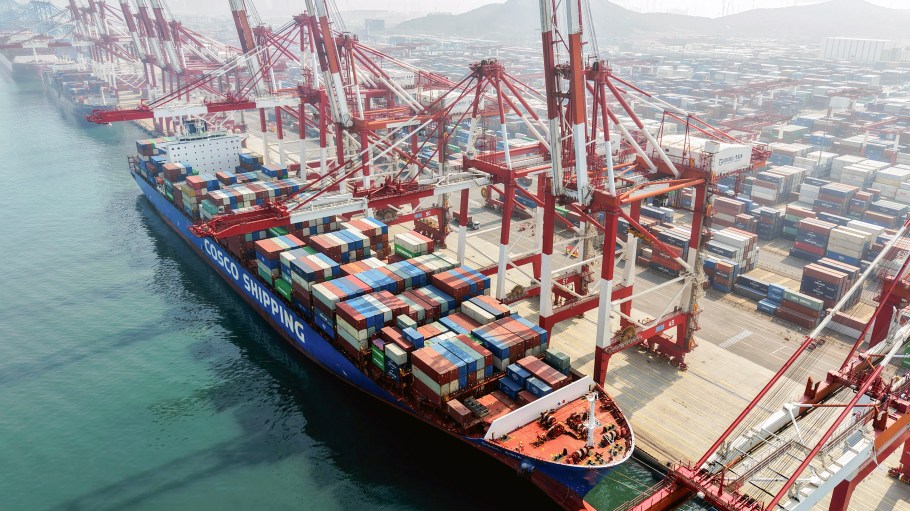
Cosco Shipping has resumed bookings for cargo shipments headed from the Far East toward several Middle Eastern countries, making it the first major ocean carrier to signal a possible return to the Strait of Hormuz and Persian Gulf since container shipping began avoiding the region after the breakout of the war in Iran.
The Chinese state-owned container shipping company will accept bookings to the U.A.E., Saudi Arabia, Bahrain, Qatar, Kuwait and Iraq starting Wednesday.
The carrier said the new arrangement is still subject to change due to the volatility in the region.
Related Stories
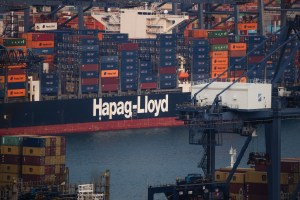
Carriers like Cosco, Mediterranean Shipping Company (MSC), Maersk, Hapag-Lloyd and CMA CGM had all suspended bookings to the Middle East amid safety concerns for vessels transiting the Strait of Hormuz. Additionally, the trepidations have forced more than 3,200 commercial vessels to stay put in the Persian Gulf, according to the International Maritime Organization (IMO).
Iran began attacking vessels passing through the strait after the U.S.-Israeli offensive against the country began, stating that the critical corridor was closed to shipping. The strait is a significant trade artery for oil, harboring roughly 20 percent of the world’s supply of oil and natural gas.
According to MarineTraffic, 18 ships having endured physical attacks since March 1.
Several country officials have claimed to establish an informal toll that would allow ships to pass safely if they paid up to $2 million.
Cosco’s announcement came a day after Iran informed the U.N. Security Council and the IMO that “non-hostile vessels” may transit the conflict-ridden conduit if they coordinate with Iranian authorities.
According to the letter, vessels, equipment and assets belonging to the U.S., Israel and other participants in the military offensive against Iran “do not qualify for innocent or non-hostile passage.”
Chinese ships have appeared to have made headway through the strait in tiny doses.
The Chinese-owned liquefied petroleum gas (LPG) tanker Lucky Gas passed through the strait on Tuesday, according to a report from Hong Kong-based publication the South China Morning Post. The Panama-flagged ship is owned and operated by Shunhang Ship Management, a Hong Kong-registered company, according to data platform VesselsValue.
The SCMP reported that a first LPG vessel, Danuta I, transited the strait around March 6. The Palau-flagged ship, owned by a Chinese company, is en route to southeastern China’s Fujian province after passing through the Strait of Malacca near Singapore on Wednesday, according to MarineTraffic.
That ship was sanctioned by the U.S. in February on the likelihood that it is carrying Iranian LPG.
Three vessels in total passed through the Strait of Hormuz on Tuesday, according to MarineTraffic.
“Shadow and sanctioned vessels continued to dominate observed traffic, accounting for two-thirds of daily transits, which points to still-constrained operating conditions and highly limited re-entry by the mainstream fleet,” said Ana Subasic, a trade risk analyst at MarineTraffic, in a Wednesday update. “While no new physical attacks were confirmed since March 19, the broader regional maritime threat environment remains critical, suggesting that the current lull in incident activity should be interpreted cautiously rather than as evidence of full deescalation.”
Cosco, the fourth-largest ocean carrier in the world by cargo capacity and vessels, had warned last week that “the complexity and uncertainty of the container shipping market will further intensify” throughout 2026 due to both the war and ongoing shifts in trade policies.
Chinese carriers have been more willing than others to brave out sailings under the tenuous circumstances in the Middle East.
Of the 43 container ships tracked by Drewry that transited the Suez Canal in the two weeks prior to Sunday, 19 of them were owned by China and Hong Kong-based operators.
Cosco noted in its fourth quarter earnings that the Iran war has cut down the chances of a full reopening of sailings through the Red Sea, which had largely been avoided by container shipping companies due to ongoing attacks from the Iran-aligned Houthi militant group.
Carriers including Maersk and CMA CGM had sought to return to the Red Sea on a limited basis after the Israel-Hamas ceasefire last fall led the Houthis to suspend their onslaught. But the carriers reversed course as tensions around the Middle East began to pick back up in February.
With more uncertainty rattling container shipping and global trade, Cosco projected that cargo volumes will grow a “low to moderate 2.5 percent” in 2026.
The Chinese state-owned carrier’s bottom line was heavily impacted by a volatile end to the year. Cosco said net profit in the fourth quarter was the lowest of all four quarters, falling 60 percent to $532 million.