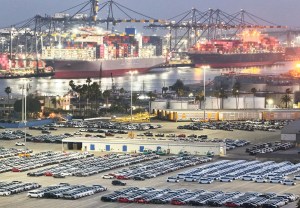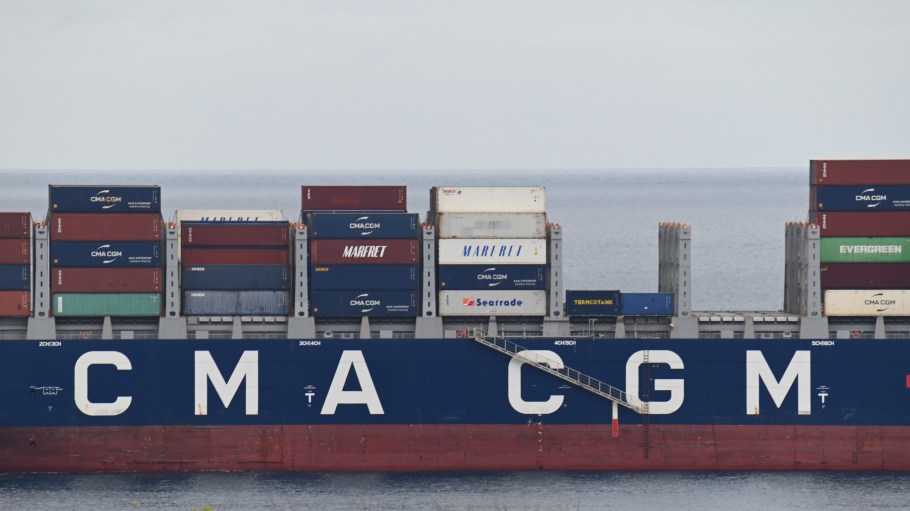
CMA CGM could be throwing its hat in the ring as the latest suitor for dozens of ports worldwide held by Hong Kong-based port operator CK Hutchison.
Exclusive talks between Hutchison and a consortium of BlackRock and Mediterranean Shipping Company (MSC) ended Sunday, opening the $22.8 billion transaction to new participants.
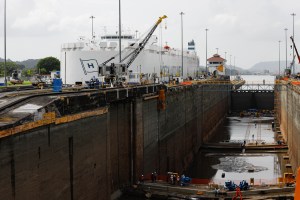
The deal has been largely held up over concerns of two ports on the opposite sides of the Panama Canal transferring hands, with China reportedly miffed over CK Hutchison’s sale of the gateways to a group with an American business involved.
Related Stories
After China’s antitrust regulator probed the deal, reports surfaced that the country threatened to block it if it’s own container shipping giant, Cosco Shipping, was not included. Panama’s government also still needs to approve the portion of the deal involving the country’s canal-adjacent ports.
On Monday, Hutchison confirmed that it was mulling the idea of a Chinese investor into the MSC-BlackRock consortium, but would not identify the party. The talks between all parties remain ongoing.
“We’re watching this very closely,” CMA CGM chief financial officer Ramon Fernandez told reporters in an earnings call Tuesday. “We’re naturally very interested in participating in the solution that hasn’t been found.”
Cosco is among the partners in the Ocean Alliance vessel-sharing agreement with CMA CGM, Orient Overseas Container Line and Evergreen.
Gaining a stake in CK Hutchison’s 43 ports across 23 countries included in the preliminary deal would help further CMA CGM, like MSC, in vertically integrating port terminals within its ocean carrier business.
According to Fernandez, the French container shipping giant is already present in 65 terminals worldwide. He said the pending Hutchison ports deal was “very important for the industry, and it’s important for us as a major player in this sector.”
Such a deal gives carriers like CMA CGM, MSC and Cosco entry into new gateway markets. These companies further expanded their roles as hybrid terminal operators during the pandemic as they drove record profits fueled by high freight rates and freight demand.
“Between 2019 and 2023, MSC and CMA CGM in particular have grown their [terminal] portfolios at three times the average rate of the industry, moving up the global terminal operator lead tables, as they’ve also moved up in the liner capacity rankings,” said Eirik Hooper, senior analyst, ports and terminals, Drewry, during a webinar in June.
CMA CGM has been doing plenty of expanding in recent years via acquisition, most recently acquiring a majority stake in South America’s largest container terminal, Santos Brazil, in April. That deal cost more than $1.1 billion.
That month, the container shipping company acquired Turkish contract logistics firm Borusan Tedarik for roughly $440 million and completed a deal to buy cargo airline Air Belgium.
Last March, CMA CGM completed a $5.2 billion acquisition of Bolloré Logistics, marking the company’s largest deal to date.
The firm has scaled operations at major ports in recent years, both in the U.S., and worldwide. CMA CGM acquired the Fenix Marine Services terminal in the Port of Los Angeles in November 2021 in a $2.3 billion deal, and then scooped up two major terminals at the Port of New York & New Jersey at the end of 2022.
In April, the company also said it was is investing $600 million to build a terminal complex in Vietnam’s Hai Phong Port.
And all of this is before getting into CMA CGM’s largest investment yet, committing $20 billion to U.S. logistics and shipbuilding over the next four years. On July 24, the CMA CGM Phoenix was reflagged, making it the largest U.S.-flagged container ship at 9,326 20-foot equivalent units (TEUs).
As the company expresses interest in the Hutchison ports, it reported that it generated flat revenue growth in the second quarter, at $13.2 billion. Net profit for the French liner declined 21.2 percent to $521 million.
In line with the revenue totals, CMA CGM’s shipping volumes were also flat at nearly 6 million TEUs, despite the “sharp but temporary” decline in trade flows between China and the U.S. when they slapped new tariffs on each other in April.
“In a context marked by persistent geopolitical tensions and renewed trade uncertainties, our Group is delivering a stable performance, driven by the resilience of its maritime activities,” said Rodolphe Saadé, chairman and CEO of the CMA CGM Group, in a statement.
Saade highlighted the “relevance” of the ocean carrier’s diversification strategy across terminals, logistics and air freight, which he said has enabled the company to adjust operations more swiftly to shifts in global trade.
In the Tuesday earnings report, CMA CGM said uncertainties linked to the macroeconomic environment and the implementation of the new tariffs remain high and could increase market volatility.
Disruptions related to the situation in the Red Sea and the Gulf of Aden, which CMA CGM has periodically sailed through with escorts from the French Navy, are ongoing and continue to pose significant operational challenges, the company says.