In the wake of the impending U.S. Trade Representative’s (USTR) port docking fees on Chinese-built and -operated vessels, China has opened the door to take countermeasures where it could impose restrictions of its own.
Chinese Premier Li Qiang signed a State Council decree to revise the established rules on international maritime transport that would allow the country’s government to conduct the retaliatory measures against all countries or regions that support discriminatory bans, restrictions or similar measures targeting Chinese operators, vessels or crew.
Related Stories
Such measures will be enacted unless “relevant treaties or agreements offer adequate and effective remedies,” according to the decree.
“These countermeasures include, but are not limited to, charging special fees on their vessels when calling at Chinese ports, prohibiting or restricting these vessels’ port access in China, and barring or restricting their organizations or individuals from accessing China-related maritime data or operating in international shipping and related services to and from Chinese ports,” the revision says.
The decree also requires operators of international shipping trading platforms to submit information to Chinese transport authorities, including name, place of registration, contact information, platform service agreement and shipping transaction rules.
The revised decree provides the power to charge a fee of between approximately $2,800 and $14,000 if a company does not provide the required information.
Additionally, it further establishes that “if the circumstances are serious, it shall be ordered to cease conducting relevant business.”
The regulations went into effect on Sunday.
Chinese state-owned news agency Xinhua first reported the news Monday, with the State Council posting the article on its website.
China did not specifically identify any country in the decree. But the order appears to be a response to last year’s USTR ruling that China violated Section 301 trade laws, which prompted the port fees.
After a nine-month investigation, the office determined that China had an “unreasonable” dominance of the global maritime, logistics and shipbuilding sectors based on various state-sponsored policies.
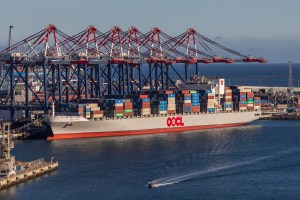
The U.S.-levied port fees are set to go into effect Oct. 14, and will be imposed differently depending on whether the ship is operated by a Chinese company, or simply built in China. Chinese operators like Cosco Shipping and Orient Overseas Container Line (OOCL) would have to pay a fee of $50 per every net ton they carry on all voyages that include U.S. ports. Starting next April, an additional $30 per net ton will be tacked on each year through 2028.
The fees could add up significantly for those companies, with one report tacking on an additional $2.1 billion in fees for the two carriers if they don’t make network adjustments. Such numbers could erode 74 percent of Cosco’s pre-tax earnings margins, as well 65 percent at OOCL, the HSBC report said.
Ocean carriers that order their container vessels from China will be impacted as well, although most have indicated they will be able to work around the USTR fees via their vessel-sharing alliances. These ships will be charged $18 per net ton, with annual fee increases of $5 through 2028.
All fees, both for Chinese-operated and Chinese-built vessels, will be charged up to five times per year.
The USTR still has yet to finalize the rules and formalize the plan to collect the fees. The USTR and Customs and Border Protection (CBP) are expected to release official documentation ahead of the Oct. 14 scheduled start of the fees.
It is unclear if the response from China would impact U.S.-built ships, American company-owned ships or U.S.-flagged ships. U.S.-flagged ships don’t have to be built in the U.S., but must be registered in the country and have a crew comprised entirely American citizens.
There are currently 188 U.S.-flagged ships, according to the Bureau of Transportation Statistics, with 17 general cargo vessels and 59 container ships.
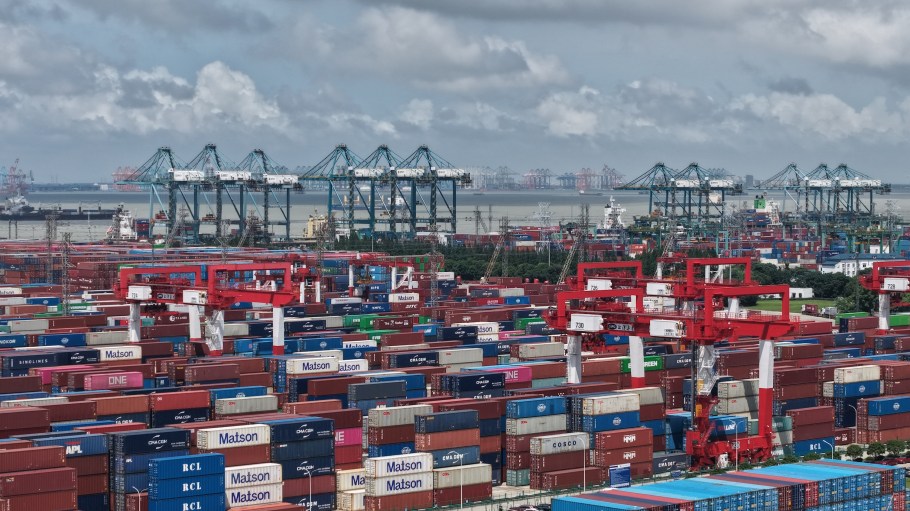
Such a decision could affect U.S. container shipping companies like Matson or CMA CGM subsidiary American President Lines.
Matson has a 0.2 percent share of the container shipping industry’s total container capacity, at 71,221 20-foot equivalent units (TEUs), according to Alphaliner data. The Hawaii-headquartered company offers shipping services on the trans-Pacific trade lane, covering the U.S. and select Pacific territories, China and Japan.
The U.S.-levied port fees and China’s retaliatory revision are an extension of the enduring trade war between the countries instigated by the Trump administration. The countries have until Nov. 10 to come to a new trade deal, with U.S. duties on Chinese goods currently standing at 55 percent.