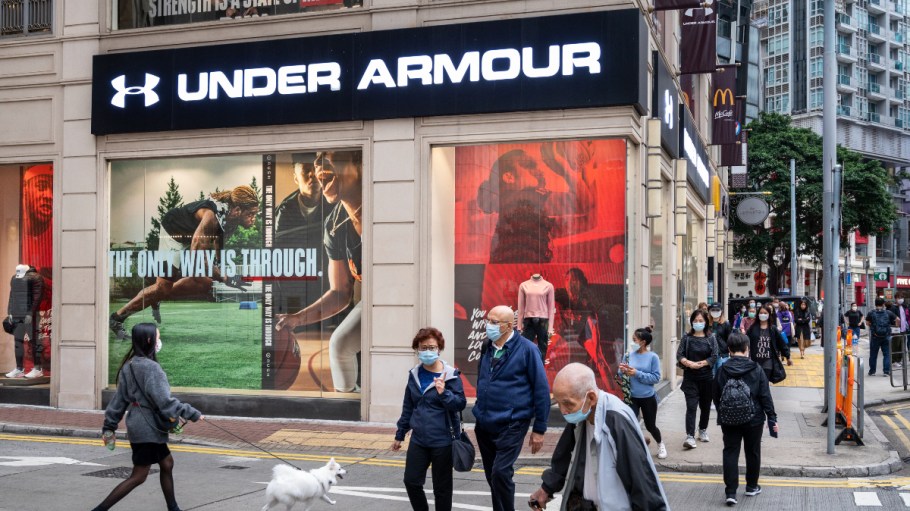
Under Armour’s under pressure.
The sportswear brand faces a newly proposed class-action lawsuit alleging that it engaged in a “false, misleading and deceptive pricing scheme” that resulted in consumers paying more than they should have for items from the company’s outlet stores and site.
Linda Rappaport, a New York resident, filed the complaint in the state’s Eastern District Court on Oct. 29.
Related Stories
The complaint alleges that Under Armour makes nearly all of its assortment for its factory stores exclusively for those stores, and that the items are inferior in quality to the goods sold in its regular stores and on its regular site.
“All, or virtually all, of the merchandise sold at Under Armour Factory outlet stores is manufactured for and sold exclusively at Under Armour Factory stores,” the complaint reads, noting that almost none of the company’s factory store merchandise has ever been part of the assortment in the brand’s regular stores.
Despite not being sold in regular stores, the complaint notes, items sold in factory stores have a tag affixed to them that show the “MSRP”—manufacturer’s suggested retail price. Items sold on Under Armour’s outlet site show an original price, slashed out with a lower price next to them.
Rappaport alleges that those tags and price slashing depictions influence consumers’ perception of what the goods are worth because they are affected by fake price comparison.
“The Under Armour Factory products sold in both the brick-and-mortar Under Armour Factory stores and [on the outlet site] are never—or virtually never—offered for sale or actually sold at their ‘original’ or ‘price tag’ prices. The reference prices and accompanying ‘discounts’ are therefore fraudulent and used solely to induce consumers to make purchases and spend more under the reasonable, but incorrect, belief that the merchandise was once sold at its advertised reference price,” counsel for Rappaport wrote.
Later in the complaint, the attorneys note that Rappaport fell victim to Under Armour’s alleged “misleading” conduct when she purchased a sports bra from the retailer. According to the filing, the item had a price tag that displayed an original price of $34.97 but was accompanied by a 50 percent off sign on the rack. Rappaport supposedly paid $17.48 for the bra.
However, she did so based on an “artificially inflated” price that made her feel as though she had received a solid markdown on the item she chose.
“[Rapaport] believed she was receiving a significant discount on the item she had chosen,” the complaint reads. “She would not have made the purchase were it not for the significant bargain she thought she was receiving,” the complaint notes.
The attorneys argue that consumers’ belief that they were being offered a discount makes sense based on the advertising and marketing behind Under Armour Factory products.
“[Under Armour’s] fake discount scheme is intended to (and does) increase [its] sales while depriving consumers of the benefit of their bargain and causing them to spend more money than factory outlet store items are actually worth,” they write.
Rappaport and her attorneys propose a class action that would include “hundreds of thousands of individuals” in New York State who purchased one or more items from an Under Armour factory store during the class period.
She alleges that Under Armour violated the New York Consumer Protection from Deceptive Acts and Practices Act and the New York False Advertising Law with its purported scheme. As a result of those alleged violations, Rappaport has asked the judge assigned to the case to certify the class and designate her as its representative. She also seeks monetary and injunctive relief from the harm she says Under Armour caused her and other consumers, as well as an order that the company “engage in a corrective advertising campaign.”
The Baltimore-based sportswear brand is not the only company that has been targeted with a false or deceptive pricing lawsuit. Department store player JCPenney has faced at least two similar allegations; both were settled out of court. Mega-discount retailer Kohl’s got dragged into the false reference price lawsuit game earlier this year, as well.
Under Armour declined to comment, noting it does not comment on pending litigation.