Fashion supply chains are facing a spate of social and environmental compliance demands from legislation, consumers and other stakeholders. To better manage these myriad risks, retail companies should evolve from the typical “transactional relationship” with solely Tier 1 to a more holistic understanding of the full supply chain through traceability, said Amit Gautam, CEO and founder of TextileGenesis, a Lectra company.
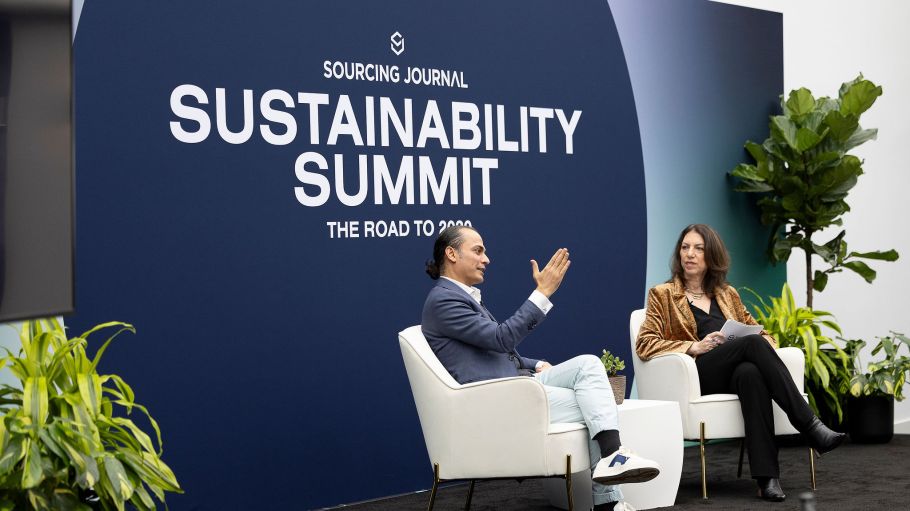
“As a fashion brand, but also as an industry, we need to take ownership of the entire value chain,” he said during a one-on-one chat with Lauren Parker, director of Sourcing Journal & Fairchild Studios, at Sourcing Journal’s Sustainability Summit. “Risks are not just at Tier 1, it’s the entire value chain that drives the risks.”
Related Stories
Gautam pointed out the sea change in legislation, as the “largely unregulated” fashion industry now faces almost 30 new laws across the United States and Europe. These laws govern everything from due diligence—forcing companies to know their suppliers past Tier 1—to sustainability messaging, clamping down on greenwashing and requiring third-party verification of claims. “The market is shifting very, very fast in terms of what you can claim and what you cannot claim and around ownership of the supply chain,” he said.
According to TextileGenesis’ analysis of the leading 100 fashion brands worldwide that account for roughly 40 percent of the total market, the majority have sustainable material sourcing targets for 2025 or 2030. However, these sought-after materials are also targets for fraud, per Gautam. As an example, the amount of recycled polyester is three times greater than the volume of PET bottles actually available. “Essentially, in the next three years, you have to have 100 percent materials responsibly sourced, but you do not know where the material comes from. And that’s a huge paradox,” he said.
Achieving the visibility required to meet these compounding compliance and claim standards is no easy feat for the fashion industry’s complex supply chains, which can often have thousands of suppliers funneling into a single brand. One tactic taken by brands is to ask Tier 1, or the finished garment producer, to report on the supply chain. Another is “peer to peer validation,” in which each tier of the supply chain confirms who their direct supplier was. Per Gautam, while these “product backwards” processes can work for conventional materials, they carry the risk of “double counting” preferred fibers.
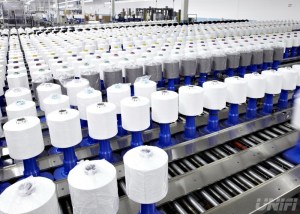
For sustainable or certified materials, he said companies need to take the opposite approach and start their tracing at the fiber stage. TextileGenesis does this by creating a digital twin of fiber at its point of origin. Each kilogram of fiber is represented with one Fibercoin, and the digital token follows each change of custody in the supply chain, with the amount of material adjusted based on usual reductions tied to production processes. This ensures that the amount of material in the final product can be claimed based on original volume.
Enabling this full supply chain participation, TextileGenesis works directly with the fiber producers, who in turn onboard the spinners and upstream manufacturers who work with their materials. This creates an established traceable system that brands’ Tier 1 and 2 producers can connect with.
Going beyond its textile purview, TextileGenesis is expanding into leather goods and footwear by launching a consortium with brands. Footwear is complex, with up to 50 components or more going into each shoe, but the group is mainly focusing on the materials that have the greatest sustainability or compliance difficulties like leather and rubber. Leather has a traceability challenge: It is a byproduct of the meat and dairy industry, making visibility into point of origin or farm more of a hurdle. Gautam noted that much like conventional fibers, leather that is not sustainably certified—such as falling under the Leather Working Group or vegetable tanned—would be best served with a product backward approach, while certified leathers would benefit from fiber-forward tracing.
“What we see is a clear distinction in the industry, that if you want to track and verify sustainable, differentiated branded materials, you need to follow fiber-forwards principles and for commodity conventional materials, you can go product backwards,” said Gautam.