Southeast Asian governments have been jolted into crisis mode once again.
As U.S. President Donald Trump sent out a fresh round of tariff letters on Monday, trade anxieties have been reignited across the region. Political leaders and economists have responded with a mix of shock and determination—shock at how high the proposed tariffs remain, and determination to use the few weeks left before Trump’s new deadline of Aug. 1 to secure better terms.
The July 2 agreement with Vietnam had injected cautious optimism into the region. That deal lowered tariffs on Vietnamese exports to 20 percent—down from a previously announced 46 percent—while setting a 40 percent tariff on transshipped goods. In exchange, the U.S. will gain zero-tariff access to Vietnamese markets.
Related Stories
Vietnam remains the region’s largest apparel exporter to the U.S., sending roughly $18.6 billion worth of goods in 2024, according to the U.S. Census Bureau. Cambodia follows with $7.8 billion, then Indonesia at $6.4 billion, Thailand at $2.7 billion, and Malaysia at $1.6 billion.
At a press conference in Phnom Penh on Tuesday, Cambodian Deputy Prime Minister Sun Chanthol acknowledged that negotiations with the U.S. would continue. He highlighted one silver lining: the tariff had dropped from the 49 percent announced in April to 36 percent in Trump’s latest letter. However, he pointed out that in some cases, such as Malaysia, tariffs had actually increased—from 24 percent to 25 percent.
The local business community in Phnom Penh responded with growing unease.
“Disappointed,” Ken Loo, Secretary General of the Textile, Apparel, Footwear and Travel Goods Association of Cambodia (TAFTAC), told Sourcing Journal summing up his reaction to the 36 percent tariff.
But he quickly added, “There are still three weeks. The government will continue to negotiate with the U.S. and try to strike a deal.”
President Trump’s letters emphasized the need for reciprocal trade, echoing themes from his earlier administration. “Our relationship has been, unfortunately, far from reciprocal,” Trump wrote in his letter to Cambodian Prime Minister Hun Manet dated July 7. “Starting on August 1, 2025, we will charge Cambodia a tariff of only 36% on any and all Cambodian products sent into the United States, separate from all sectoral tariffs. Goods transshipped to evade a higher tariff will be subject to the higher tariff.”
Trump further stated that if Cambodia or its companies chose to build or manufacture products within the U.S., they would face no tariff at all. “We will do everything possible to get approvals quickly, professionally, and routinely—in other words, in a matter of weeks.”
He also warned that if Cambodia increased its own tariffs on U.S. goods, the U.S. would respond by adding an equal percentage to the existing 36 percent. “These tariffs are necessary to correct the many years of Cambodia’s tariff and non-tariff policies and trade barriers,” he wrote, calling the trade deficit with Cambodia a threat to U.S. national security.
The letter concluded: “You will never be disappointed with the United States of America.”
Cambodia, where the U.S. accounts for 39 percent of garment, footwear, and travel goods exports, is heavily reliant on preferential market access from both the U.S. and the European Union. A withdrawal of those benefits, analysts warn, could shake the very foundation of its export-driven economy.
Trade expert Massimiliano Tropeano pointed out that Cambodia’s exclusion from any mention of transshipment provisions—as Vietnam was—is both confusing and potentially concerning. “Although it is not yet clear what will be considered ‘transshipping’ and what will not, Cambodia strangely enough did not have a similar clause,” he said. “The 36 percent is quite high—almost at the same level as Vietnam’s transshipment duty of 40 percent.”
He added that it remains uncertain whether garments made with Chinese raw materials would be classified as transshipments. “Vietnamese factories will now have to demonstrate a ‘substantial transformation.’ This could increase orders to local mills using locally sourced fabrics, and perhaps a shift toward dyeing and finishing facilities in Cambodia too.”
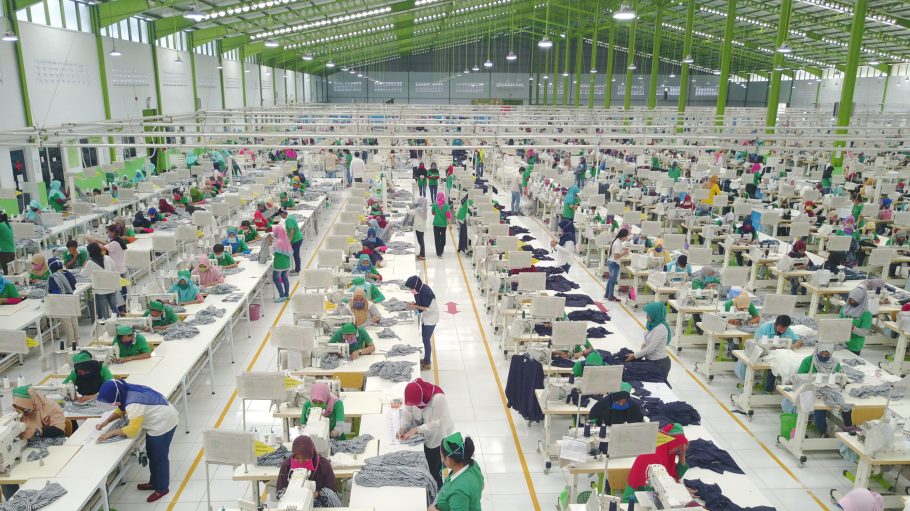
The past two months of tariff confusion have already battered Cambodia’s garment sector. In 2024, Cambodia’s garment industry posted $13.6 billion in exports, supporting approximately 918,000 formal jobs.
Manufacturers told Sourcing Journal that the uncertainty has disrupted planning, added costs, and forced brands to reconsider sourcing strategies—including possibly redirecting orders to competing countries.
A recent survey conducted by Better Factories Cambodia (BFC), the International Labour Organization (ILO), and the International Finance Corporation (IFC) underscored these anxieties. Nearly half of Cambodia’s garment, footwear, and travel goods factories reported that they were uncertain they could maintain operations beyond the next three months due to tariff uncertainty and declining buyer confidence.
More than a quarter of factories said buyers were pushing for price reductions; 15 percent reported having few or no orders on hand.
The survey, which was conducted across 756 registered factories, revealed:
- 44 percent of factories could operate at current capacity for three more months at most
- 27 percent said buyers had requested lower prices for 2025 orders
- 15 percent reported minimal or no orders
- 65 percent still expressed cautious optimism
Factories exporting to the U.S. made up the bulk of respondents. Of those, 51 perent of their output was U.S.-bound. Factories exporting to the EU accounted for 31 percent of production. Other major markets included Japan, Canada, China, Australia, and the UK.
How long can factories sustain their business? Forty percent said they could sustain operations for one to three months; 8 percent said less than one month. With the sector already characterized by rapid turnaround times and flexible production schedules, even a slight decline in orders could trigger widespread layoffs and suspensions—reminiscent of the COVID-19 trade collapse, the survey found.
The survey also noted other issues, including labor shortages, which were compounding the problem, with rising competition from new provincial factories and worker relocation issues that have contributed to a high attrition rate and diminished efficiency.
Other countries in the region have been reacting with a similar sense of shock.
Japan and South Korea face blanket 25 percent duties, while Myanmar and Laos were hit with 40 percent, and Indonesia with 32 percent.
Indonesia’s government has moved quickly. Coordinating Minister for Economic Affairs Airlangga Hartarto is set to resume negotiations with U.S. trade envoys to reduce the 32 percent tariff. “There is a narrow window for diplomacy, and everyone is recalculating their leverage,” said one Jakarta-based trade official.
Meanwhile, the tariff blow hit Thailand hard. The 36 percent figure was unchanged from April levels—despite Thailand submitting a new proposal to Washington on Sunday, pledging to cut its $46 billion trade surplus by 70 percent within five years. Commerce Minister Jatuporn Buruspat said that an additional review and other countermeasures would be considered, while preparing for renewed talks with the U.S.
The situation in Thailand has been complicated further by a changing political landscape: Prime minister Paetongtarn Shinawatra has been suspended by court order over alleged ethical misconduct related to a border dispute with Cambodia.
Malaysia’s Ministry of Investment, Trade and Industry (MITI) said Tuesday it remained committed to ongoing engagement with the U.S. toward a “balanced, mutually beneficial, and comprehensive” trade agreement. Malaysia saw its proposed tariff increase slightly—from 24 to 25 percent.
Analysts say this is a make-or-break moment for Southeast Asian trade diplomacy. Each country must now perform a delicate balancing act: securing national interests without undermining regional solidarity or provoking harsher terms.
As each nation scrambles to adjust their numbers—and perhaps offer concessions or deeper market access—the urgency is palpable.