Consumers’ love affair with resale continues, new data from OfferUp shows.
The company, which facilitates local resale, surveyed 1,500 U.S. adults about their previous and planned interactions with resale.
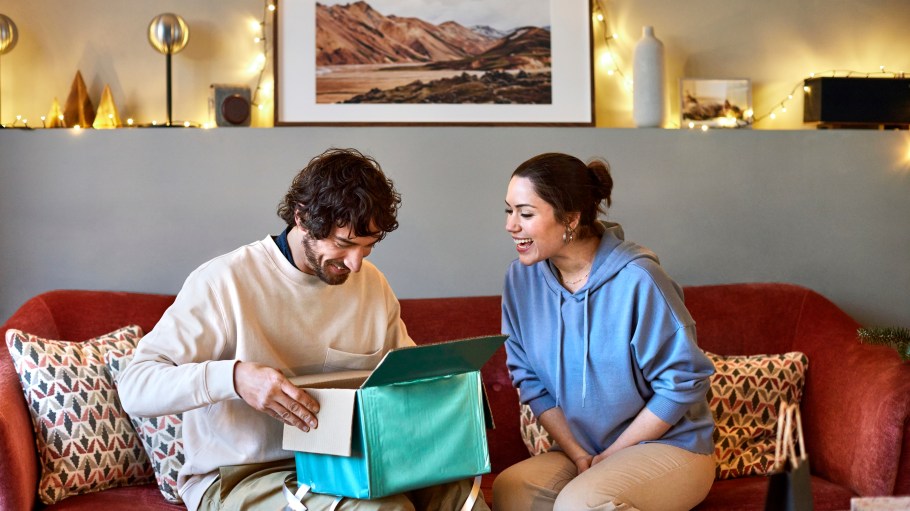
The data shows that 74 percent of shoppers feel that gifting secondhand items has become more widely accepted over the past year, up 7 percentage points from 2023. Ken Murphy, senior vice president of product at OfferUp, said that growth is likely coming due to multiple factors.
Related Stories
Some consumers may be looking at resale as a value-centric option, and in turn, have become more open to gifting or receiving secondhand items because of economic strain or inflation; Offerup’s data shows that over half of consumers purchasing secondhand gifts do so to help stay within their budget, and 63 percent of shoppers said they were more likely to buy secondhand items this holiday season because of rising living costs.
Simultaneously, Murphy said, the technology behind online resale platforms has proliferated in a way that gives consumers the power to bridge the knowledge gap about products they’re interested in purchasing. For instance, shoppers can ask questions about quality or measurements on peer-to-peer resale sites like Poshmark and Depop. A number of resale platforms, including Poshmark and ThredUp, have also begun integrating generative AI into their respective platforms, both on the buyer side and on the seller side, which can make finding items to match consumer queries an easier process.
Murphy said the improved visibility technology platforms have started to offer resale consumers improves their trust in the quality of items they browse as they shop for holiday gifts.
“When you [give] a gift, there’s a little bit of your personal pride attached to that. It’s a statement of your care for somebody, and so you want to make sure that the item you’re giving them is of the quality and caliber [that] reflects that sentiment,” Murphy told Sourcing Journal. “At the technology platform level, [resale platforms] play an important role in helping close gaps that might have historically made resale a bit harder at the holidays…and enabling shoppers to feel great about those transactions.”
The proportion of consumers indicating they would be open to receiving a secondhand gift during the holiday season outpaces the three-quarters of consumers saying they’d be willing to gift a secondhand item. This year, 83 percent of shoppers said they’d be happy with a secondhand gift, up just one percentage point from last year’s figure of 82 percent. Murphy said despite the minimal growth, having more than eight in 10 consumers show an interest in receiving a secondhand gift affirms stability in the secondhand market.
Murphy said he thinks consumers’ own willingness to receive secondhand gifts paired with the economic viability of purchasing items used could drive further growth in the number of consumers apt to gift secondhand items in the coming years. Already, 48 percent of consumers indicated that they prefer secondhand items over traditional retail because they perceive that they get a better value.
“I think for many of our shoppers, we see that they’re trying to upscale their dollars—get a better item for the same price that they might buy a lesser item brand new,” he said.
As browse on resale platforms throughout this holiday season, apparel and footwear—which OfferUp lumped as one category for the survey—didn’t crack the list of the top three categories consumers want to purchase and gift. Fifty-five percent said they’d be looking into secondhand electronics, while the second and third-place winners were sporting goods and furniture. About four in ten consumers said they had an interest in purchasing apparel and footwear items secondhand this holiday season.
As consumers become increasingly interested in purchasing from resale platforms, they’ve also started to sell their own items on them. OfferUp’s data shows that 36 percent of consumers would consider selling items on a secondhand platform; that figure goes up to 53 percent when only considering Gen Zers, who Murphy said grew up alongside the growth of online resale platforms like The RealReal, ThredUp and others.
Having higher supply during the holidays makes it easier for resale platforms to engage shoppers; OfferUp often faces a shortage of supply to meet increased demand during the holidays.
“That so many shoppers are saying they may be more open to selling during the holidays is a great thing, and the driver to it is probably a little bit of a nuance between that underlying economic pressure and the fact that [consumers think], ‘Hey, I could use those dollars to fund other purchases for the holidays. I can extract a little bit of value on things that I have around the house that I’m not using anymore,’” Murphy explained.