Pantone may have had a rough start to 2026, but the global authority and system for color communication is reminiscing on its roots.
The color guarde has dropped Pantone Capsule: Signature Edition—a curated, portable fan guide on all things pigmented. The Color Institute said its capsule distills decades of Pantone palettes and predictions into one cohesive and conventional? (see: controversial) color collection. Pitched as an accessible way for smaller fish (think students and freelancers and content creators) to work with Pantone Color across creative workflows, the curated capsule runs for $99.
Related Stories
“At Pantone, we have spent a lot of time speaking with our creative community to understand how their roles have changed, the tools they need and how to best serve them,” said Ora Solomon, vice president of product and engineering at Pantone.
The collectible fan features 600-plus spot colors on coated and uncoated paper stock. Curated from 60 years of Pantone history, the collection begins in 1963 and features legacy shades as well as tried-and-true hues. Given the color intelligence service’s intended audience, the collection is equally useful as a learning tool for understanding the Pantone Matching System (PMS).
For context: PMS serves as a universal standard to bridge the gap between digital (RGB) and print (CMYK) by providing designers with a specific, reliable color reference and consistent branding.
For example: The PMS code for Pantone’s 2025 Color of the Year, Mocha Mousse, is 17-1230. The primary code for Pantone’s 2026 COTY, Cloud Dancer, is two-fold: 11-4201 TCX for textiles and 11-4201-TPG for paper. On the other hand, the Pantone Formula Guide (PFG) is the Bergen County-based company’s most globally recognized and used color guide.
In short: PMS is the system and PFG (or book) is the essential tool (fan deck) that embodies it for practical use.

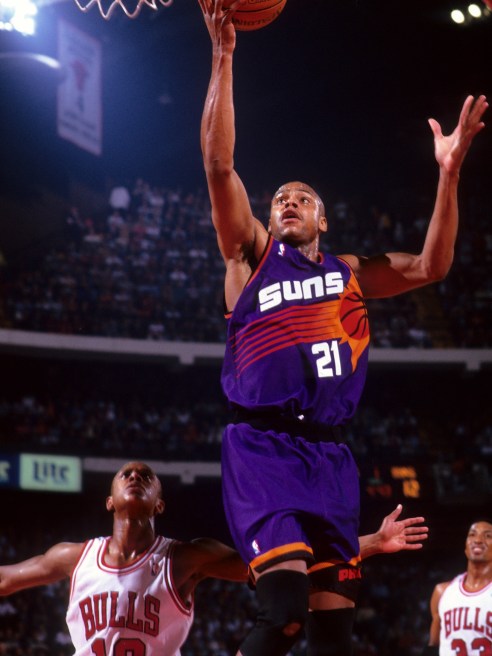
Representing the decade of decadence is PMS 102 C, a green-yellow color from 1982 and memorialized by the Chicago & North Western Railway; dubbed “Zito Yellow,” the Midwestern granger introduced the brighter shade, as a safer alternative to the traditional “Stagecoach Yellow,” according to railway enthusiasts. The digital dawn is immortalized with PMS 1505 C, a vibrant orange-yellow color famously used by the Phoenix Suns for the basketball team’s uniforms and branding during the 1990s.
Less culturally-significant colors—those functioning more as reliable tools in a standardized system—are peppered throughout as well; color codes include the workhorse purple-red color PMS 238 C and the “unconventional purple,” PMS 2665 C. The collection closes on contemporary additions like PMS 6104 C, a “magnetic sapphire blue” introduced in Pantone’s most recent color expansion, Dualities.
“We wanted to expand the opportunities for our design community to have a more accessible way to use our guides, especially at the beginning of their careers and help them create with confidence,” Solomon said. “We are so excited for designers to use this as a great way to start their journey.”
Attendees of Adobe Max 2025—the software giant’s annual creativity conference, held last October at the Los Angeles Convention Center—exclusively previewed the product.
One designer said it’s a “really cool, smart way to approach evolving trends” that they would “use as a mobile, on-the-go tool to work directly with clients and have it to hand in meetings.” Another said that the “innovation and newness” of the capsule “gets me excited.
“The colors are so vibrant and fun,” an anonymous attendee shared. “I see a whole world of creativity that’s untouched, and that reignites my creative passion.”
All 612 colors, printed on coated and uncoated stock, were created with Pantone base inks, with an index providing the numeric location of each spot color. Pantone Capsule: Signature Edition will be available on a limited first-run basis only at the platform’s click–and-order (get it?) website storefront.
The entry-point collector’s tool is just the latest effort out of the X-Rite subsidiary as Pantone works to cater to the evolving needs of creativity.
Last November, Pantone and Microsoft put the “art” in “artificial intelligence” with the launch of Palette Generator, an AI tool that generates color palettes for designers and creatives based on a prompt. Last month, Cloud Dancer was hit with criticism after the soft white shade made its rounds on social media. COTY-enthusiasts deemed the ecru-ish hue a little less evocative of having one’s head in the clouds and a lot more blatantly (not blissfully) ignorant.