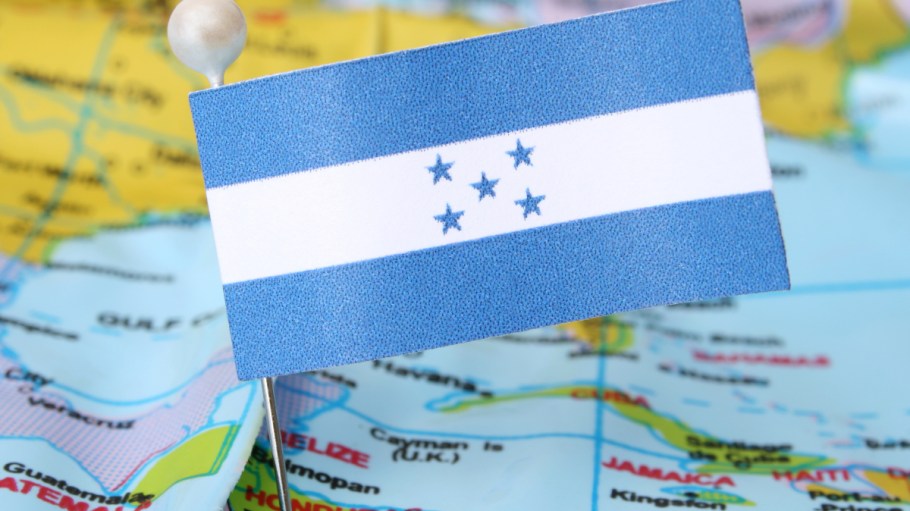
The Wilson College of Textiles at North Carolina State University has been named the recipient of a two-year $2 million grant from the United States Agency for International Development (USAID). The funds will go toward developing a textile training program called Hilando Oportunidades (Spinning Opportunities) for young people in northern Honduras seeking a career in the textiles industry.
The news comes after Target this year committed to increase its spending by $300 million in El Salvador, Guatemala, and Honduras by the end of 2023 and Columbia Sportswear said it would purchase $200 million in regional products as part of a $1 billion White House commitment to Central American sourcing.
Related Stories
The Hilando Oportunidades program can accommodate 1,500 students in yarn spinning, knitting, dyeing and finishing, and apparel production, providing them with trackable credentials that will help them to advance in the textile industry. North Carolina State will maintain the credentials, which will be issued by Credly, a digital credentials manager that will provide third-party documentation of skills and training by Hilando Oportunidades.
David Hinks, dean of the Wilson College of Textiles, noted the boost the grant money will mean to the students. “Through Hilando Oportunidades, Wilson College and our partners have the rare opportunity to transform the lives of thousands of Hondurans by providing pathways to better employment and brighter futures while simultaneously enabling a sustainable regional textile supply chain with key allies that also drives economic prosperity here in North Carolina.”
Wilson College and Hilando Oportunidades are part of a partnership with Gaston College and Catawba Valley Community College that are also nationally recognized for their stature in textiles innovation, research and education from North Carolina, a long-time hotbed of North American textile production, and Universidad Tecnológica Centroamericana (UNITEC), an institution of higher education focused on technical skills and engineering in Honduras. Another partner, Shimmy, uses mobile apps to deliver app-based training to the team in challenging environments.
The partnership of the three schools was only forged last year, when they signed a Memorandum of Understanding (MOU) with UNITEC in anticipation of new market demands created by the U.S.-Central America-Dominican Republic Free Trade Agreement (CAFTRA-DR) which had already generated $12.6 billion in annual trade within the sector when the MOU was signed. CAFTA-DR supports 1 million workers in the U.S. and the region, and predictions say Honduras alone will need 10,000 workers in five years.
Specific needs in the region have yet to be addressed but the U.S. and Honduras will be active in the program, hiring the trainees, supporting their training and providing input on workforce needs. Given the growth predicted for Honduras and the surrounding region, it was imperative that the people in the region be prepared for the changes ahead. The USAID grant and the support of UNITEC and the colleges will help maximize employment opportunities in the Honduran textile sector.
Nearshoring is poised to grow as manufacturers diversify their supply chain and aim to produce closer to end markets, making this a pivotal time for grants like this one from USAID. According to Kim Glas, president and CEO of the National Council of Textile Organizations (NCTO), “The unique partnership demonstrates the critical need for education and training programs for the next generation of academics and textile employees to be positioned for a global sourcing paradigm shift that is leading to an incredible expansion in the co-production chain currently supporting more than 1.1 million workers.”