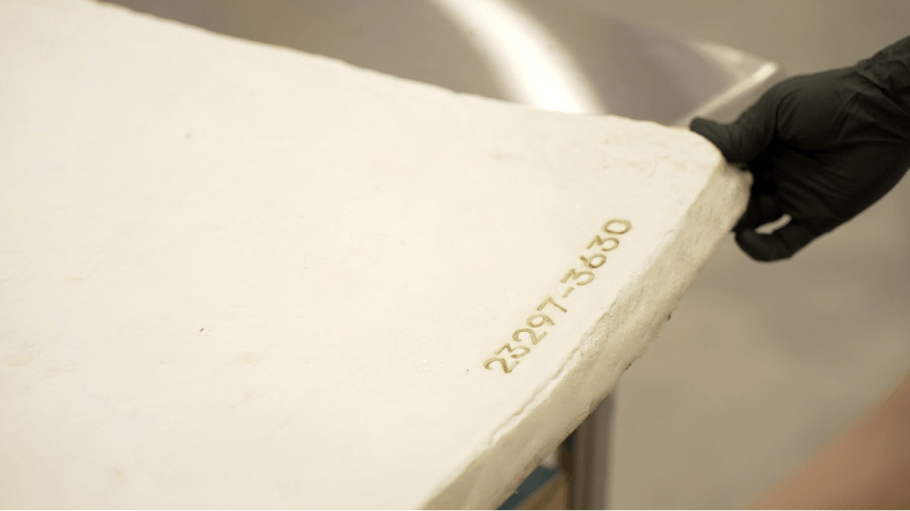
Just over two months since opening, the new MycoWorks facility in South Carolina has harvested more than 1,000 sheets of the company’s alternative leather material, Reishi. The milestone puts MycoWorks several months ahead of schedule on shipping revenue-generating orders.
The site in Union churns out Fine Mycelium, a proprietary construction of root-like fungal threads found in mycelium. The company uses Fine Mycelium to create its made-to-order natural leather alternative, Reishi.
Related Stories
MycoWorks said the Fine Mycelium grown at its South Carolina facility has exceeded the quality standards of what’s produced at the company’s Bay Area pilot plant. The company, which secured a $125 million investment in 2022, credits quality and scaling lessons learned at that West Coast facility for laying the groundwork for its South Carolina plant.
MycoWorks’ 136,000-square-foot South Carolina plant is the largest mycelium production facility in the world, employing nearly 400 workers. The factory opened in late October, after the company received a $30 million allocation from the federal government’s New Markets Tax Credits program, based on its promise to bring high-quality jobs to Upstate South Carolina.
One of the key goals of the facility was to scale production of mycelium materials such as Fine Mycelium by introducing automation to the production process. Those new processes have allowed the company to cut costs and increase scale by double-harvesting sheets of Fine Mycelium and eliminating an initial tanning step at the plant. Previously, only one layer of the material could be harvested per tray.
By cutting the initial tanning step, MycoWorks can ship Fine Mycelium to tanneries in an untanned “wet” form. This offers a cost reduction along with higher quality output at tanneries that process Fine Mycelium into Reishi.
“In 2023, MycoWorks achieved multiple manufacturing milestones, most notably start of production of the world’s first commercial-scale mycelium biomaterial in South Carolina as well as the first harvests of high-quality sheets of Fine Mycelium using this facility’s new systems and process automation,” said Doug Hardesty, MycoWorks’ chief operating officer. “Our teams redesigned and scaled up our one-of-a-kind tray based process to achieve low cost and high-quality production all while delivering Fine Mycelium to the market ahead of schedule, only 17 months after breaking ground.”
MycoWorks said it has nearly two years-worth of Fine Mycelium pre-reserved by clients and partners. The demand for plant-based alternative leather products has grown significantly, with research firm MarketsandMarkets estimating the market will close in on $97 billion by 2027.
MycoWorks’ Reishi biomaterial leather alternative has been used by brands such as Hermès and Ligne Roset. Last summer, Stockholm-based Deadwood Studios launched the first ready-to-wear garments made with Reishi at Copenhagen Fashion Week.