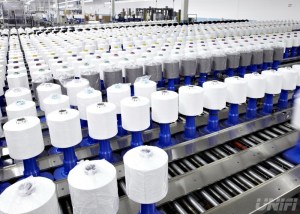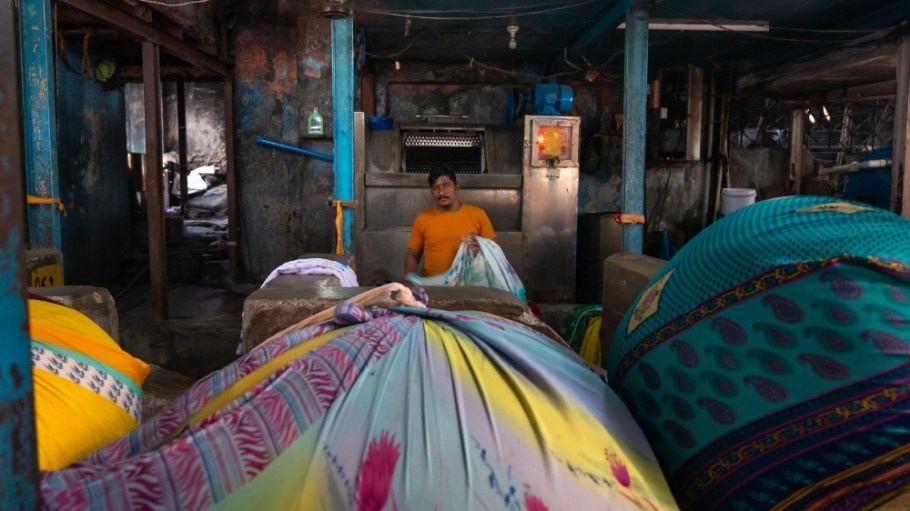
The Indian state of Maharashtra will merge several textile corporations to form a state-run development organization that will support the industry at large.
According to officials, Maharashtra State Textile Corp., Maharashtra State Handloom Corp. and Maharashtra State Powerloom Corporation Ltd. will be consolidated to form the Maharashtra State Textile Development Corporation (MSTDC).
The venture will be modeled on the successful Maharashtra Industrial Development Corporation (MIDC), established by the government in 1962 as its premier industrial infrastructure development agency. Since its launch, MIDC has developed land, roads and water supply and implemented infrastructure like drainage facilities and street lighting. The role of the new organization will be to provide similar infrastructural support services for the textile sector.
Related Stories
Maharashtra accounts for 10.4 percent of the country’s total textile and apparel production and more than 20 percent of the cotton production in India, according to state government data. It also employs 10.2 percent of the country’s workforce and houses its financial capital and the port city of Mumbai.
Government officials told Sourcing Journal that the formation of MSTDC represents another step in achieving the goals set out in the Integrated and Sustainable Textile Industry Policy for 2023-2028. Launched by Maharashtra’s government last June, the plan aims to drive 250 billion rupees ($3 billion) into the textile sector. The launch is a practical way of achieving efficiencies, officials said.
“We are committed to promoting Maharashtra’s textile products both domestically and internationally. The department will be organizing trade fairs, exhibitions, and buyer-seller meets to showcase the finest textiles produced in our state,” Maharashtra Textile Minister Chandrakant Patil said in a message to the industry earlier this week.
“Through collaborations with various industry associations and government agencies, we aim to increase market access and boost exports, thereby contributing to the state’s overall economic development,” Patil added. “We aim to position Maharashtra as a leading textile hub, generating investment and employment opportunities and driving economic growth of the state.”
The reaction within the textile industry has been mixed. While some mill and factory owners said the merger was a step in the right direction, others felt the focus should be on creating organizations to support the small and medium sector.
“In principle, it’s a good move to look at the textile value chain as one integrated whole, rather than differentiated by so many segments,” said Premal Udani, managing director of Mumbai-based manufacturing company Kaytee Corporation Pvt. Ltd. and former president of the Apparel Export Promotion Council (AEPC). “But we’re really going to have to wait and watch to see how efficient it will be. Ultimately, the job is to make it work.”
Although Maharashtra was lagging behind other states in promoting textiles, Udani said he’s noted progress in recent months due to new textile policy and other initiatives.
The industry is not mourning the dismantling of the original organizations, which were operationally less than effective. Maharashtra State Textile Corporation Ltd., for example, was established in 1966 to administer and rehabilitate beleaguered textile mills, and to erect new ones in industrially stunted areas of the state. The group took over 26 mills, which continued to incur losses until they were all closed in January 2001.
States across India want to see the textile sector continue to develop because it is one of the largest employers, according to Prashant Agarwal, co-founder and joint managing director of consulting firm Wazir Advisors.
“Maharashtra is already working on the 1,000-acre park in Amravati,” he said, referring to the government’s PM Mitra park scheme, which launched last year. In July 2023, officials announced that the industrial park would attract investment of 100 billion rupees ($1.2 billion) and create 300,000 jobs.
“While many states have been making their textile policies, like Madhya Pradesh, Odissa and Jharkhand, quite a few of them are more apparel focused,” Agarwal said. “Maharashtra has a lot of cotton, and the conversion into yarn and fabric, so they are investing a lot in textiles.”
The new industrial policy aims not only to consolidate, but to modernize the textile sector. Textile parks will strive to create a conducive environment for the industry’s growth, with common facility centers, support services and state-of-the-art infrastructure. The upgraded textile value chain is projected to increase processing capacity for cotton from 30 percent to 80 percent in the next five years.
“With the consolidation, the MSTDC will become larger and become more efficient,” Agarwal said. “But what will really help the industry get ahead would be helping the medium and small businesses—to bring them together to make a corporation and a marketplace. It can become a movement if you consolidate smaller units and support them.”