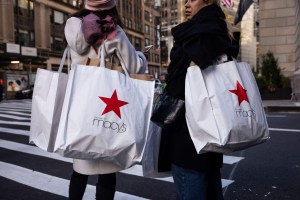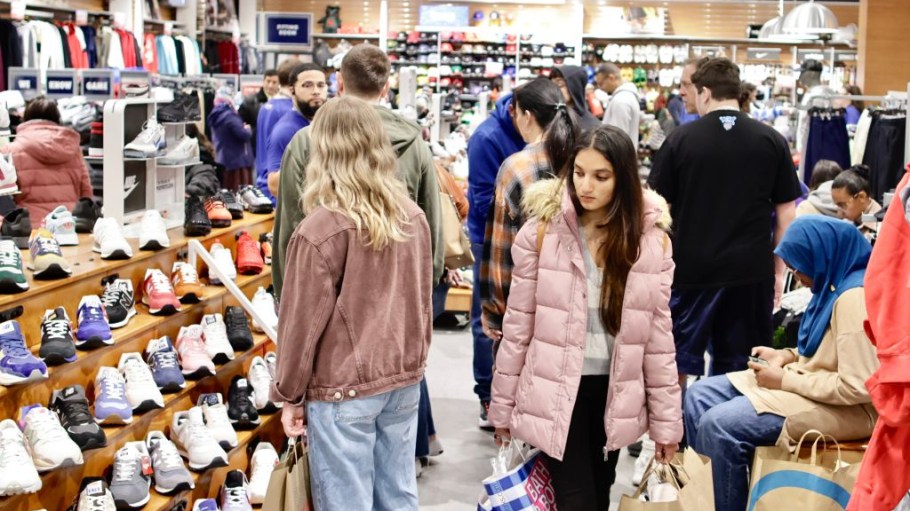
Despite all odds—geopolitical strife and upheaval, an economic instability and rising inflation—shoppers are still spending.
But beneath the veneer of the status quo, macro anxieties about the state of the country and everyday financial strain are weighing on consumers heavily, according to the Kearney Consumer Institute’s (KCI) Q3 2025 update of the Consumer Stress Index.
Analysts have dubbed the current economic landscape the “Yes, But” economy: “Consumers are facing ongoing financial tensions: secure enough to spend, anxious enough to feel behind, with the pinch felt from the job market to values-based shopping,” analysts wrote.
Related Stories
In other words, consumer spending is still strong, accounting for almost 70 percent of United States GDP, median household incomes have been relatively stable for a decade, and poverty slightly down, and household net worth has ballooned since the pandemic by 30 percent. And yet, there are significant mitigating factors to these upsides: the top-earning 10 percent of households make up nearly half of all consumer spending, middle-income households are on the decline, falling from 61 percent in 1971 to 51 percent in 2023, and debts—credit cards, student loans and car payments—are on the rise.
Median net worth may be up in the long-term, as evidenced by buoyant consumer spending (and even some splurging), but shoppers are currently taking on more debt, and parking their real money in their homes and 401 (k) accounts while reserving cash flow for necessities like food and utilities.
“Stability in aggregate is masking stress in practice,” said Katie Thomas, lead at the KCI. “Higher-income consumers are keeping spending levels steady, which makes the data look stable. But lower-income consumers are under mounting pressure, cutting back and optimizing more aggressively than ever. The result is a false calm: resilience that hides real strain.”
Case in point: the consumers surveyed reported that personal finances and geopolitical factors account for more than 60 percent of their top stressors, a 10 percent increase over the same period last year.
They view the current government as unstable, with 59 percent of Americans saying they view the division between political parties distressing, up 17 percent from 2024. While they did not name the specific policies that have contributed to feelings of destabilization, the current administration’s tariff and tax policies—which have contributed to higher prices at retail, and aim to extend tax breaks for high-earning Americans and businesses—may have middle-class earners feeling stretched financially and frustrated politically.
The duality of this emotional strain represents “a clear signal that anxiety is concentrating in both the tangible and the intangible,” analysts wrote. “Pervasive uncertainty is leading to emotional responses and psychological exhaustion.”
In order to alleviate the financial stress, 43 percent of consumers reported making changes to lower their cost of living.
According to KCI’s research, there are several areas to watch in the near- and medium-term that could further illuminate the consumers’ state of mind.
One is holiday spending, as “[l]ong-standing research indicates that consumers simply love to spend around the holidays unless there’s an immediate impact on their finances,” which there may be. Most inventory ordered by retail will hit store shelves before the worst of the tariffs take hold (like those on China, which will hit in early November), and consumers will do their due diligence by leveraging the web and AI to compare prices.
As seen in years past, shoppers are increasingly gravitating to private labels in their everyday shopping excursions as they look to stretch their dollars further. Stigma surrounding eschewing brand names in favor of lower-cost options has all but dissipated. In other words, “[t]hey no longer need to be convinced to try or buy private label; they need to be convinced why not to.”
Finally, apparel and beauty, often viewed as “discretionary” categories, “are where financial compression meets identity compression,” analysts wrote. Consumers who view themselves as middle class are still “performing” that identity, “just with more math behind every look.”