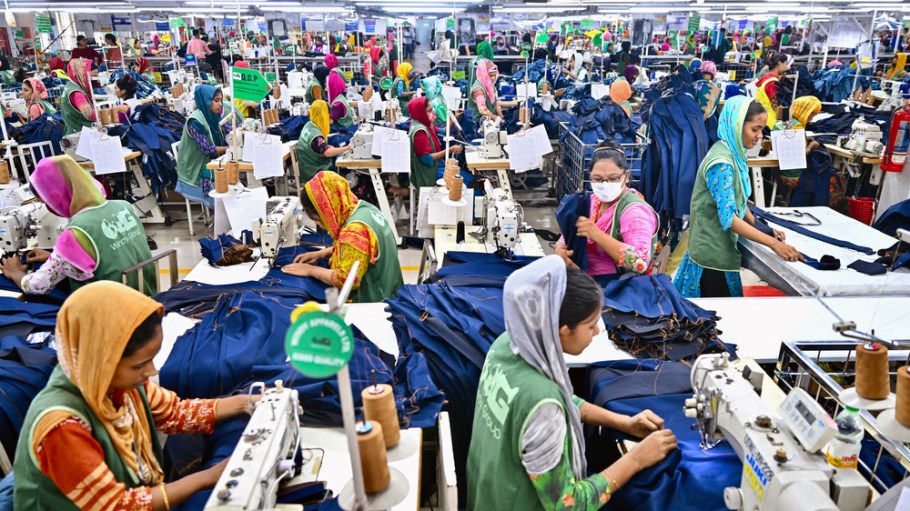
Extreme heat, exacerbated by climate breakdown, is turning into a full-blown health and safety crisis. A raft of trade unions, civil society and academic organizations want the garment and textile industry not only to acknowledge that fact but also to take responsibility for protecting vulnerable workers.
In a letter published earlier this month, 45 trade unions, civil society organizations and academic groups urged the International Accord for Health and Safety in the Garment and Textile Industry to incorporate heat stress as a central pillar of its mandate. While the Accord currently covers heat safety in its training initiatives and complaint mechanisms, the binding agreement does include heat stress as part of its inspection and remediation process for ensuring fire, electrical, structural and boiler safety. This creates an assessment gap that threatens the health and safety of workers in Bangladesh and Pakistan, where indoor temperatures can surpass 43 degrees Celsius—or 101 degrees Fahrenheit—during peak production hours, the letter said. As temperatures across the globe continue to spike, safeguarding workers from heat stress will “need to become a central element of any credible and effective workplace safety program.”
Related Stories
“The challenges brought on by workplace heat exposure will be particularly pronounced in South Asia—which is projected to experience some of the highest increases in average annual temperatures throughout the century,” said organizations such as Climate Rights International, the Bangladesh National Garment Workers Federation, Fashion Revolution, the HeatWatch Foundation and Remake. “These risks are especially concerning for certain groups of already marginalized workers—particularly those who perform physical labor outdoors or work indoors without adequate cooling systems—because they may be exposed to high temperatures for longer periods of time than the general population.”
Workers face acute risks such as dehydration, fainting, vomiting, skin rashes, heart palpitations and fatal heatstroke. They are also susceptible to long-term prospects like chronic kidney disease, cardiovascular disease, respiratory disorders, neurological conditions and reproductive health impacts. These dangers could be exacerbated by workplace conditions and policies that don’t allow for behavioral changes that could help regulate body temperatures, such as taking short breaks or working less intensely.
In a recent study by Climate Rights International, workers spoke of experiencing excessive sweating, headaches, fever, nausea, heat palpitations, dehydration and temporary vision loss. Most had fainted on the job due to the heat or witnessed a co-worker who did. Some said their symptoms were so severe that they were physically unable to move, let alone function.
“The toll of workplace heat exposure is not only physical, but also psychological,” the letter said. “A growing body of public health research links high ambient temperatures and poor mental health outcomes, including irritability, anxiety, depression and even suicide; and findings suggest evidence of increased risk in populations living in tropical and subtropical climate zones, like Bangladesh. Workers interviewed by Climate Rights International reported feelings of anxiety, restlessness and hopelessness due to the heat.”
Heat stress can also stoke increased absenteeism, reduced work performance and income loss. Already, productivity declines are dogging the industry. One 2023 study by the Arsht-Rockefeller Resilience Center estimated that the Bangladeshi capital of Dhaka alone has lost more than 8 percent of its annual output due to heat- and humidity-related labor declines. A paper published in a 2021 edition of the Journal of Political Economy found that output in factories across India drops by roughly 2 percent per degree Celsius increase in temperature above a 25-degree Celsius threshold.
Despite what appears like an insurmountable challenge, the letter described “important and immediately actionable strategies” such as scientifically backed work-to-rest ratios that call for adequate recovery times based on workload intensity and environmental conditions. Other interventions that have proven to be effective in terms of safeguarding worker health include sufficient hydration and schedule adjustments that allow for adequate breaks during peak heat hours.
As temperatures continue to rise and engineering changes become necessary, the installation of cool roofs, improved ventilation and use of low heat-emitting lights could help boost health outcomes where air conditioning at scale is stymied by financial or infrastructure limitations. But they also require greater employer buy-in that factories may be unwilling to provide without the technical and financial assistance from buyers that the Accord already helps facilitate, the letter said. The Accord, which did not respond to a request for comment, is poised to renegotiate its Pakistan and Bangladesh agreements at the end of 2025 and 2026, respectively, presenting what the organizations say is a “timely opportunity” to beef up the pact and do for heat stress what it’s done for fire and building remediations since the calamitous collapse of Rana Plaza outside Dhaka in 2013.
The fact that most companies haven’t included heat protections in their supplier codes of conduct makes the issue more urgent, the letter said. Even brands that have policies around heat adaptations face challenges in ensuring that improvements are applied across all factories. Expanding the Accord’s scope could help companies monitor heat stress risks and live up to their obligations.
“As rising temperatures increasingly threaten the health, safety and livelihoods of workers in Dhaka and across South Asia, companies operating in the region and sourcing from its supply chains have a responsibility to prevent and address human rights harms, including climate-related harms, linked to their business activities,” it added. “Expanding the Accord’s scope to include heat stress could help companies to better monitor these risks and more effectively fulfill their obligations.”