How does one define a “landmark” settlement for garment workers in an industry where wage exploitation in the global South is not only endemic but has become normalized?
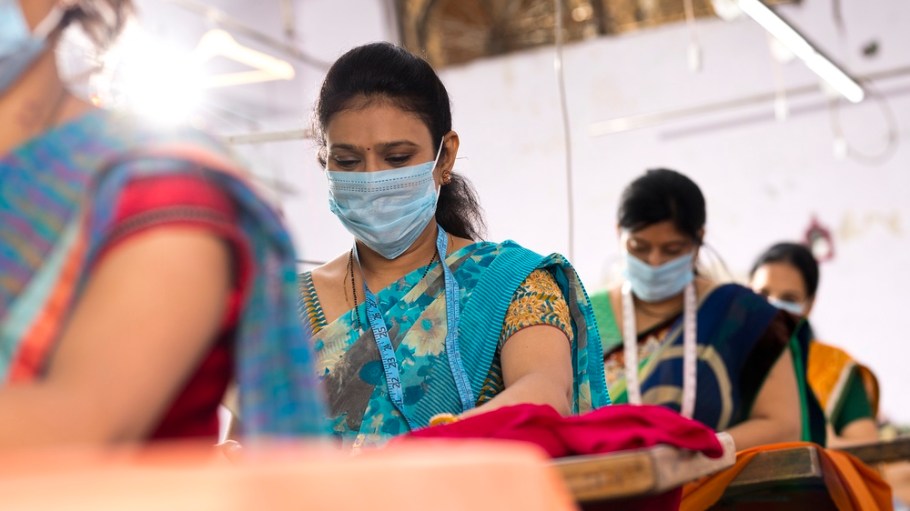
India’s Garment Labour Union can’t say exactly, but the payout it agreed upon with Sonal Apparel Private Limited Industries, a Bangalore-based supplier to Western retailers such as Primark, Only & Sons and The Children’s Place, is, suffice to say, “significant.” It’s also the hard-won result of a three-year legal battle that it waged alongside the Asia Floor Wage Alliance, a consortium of garment trade unions, before the Bangalore Industrial Tribunal. At stake: the wages GLU said were “unlawfully withheld” from SAPL Industries’ 317 workers during the Covid-19 lockdown in 2021.
Related Stories
If turning to the courts strikes some as drastic, it’s because Initial discussions about repayment didn’t begin on even footing, GLU representatives said. Despite regularly meeting with SAPL Industries management about critical issues facing workers, including sexual harassment, verbal abuse and what was perceived as unfair pay—not to mention far exceeding the 10 percent threshold that national law requires for trade union registration and recognition—efforts to formalize the industrial relationship failed to gain traction.
With no other avenue to help workers claw back what they said they were owed, GLU leveraged AFWA’s joint employer liability, or JEL, strategy—a Hail Mary play, as Ananya Bhattacharjee, international coordinator for the AFWA once put it, to hold fashion buyers legally accountable in a fragmented landscape where corporate regulation is next to nonexistent and challenges to that status quo are under constant attack.
The AFWA has argued, for instance, that H&M Group should be held jointly liable for reported abuses that occurred at a supplier factory—also in Benglaru—in 2020 because it wielded “total economic control over the workers’ subsistence, skill and continued employment.” The same with Asics, Columbia Sporting Company, DKNY, Levi Strauss and Tommy Hilfiger, which the AFWA and its local union partners told Sri Lanka’s labor commissioner should be considered “shadow employers” at a factory where laid-off workers were told they wouldn’t be receiving their wages and bonuses because of pandemic-driven cancellations.
In 2023, the AFWA and Global Labor Justice, along with 20 garment-sector unions representing workers in Nike’s supply chains in Cambodia, India, Indonesia, Pakistan and Sri Lanka, submitted a labor complaint with the Organisation for Economic Co-operation and Development in Washington, D.C. to accuse the sportswear giant of ignoring Covid-era behavior that they said stripped thousands of garment workers of an average of three months’ worth of wages.
That the SAPL Industries’ case, which GLU and AFWA filed in 2022, would be accepted by India’s deputy labor commissioner was a “historic feat” in and of itself, those involved said. Despite what GLU characterized as objections from the suppliers and the named brands, the complaint wended its way through the government’s labor wing to land in front of the Bangalore Industrial Tribunal for trial. SAPL Industries, which did not respond to a request for comment, settled before a ruling could have established a major legal precedent.
“They were apprehensive about the broader implications, including the genuine risk of the brand reducing orders or severing ties altogether if held legally accountable,” Bhattacharjee said in a statement. “The structural shift introduced by a framework like JEL, which redefines the liability of global fashion brands on an international scale, is significant.”
A spokesperson for Bestseller, which owns Only & Sons, said that it welcomed the resolution of the “long-running case,” throughout which it has “remained committed” to “facilitating dialogue and fostering a constructive atmosphere for resolution.” Primark also said that it supported open dialogue alongside its fellow buyers and that it’s “pleased” to see the resolution of this case. The Children’s Place did not return an email seeking comment.
New-ish for fashion, though less so for sectors like janitorial, warehousing and port trucking, the concept of joint liability is a linchpin of California’s Senate Bill 62, better known as the Garment Worker Protection Act. Underpinning the rule is a desire to hold so-called “brand guarantors” liable for any wages, damages, penalties and other compensation owed to the people who make those items, no matter how many layers of subcontracting serve as buffers.
“Brands profit from this dynamic but have no legal liability for the wage theft they create in their supply chain,” Marissa Nuncio, director of the Los Angeles nonprofit Garment Worker Center, said in 2021, when the bill was signed into law by Governor Gavin Newsom. “SB 62 proposes joint liability to correct this problem and ensure that all actors share the responsibility for wage compliance.”
Workers who were axed or furloughed at the height of Covid-19 lost roughly half a billion dollars in withheld severance, according to the Worker Rights Consortium, a Washington, D.C. nonprofit. Remake, another advocacy group, estimates that fashion buyers still owe suppliers some $18 billion in canceled orders or the imposition of unilateral discounts, in breach of their due diligence obligations under international business and human rights norms.
For now, Saroja K., general secretary of GLU, counts the SAPL Industries’ settlement as a victory. “This is a massive win for workers at SAPL and a powerful example of what can be achieved through innovative legal thinking and strategy,” she said.