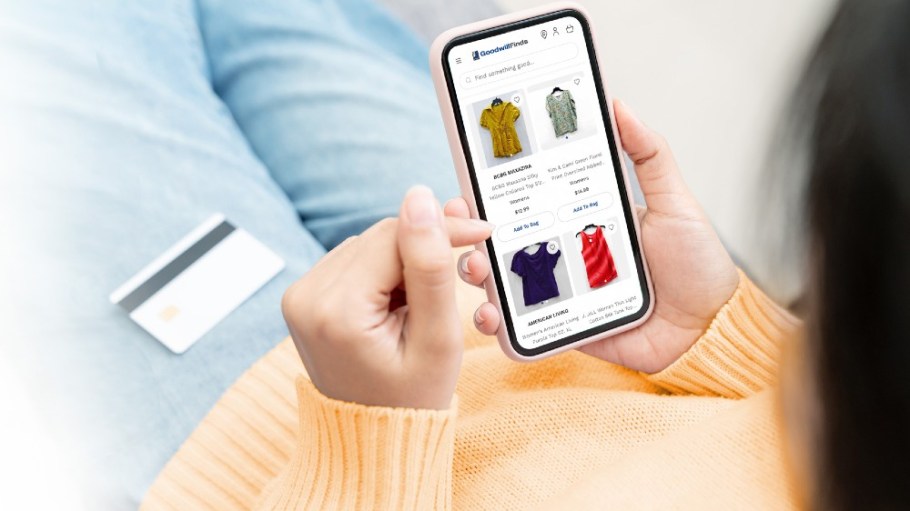
GoodwillFinds wants customers to focus their energy on hunting for secondhand finds—not on hunting for answers to routine questions.
Goodwill’s digital platform has partnered with artificial intelligence giant OpenAI to bring a generative AI-powered chatbot to its consumers. The tool, which GoodwillFinds calls Gem, allows customers to have constant, real-time access to information from the company. The chatbot is equipped to help with questions about products, returns, order status and GoodwillFinds’ general purpose, the company said.
Related Stories
While GoodwillFinds did not specify exactly how the chatbot works underneath the hood, OpenAI’s enterprise clients typically use their own documents and internal data, augmented by some relevant external data, to train this type of model. Because the models companies like GoodwillFinds deploy are focused on specific use cases, rather than general-purpose use, they’re able to give consumers more specific answers to their queries than, say, ChatGPT—which is trained on an extremely wide set of information—might be capable of doing.
Though the chatbot is built for customer service, it differs from other generative AI-powered, customer-facing chatbots, like Amazon’s Rufus bot or ThredUp’s Style Chat tool. That’s because it doesn’t yet have the ability to recommend specific products to consumers. So, for example, if a consumer asks Gem to “show me size 8 women’s jeans,” it’s not able to do so; instead, it directs the user to check the women’s apparel section and filter by size.
However, it can offer up ideas that may lead to discovery. If a consumer were to ask Gem for ideas of what to gift a friend’s three-year-old child for their birthday, the chatbot can compile a list of age-appropriate gift ideas, even if it can’t pull listings from GoodwillFinds that correlate to those suggestions.
Gem excels in giving answers related to process; it can easily answer questions about how GoodwillFinds’ partnership with Seel enables returns on some products and knows that items listed on GoodwillFinds aren’t eligible for in-store pickup. This likely indicates that, in training Gem, the company has, to date, focused on its process-based documents, rather than linking its product description pages to the backend of the LLM.
Matt Kaness, CEO of GoodwillFinds, said the technology implementation represents a better way to serve its customers, particularly with the nuances of shopping secondhand involved.
“At GoodwillFinds, our mission is to innovate thrift shopping with a purpose,” Kaness said in a statement. “By integrating OpenAI’s innovative technology into our customer service operations, we can provide immediate, reliable and helpful answers to our customers anytime they need assistance. With Gem, we’re proud to deliver an intuitive, friendly and always-available experience for our shopping community.”
The company noted that it launched Gem late last year and, thus far, it has been able to handle more than 60 percent of inbound customer queries. Kaness said he expects Gem to aid GoodwillFinds’ further expansion in 2025.
“GoodwillFinds enables consumers to thrift-shop Goodwills across the country from the convenience of your mobile device. We are committed to continuously improving the shopping experience through targeted applications of modern technological solutions,” Kaness said.